

Disclaimer: Some of the highlighted links within this post are affiliate links. This means if you click on them and make a purchase, I might earn a small commission at no additional cost to you. For further information, please see the privacy policy and cookie policy. In addition, if you wish to ensure that your personal information is not passed on to third party advertisers, you can request that via the Do Not Sell or Share My Personal Information page.
San Francisco’s Top Attractions – A Quick Guide
An Overview
San Francisco is a city that seems determined to impress.
It provides a wide mix of contrasts:
- from the open waters of the Pacific Ocean; and
- one of the world’s most recognisable bridges;
- to steep streets, Victorian houses, and bustling neighbourhoods.
Its major tourist attractions sit alongside distinctive neighbourhoods, and its history blends with today’s reality.
A Sightseeing Plan
If you’re visiting the city for only a few days, there’s no way you are going to be able to see everything. Instead, you should simply try and connect its famous landmarks with the neighbourhoods that give the city its character.
In my opinion, the best strategy is to concentrate on visiting the top five must-see attractions:
- Lombard Street; and
while at the same time still finding time to:
- take a ride on one of the historic cable cars and perhaps visit the cable car museum;
- browse the shelves of the City Lights Bookstore;
- explore the more bohemian side of the city around Haight-Ashbury; and
- take in one or two of the museums and gardens within Golden Gate Park.
If you have additional time, you could also consider visiting some of the city’s other attractions and neighbourhoods including:
- the North Beach and Union Square neighbourhoods
- the Painted Ladies on Alamo Square
- the Castro neighbourhood; and
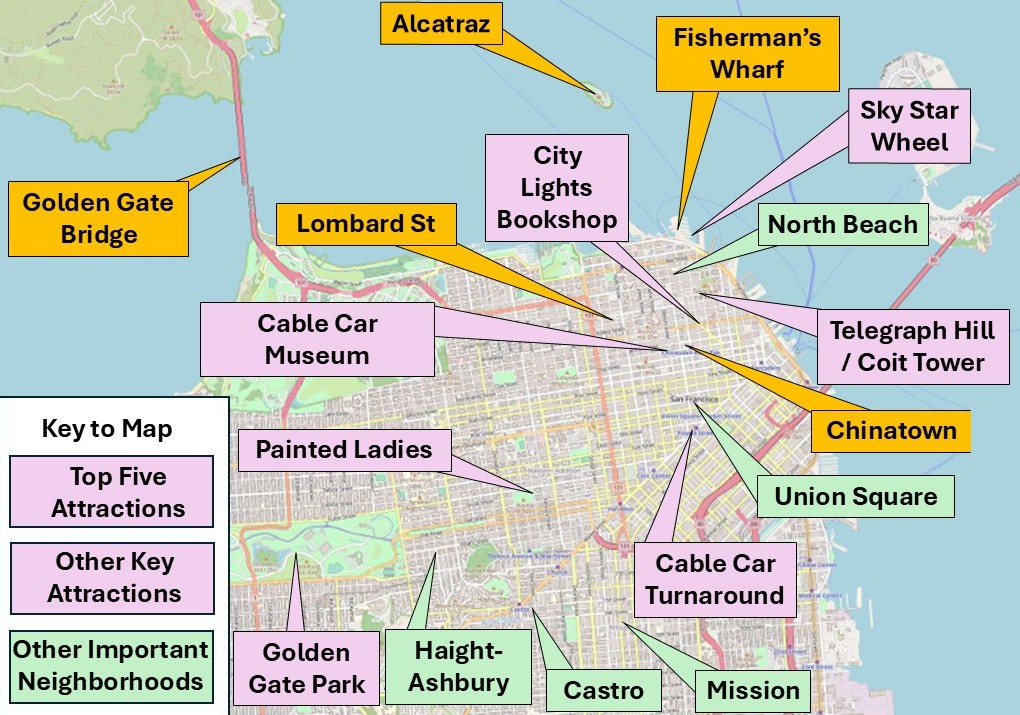
A Sightseeing Map
The central area of the city is fairly compact and easy to navigate on foot or by cable car. Be warned, though, the City’s hills can be challenging and the cable cars, although an obvious alternative to walking, can be crowded.
The map below highlights the location of each of the City’s:
(Attribution: DavesTravelWorld.com)
A short description of each is provided below, together with additional information about:
- the City’s museums and main public buildings;
The Top Five Attractions
Alcatraz
(Attribution: DavesTravelWorld.com)
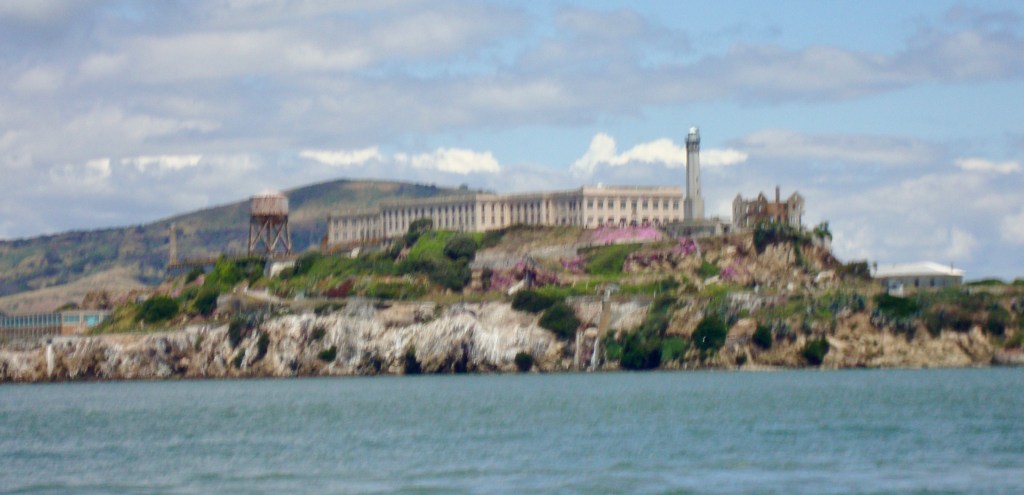
Alcatraz Island, famously known as “The Rock,” was once a maximum security federal prison that housed notorious criminals, including Al Capone. Today, visitors can take a ferry across San Francisco Bay and explore the former prison, including its cells and historic buildings. The island also provides excellent views of the city skyline and Golden Gate Bridge.
Find Out More in my Dedicated Guide to Alcatraz Island
Fisherman’s Wharf

(Attribution: DavesTravelWorld.com)
Fisherman’s Wharf is one of San Francisco’s busiest and most popular waterfront districts. Visitors can enjoy seafood restaurants, souvenir shops, street performers, museums and spectacular bay views.

(Attribution: DavesTravelWorld.com)
The area is particularly famous for its lively atmosphere and Pier 39, which is home to the area’s most famous residents, the California sea lions, which regularly gather on the dock.
Find Out More in my Dedicated Guide to Fisherman’s Wharf
(Attribution: Booking. com)
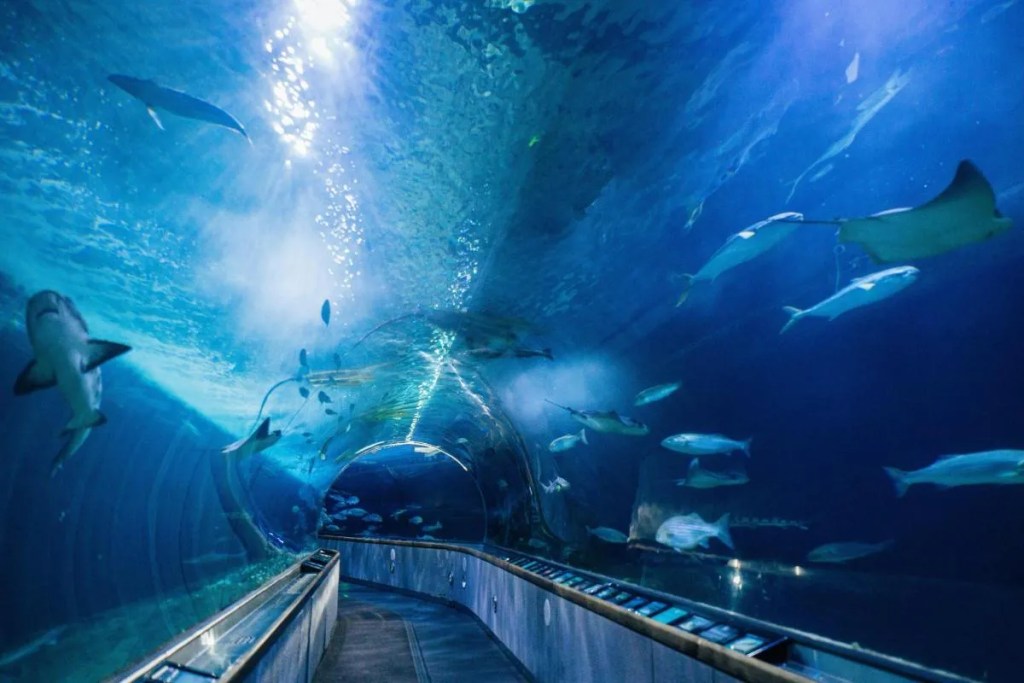
Other attractions at Fisherman’s Wharf include the Aquarium of the Bay, the San Francisco Maritime National Historical Park and its integral Hyde Street Pier, and the Maritime Garden / Aquatic Park.
Find out more about the Aquarium of the Bay
The Golden Gate Bridge

(Attribution: DavesTravelWorld.com)
The Golden Gate Bridge is San Francisco’s most recognisable landmark and one of America’s most famous engineering achievements. Opened in 1937, its distinctive orange structure stretches across the Golden Gate Strait. Visitors can walk or cycle across the bridge while enjoying spectacular views of San Francisco Bay, the Pacific Ocean and surrounding hills.
Find Out More in my Dedicated Guide to the Golden Gate Bridge
Lombard Street

(Attribution: DavesTravelWorld.com)
Lombard Street is famous primarily for its unusually steep, winding section of road between Hyde Street and Leavenworth Street. This section has eight sharp hairpin bends to allow vehicles to navigate the hillside. This feature, combined with its colourful gardens and impressive views, has made it one of San Francisco’s most photographed scenes.
Chinatown

(Attribution: DavesTravelWorld.com)
San Francisco’s Chinatown is one of the oldest and most significant Chinese-American neighbourhoods in North America. Its streets are filled with traditional shops, restaurants, bakeries, markets and distinctive architecture.
The Dragon Gate provides a famous entrance, while wandering the side streets reveals temples, historic buildings and everyday neighbourhood life.
Find Out More in my Dedicated Guide to Chinatown
Other Key Attractions
Coit Tower and Telegraph Hill

(Attribution: Dietmar Rabich / Wikimedia Commons / “San Francisco (CA, USA), Coit Tower — 2022 — 3082” / CC BY-SA 4.0)
Standing prominently on Telegraph Hill, Coit Tower is an iconic part of the San Francisco skyline. Built in 1933, the tower was funded by philanthropist Lillie Hitchcock Coit. Visitors can admire murals inside and enjoy panoramic views over the city, the Bay, the Golden Gate Bridge and the surrounding neighbourhoods.
Telegraph Hill itself is one of San Francisco’s iconic hills. It’s accessed by a series of steep streets and stairways. One of these, the Filbert Street steps, provides a particularly memorable route through gardens and residential areas.
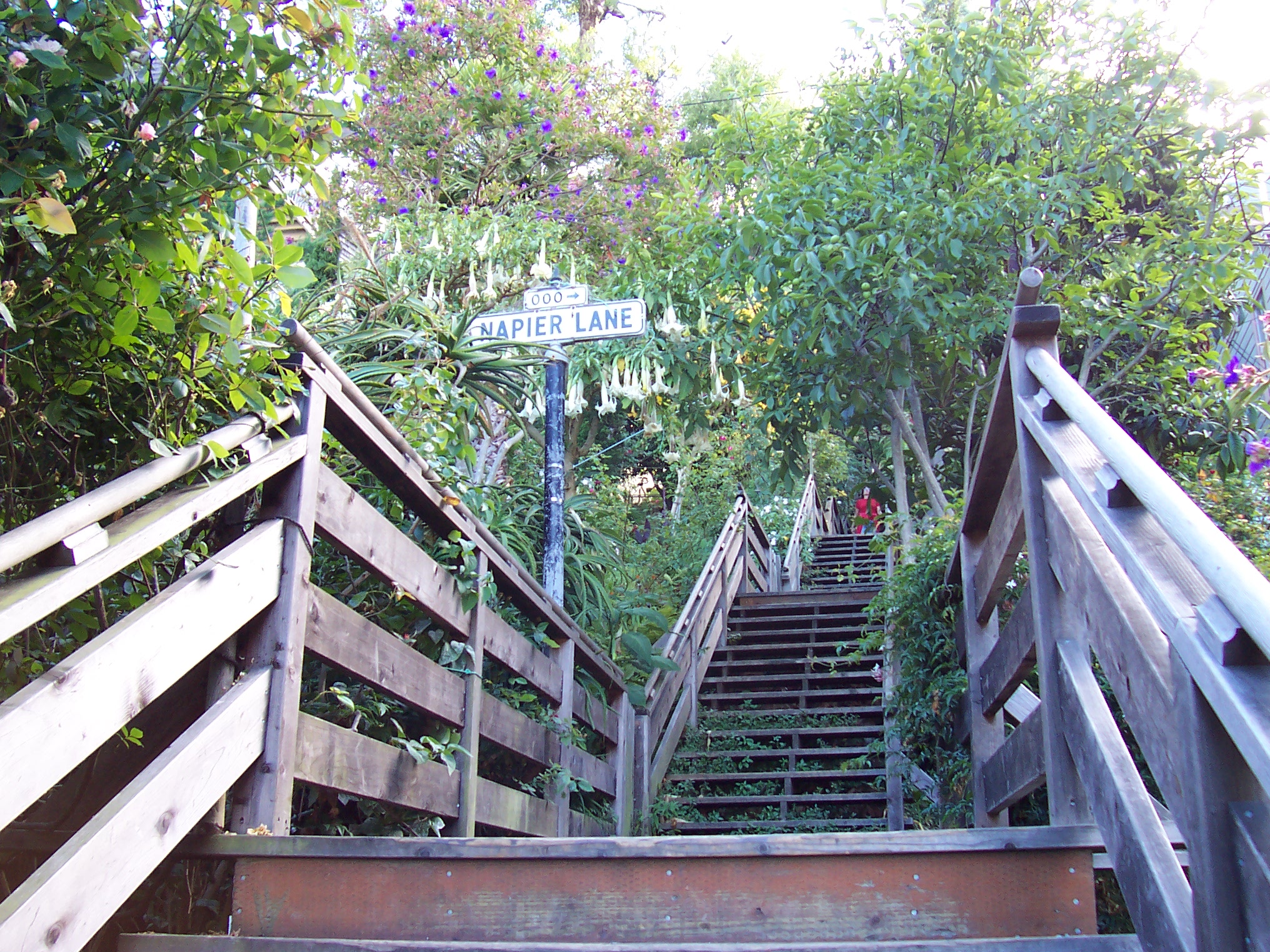
Whether you ascend the Coit Tower or not, the climb up to Telegraph Hill, on its own, rewards visitors with attractive views and a glimpse of one of the city’s more unusual hillside communities.
The Cable Cars and the Cable Car Museum
(Attribution: DavesTravelWorld.com)
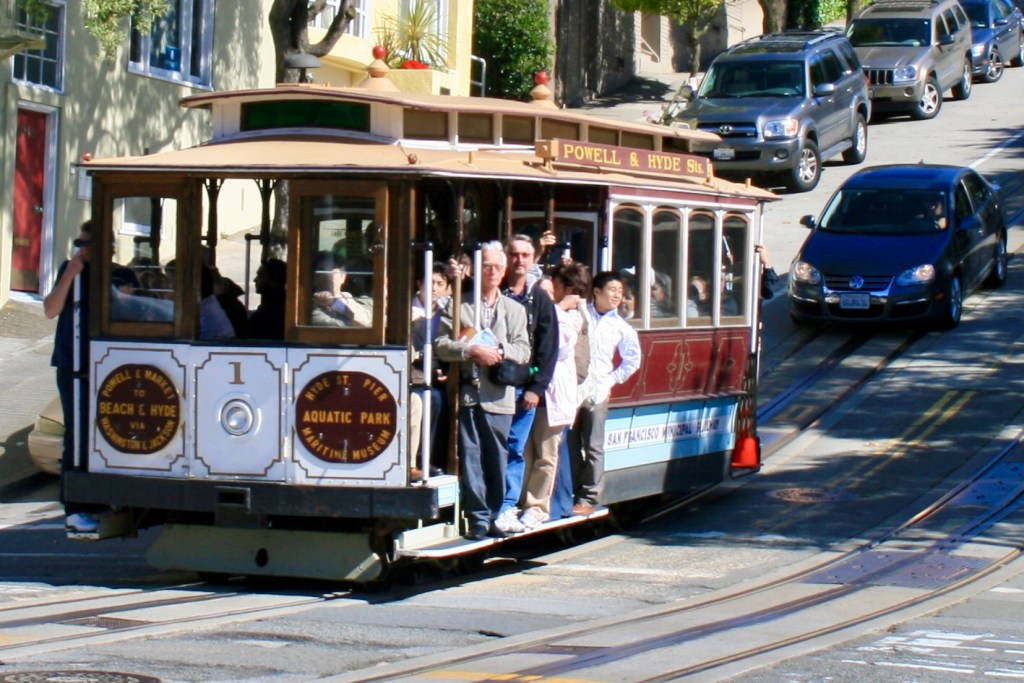
San Francisco’s cable cars are more than a means of transportation – they are a defining part of the city’s identity. Three lines climb and descend the city’s famous hills, offering a wonderfully old-fashioned sightseeing experience. The Powell-Hyde and Powell-Mason routes are particularly useful for combining transportation with views and major attractions.
Cable Car Museum
The history of these cable cars is celebrated in the Cable Car Museum. The museum sets out exhibits that explain how the cable car system operates and also displays historic cable car vehicles and equipment. The highlight, though, for most visitors, is that the museum also provides them with an opportunity to watch the enormous underground wheels that turn the cables that pull the famous cars through the city’s steep streets.
Cable Car Turnaround

(Attribution: DavesTravelWorld.com)
Another interesting attraction for cable car ‘fans’ is the Powell & Market Street cable car turnaround facility. It’s the location where the historic cable cars are manually turned around at the end of their routes. Watching the process is an entertaining experience in itself, particularly for first-time visitors. The ‘turnaround’ also provides a convenient point to begin a cable car journey towards Chinatown, Nob Hill or Fisherman’s Wharf.
The Painted Ladies
(Attribution: Booking.com)
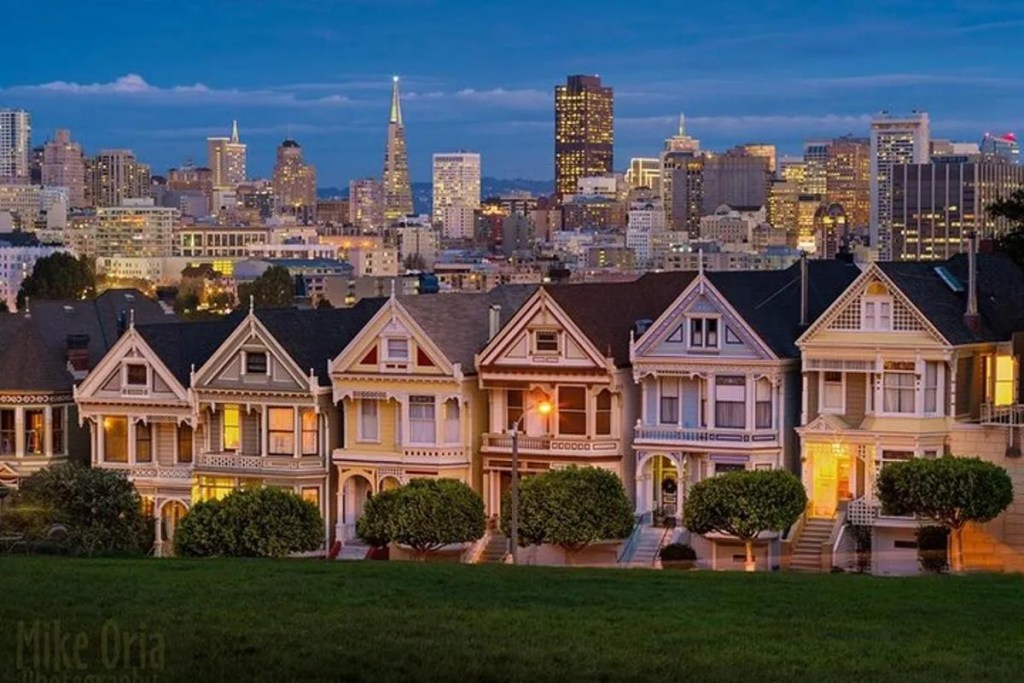
The Painted Ladies are a famous row of beautifully preserved Queen Anne Victorian houses overlooking Alamo Square. Their colourful façades and elaborate architectural details make them a favourite photography subject. The houses became especially recognisable through popular culture and television.
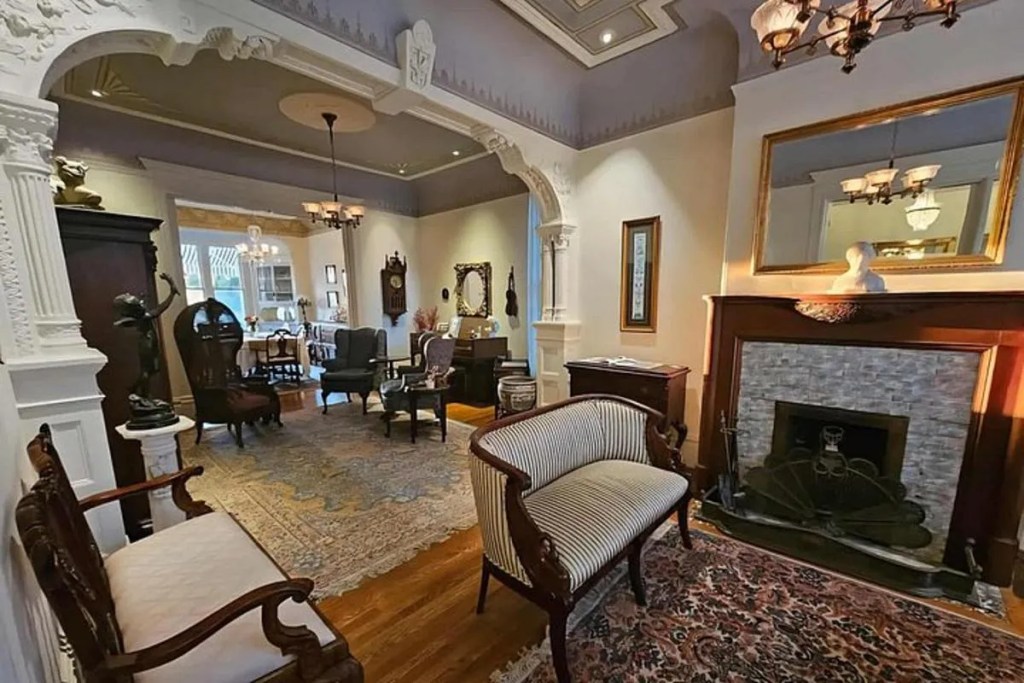
Now, one of the owners has started giving guided tours of the interior of one of these famous houses. If you are interested in finding out more, please click the link below.
(Attribution: Booking.com)
Find out more about visiting one of the Painted Ladies
The City Lights Bookstore
(Attribution: DavesTravelWorld.com)
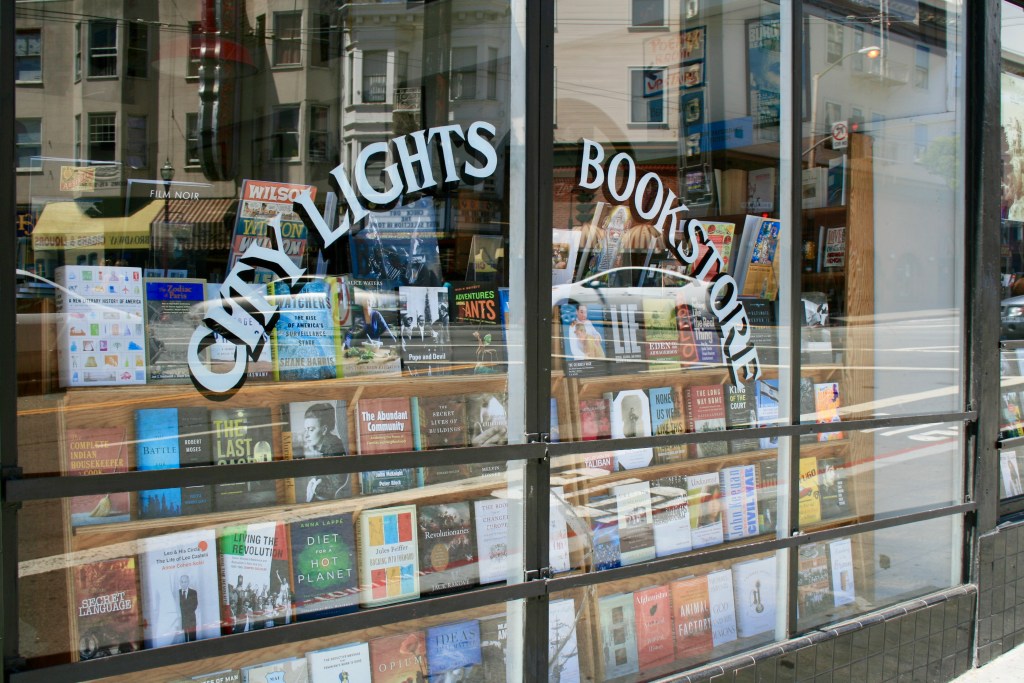
The City Lights Bookstore, at 261 Columbus, deserves a special place in any visit to this City. It’s more than just an independent bookstore: it’s a long established literary landmark closely associated with the Beat Generation, free expression and independent culture.
Its shelves are filled with works by Jack Kerouac, Steinbeck, Mayo Angelo and many other international writers of poetry, fiction, politics and philosophy.
Golden Gate Park and its Integral Attractions

(Attribution: DavesTravelWorld.com)
Golden Gate Park itself is a huge urban park stretching across the western part of San Francisco. Within its confines, it contains gardens, museums, lakes, walking paths and recreational areas. These integral attractions include:
California Academy of Sciences

The California Academy of Sciences combines a natural-history museum, aquarium, planetarium and rainforest under a living roof. It offers fascinating experiences for visitors of all ages. Exhibits explore astronomy, marine life, evolution and the natural world, making it particularly popular with families.
Find out more about the Academy of Sciences
de Young Museum
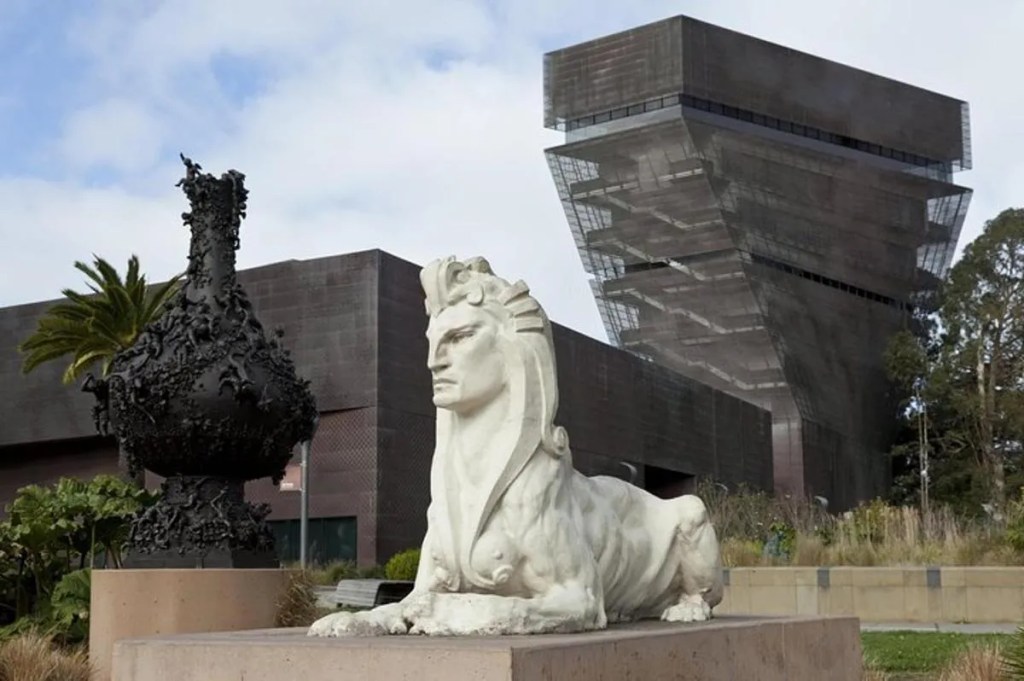
(Attribution: Booking.com)
The de Young Museum, one half of the Fine Arts Museum of San Francisco, is a major art museum. It includes collections of American art, international textiles, costumes and decorative works. The building itself is architecturally striking, while its observation tower provides impressive panoramic views of San Francisco.
The other part of the FAMSF is the Legion of Honor, overlooking Lincoln Park.
Find out more about the de Young Museum
San Francisco Botanical Gardens
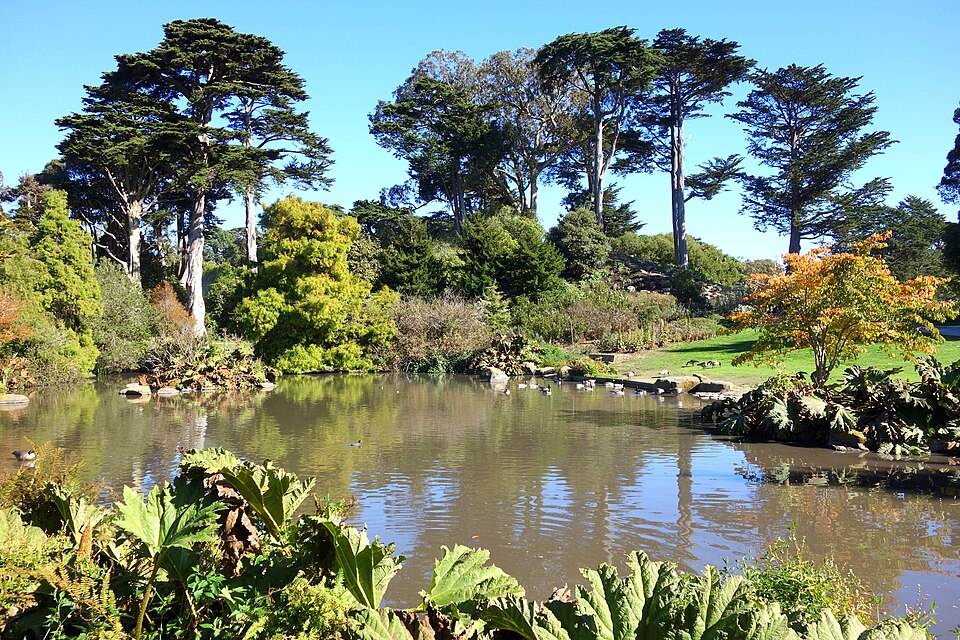
(Attribution: Daderot, CC0, via Wikimedia Commons)
The San Francisco Botanical Gardens occupy 55 acres of land within the Park and contain more than 8,000 kinds of plants from around the world. San Francisco’s mild climate allows many unusual species to flourish within this outdoor garden.
Find out more about the San Francisco Botanical Garden
Japanese Tea Garden
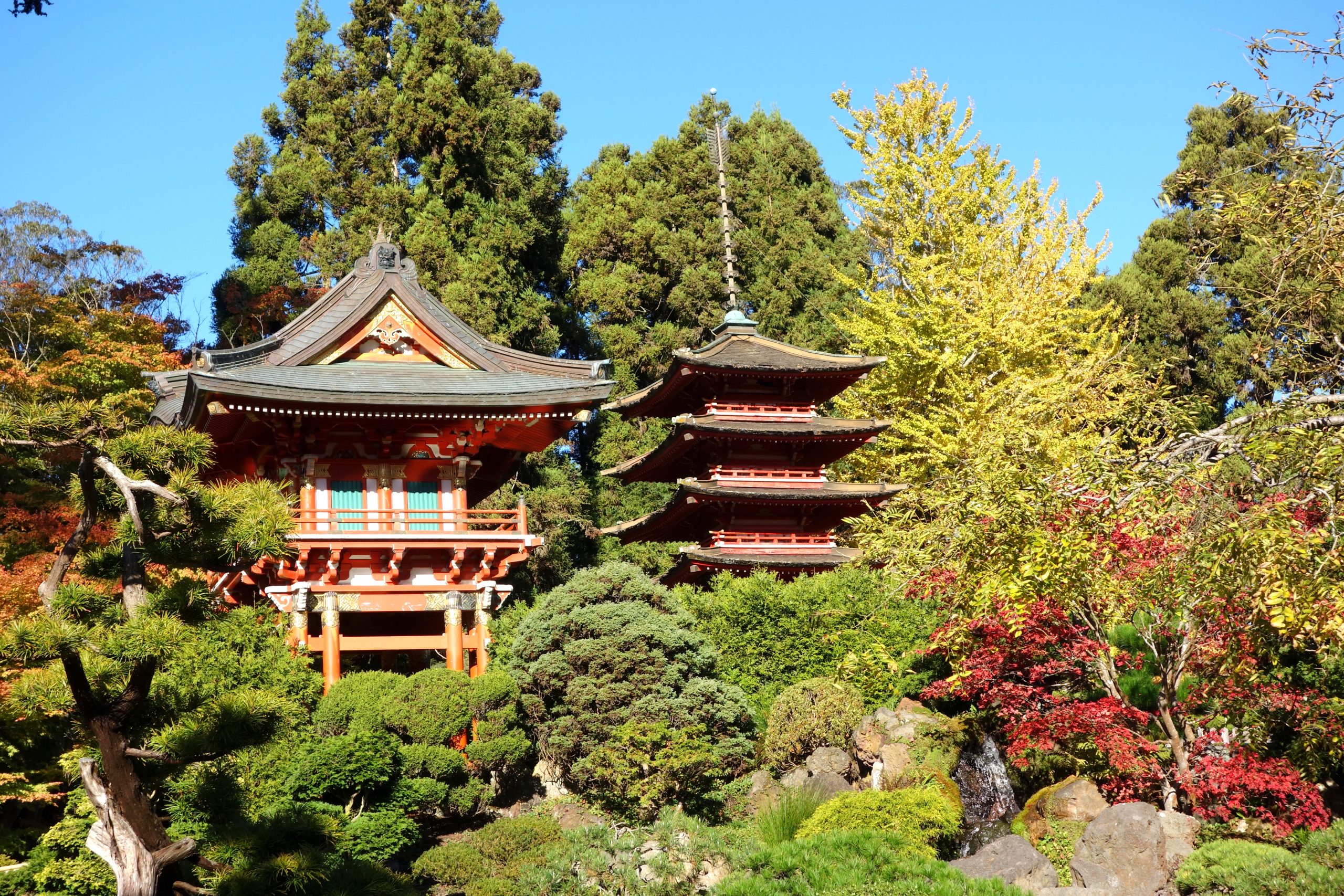
(Attribution: Daderot, CC0, via Wikimedia Commons)
The Japanese Tea Garden provides a peaceful escape from San Francisco’s busy streets. Its beautiful landscaping includes traditional Japanese architecture, ponds, bridges, lanterns, pagodas and carefully maintained plants.
Find out more about the Japanese Tea Garden
Conservatory of Flowers

(Attribution: Almonroth, CC BY-SA 3.0, via Wikimedia Commons)
The Conservatory of Flowers is housed within an elegant Victorian glass-and-wood greenhouse structure. It contains colourful displays of tropical plants and rare specimens representing a variety of different environments. The nineteenth-century building itself is an attraction, and it is surrounded by lawns, flowerbeds and landscaped gardens.
Find out more about the Conservatory of Flowers
San Francisco Zoo
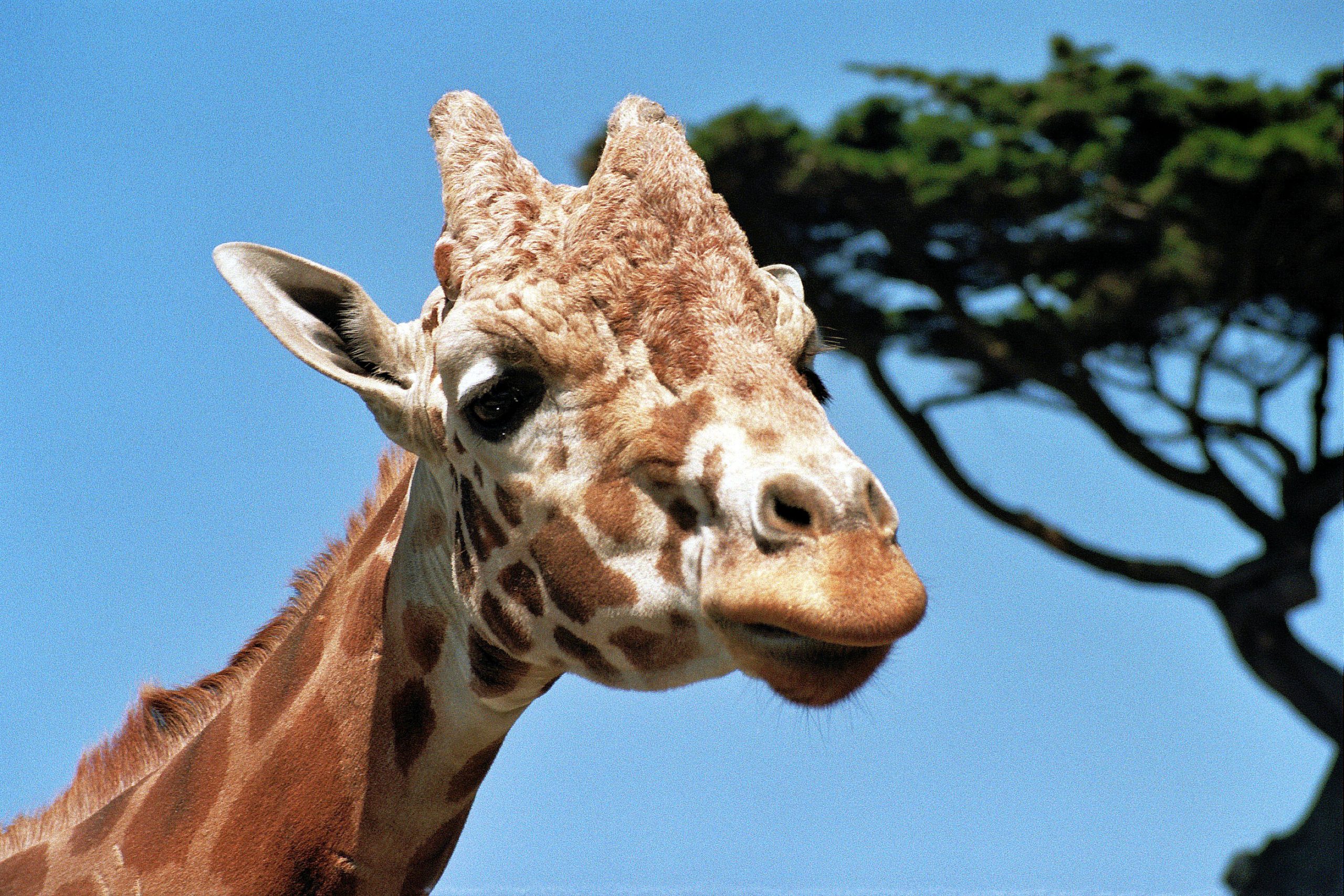
(Attribution: Michael Fraley, CC BY 2.0, via Wikimedia Commons)
To the south of Golden Gate Park is the San Francisco Zoo and Gardens. It is located beside the Pacific Ocean and occupies approximately 100 acres of land. It is home to around 1,000 animals representing hundreds of species. Its coastal setting gives it a different atmosphere from many urban zoos and makes it a worthwhile family attraction.
Find out more about the San Francisco Zoo
Sky Star Wheel
(Attribution: GetYourGuide.com)
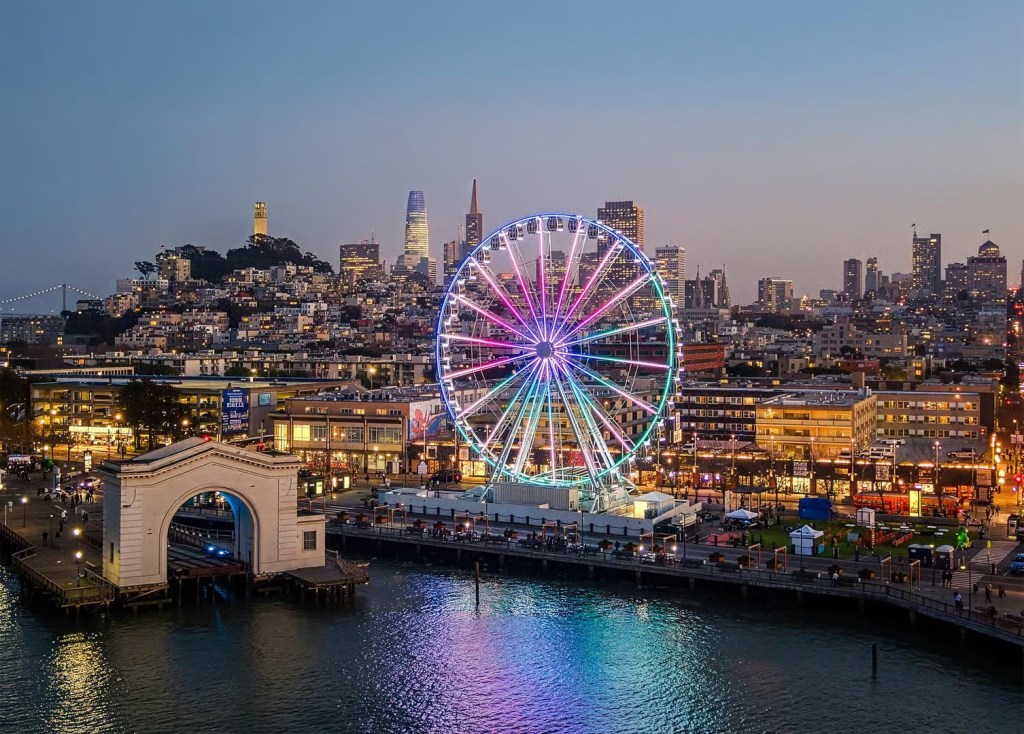
The Sky Star Wheel is a large observation wheel located near San Francisco’s northern waterfront. Its enclosed gondolas provide elevated views across the city and San Francisco Bay. The attraction is particularly appealing around sunset or after dark, when visitors can see the illuminated waterfront and city skyline from above.
Find out more about the SkyStar Wheel
Neighbourhoods Worth Visiting
Haight-Ashbury
(Attribution: DavesTravelWorld.com)
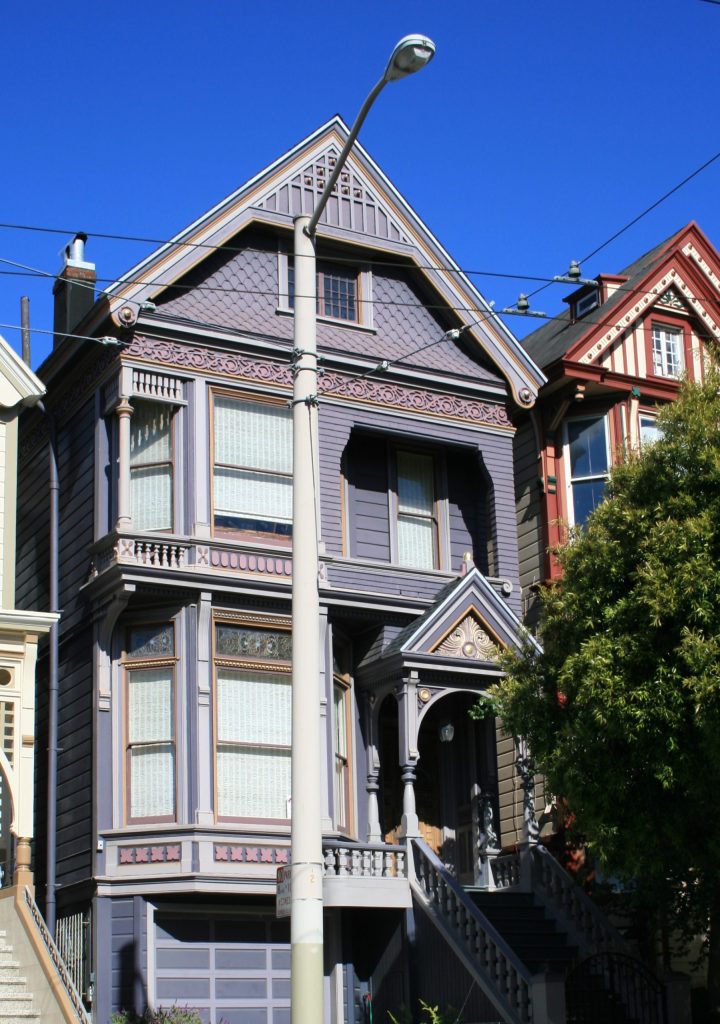
Haight-Ashbury is one of the most distinctive neighbourhoods in San Francisco. It’s famous around the world as the birthplace of the 1960’s counterculture movement and the 1967 Summer of Love.
It’s much more than just that, though – It brings together music history, colourful Victorian architecture, independent shops, cafés, and a distinctly bohemian atmosphere. Its close proximity to Golden Gate Park also provides opportunities to visit the museums and gardens located therein.
Find Out More in my Dedicated Guide to the Haight-Ashbury Neighbourhood
Union Square
(Attribution: Lordsamp, CC BY-SA 4.0, via Wikimedia Commons)
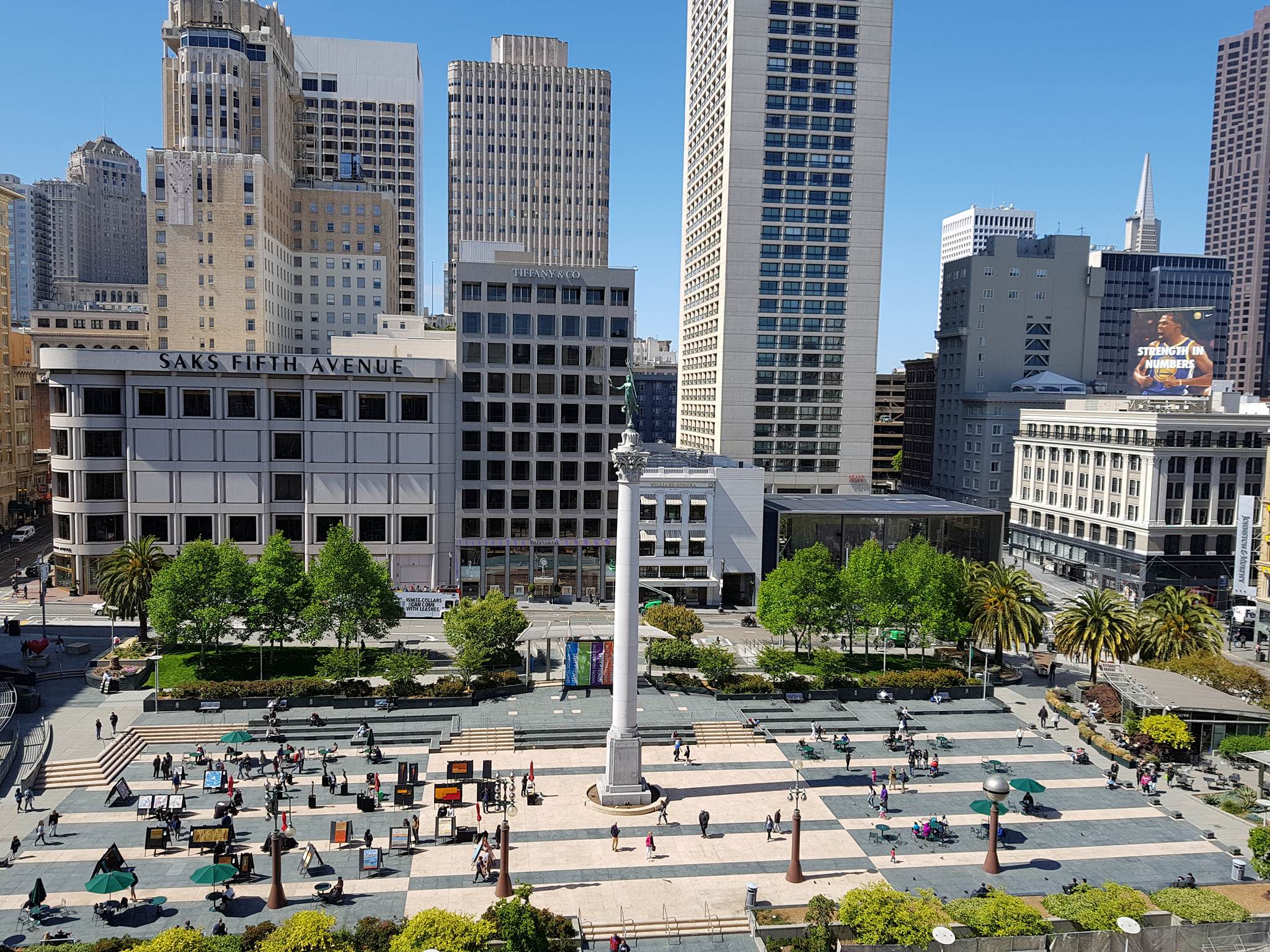
The Union Square neighbourhood is centred around the square that gives it its name. Union Square is a central San Francisco gathering place surrounded by shops, restaurants, hotels, theatres and galleries. The area is particularly well known for shopping, with numerous major retailers and luxury brands nearby.

(Attribution: DavesTravelWorld.com)
The square itself provides a convenient starting point for exploring downtown and travelling onwards to other parts of the city.
North Beach
(Attribution: Christopher Michel, CC BY 2.0, via Wikimedia Commons)
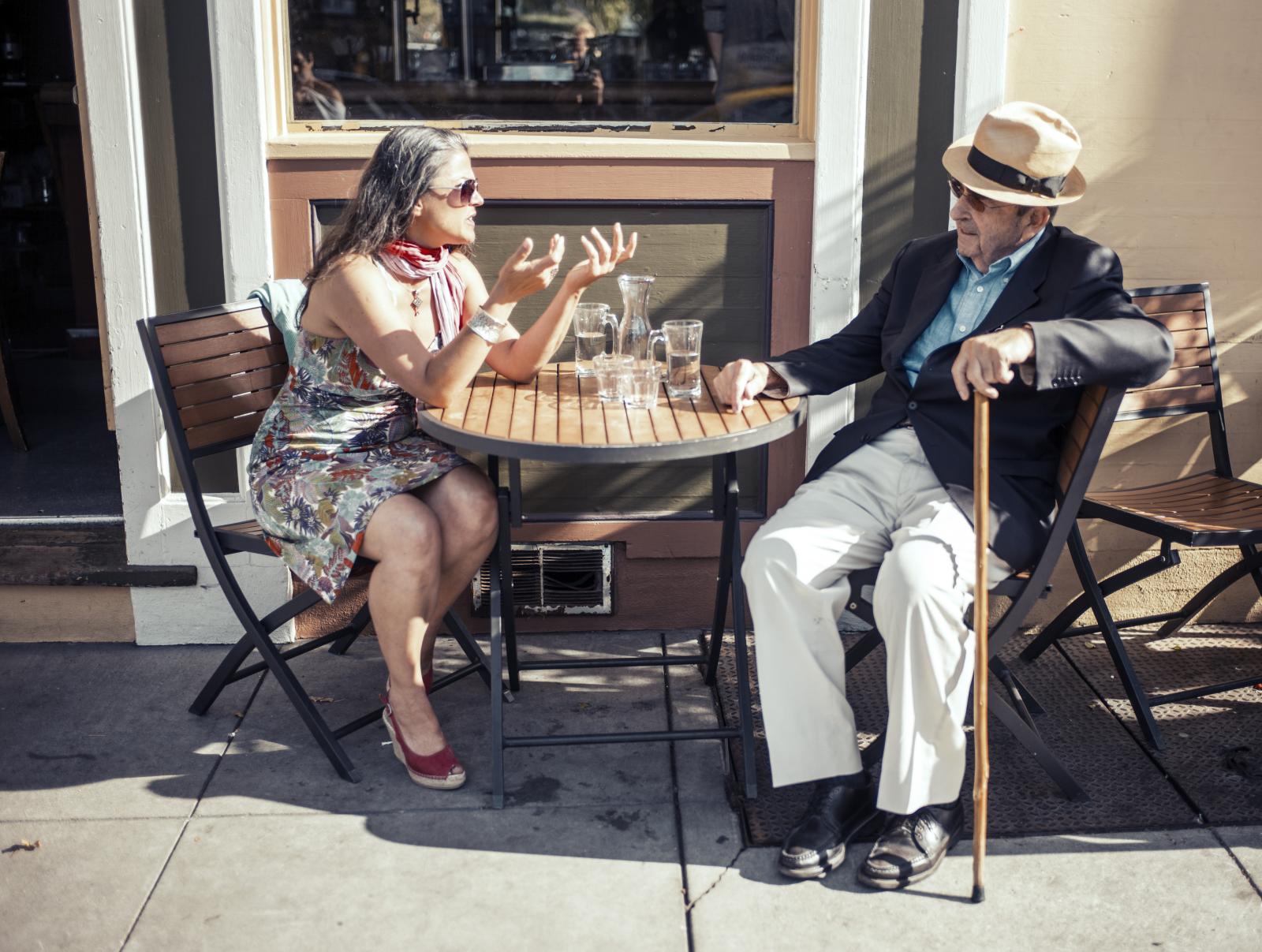
North Beach, located between Chinatown and Telegraph Hill, is San Francisco’s traditionally Italian-American neighbourhood and is famous for its cafés, restaurants, bakeries and nightlife.
It also has a strong literary history, with the City Lights Bookstore being located here and the Jack Kerouac Alley, adjacent to the bookshop, containing several pavement plaques dedicated to some of America’s most influential writers and poets.
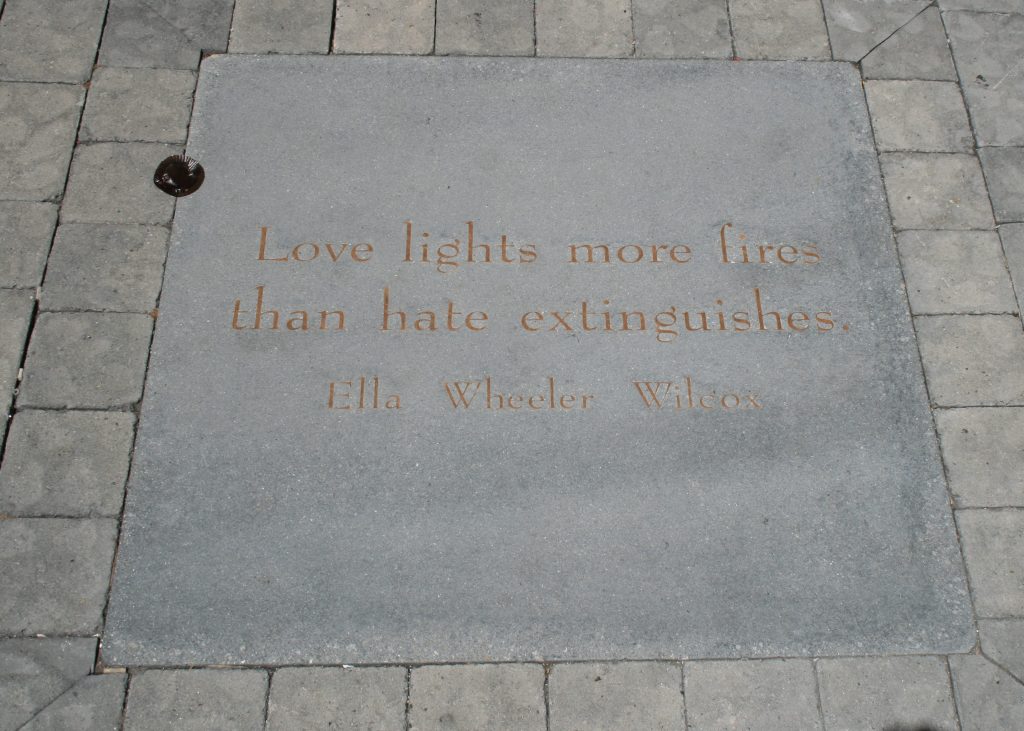
(Attribution: DavesTravelWorld.com)
Another notable landmark within North Beach is Washington Square – a historic green space.
The Castro
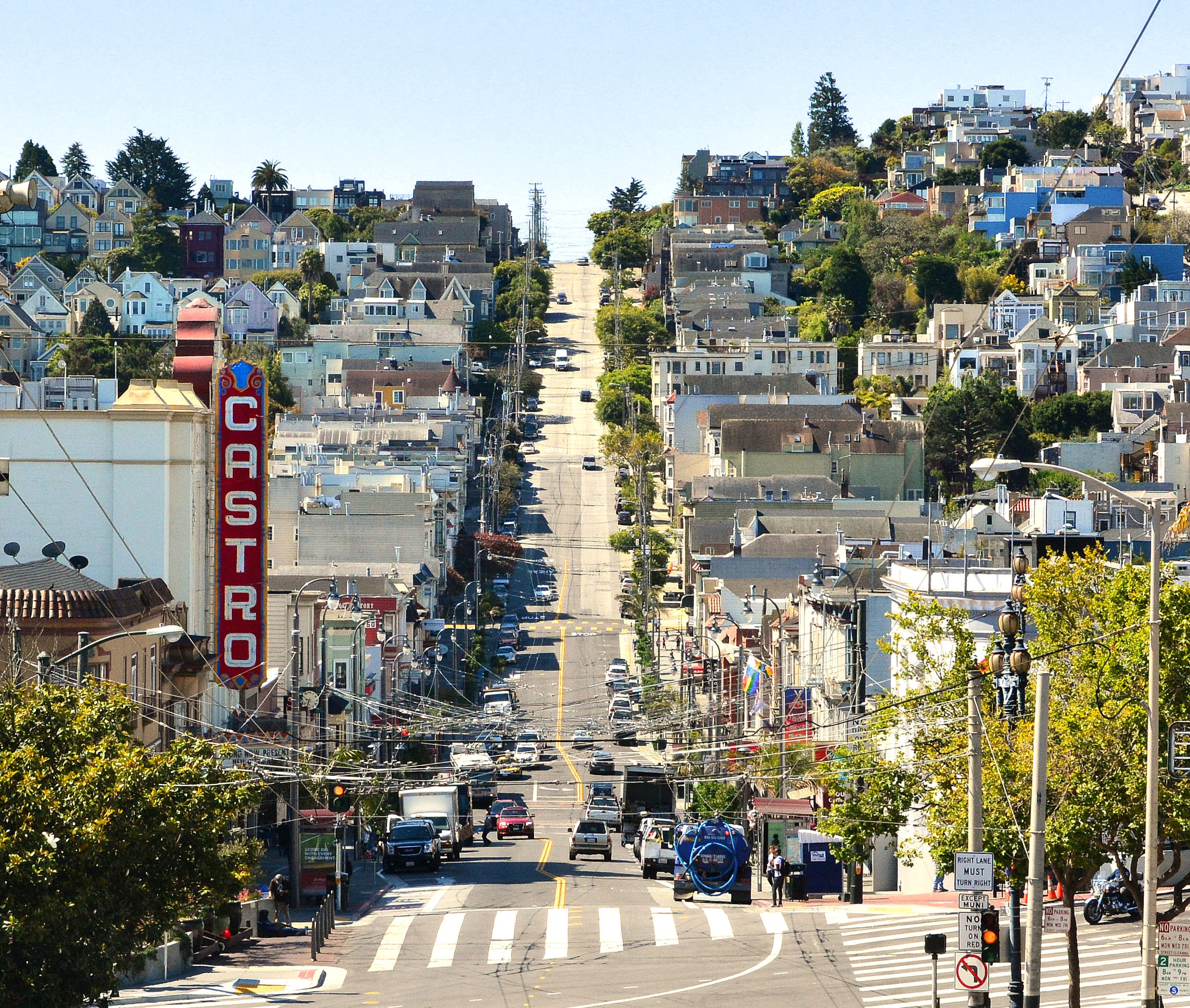
(Attribution: Mike McBey, CC BY 2.0, via Wikimedia Commons)
The Castro is one of San Francisco’s best-known neighbourhoods and has played a major role in LGBTQ+ history and culture. Visitors can explore colourful streets, historic theatres, cafés, shops and public art. It’s also home to the GLBT Historical Society Museum.
Find out more on a walking tour of the Castro
The Mission District
Mission District, to the east of the Castro, is also worth visiting as it is one of the city’s most culturally diverse neighbourhoods. The area has strong Latino roots, numerous restaurants, cafés, bars and shops and also contains some of the City’s most impressive public art. The historic Mission Dolores landmark and Dolores Park are also in this neighbourhood.
Find out more on a Food Tasting Tour in the Mission District
Mission District Murals
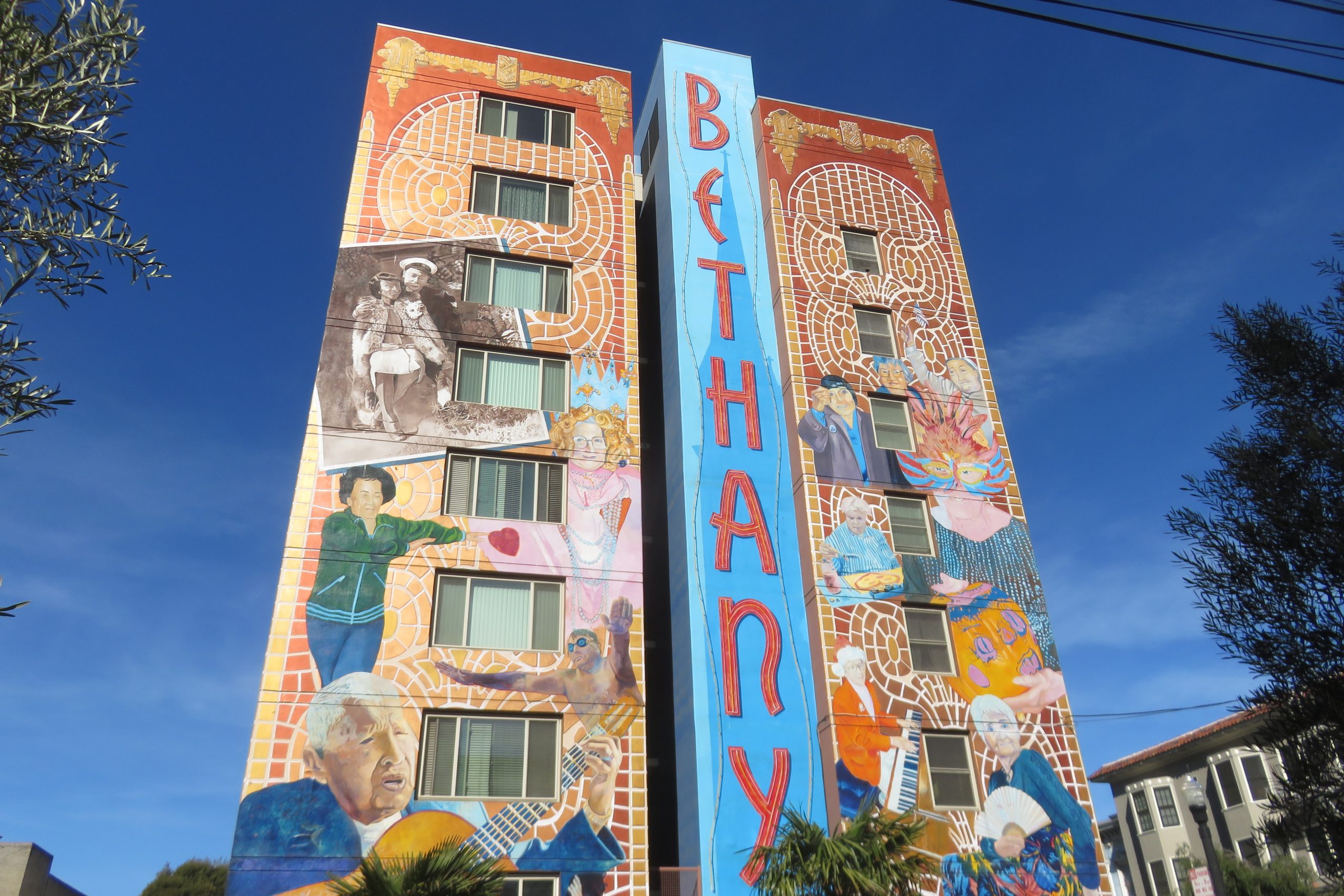
(Attribution: Fabrice Florin, CC BY-SA 2.0, via Wikimedia Commons)
In the area around Clarion Alley and Balmy Alley, colourful murals cover the walls. These depict political, social and cultural imagery. The content of the murals changes constantly over time, so the experience of seeing them is partly about discovering what the area’s artists and community groups currently view as being important to them.
Find out more about the Balmy Alley Murals
Mission Dolores Basilica & Mission
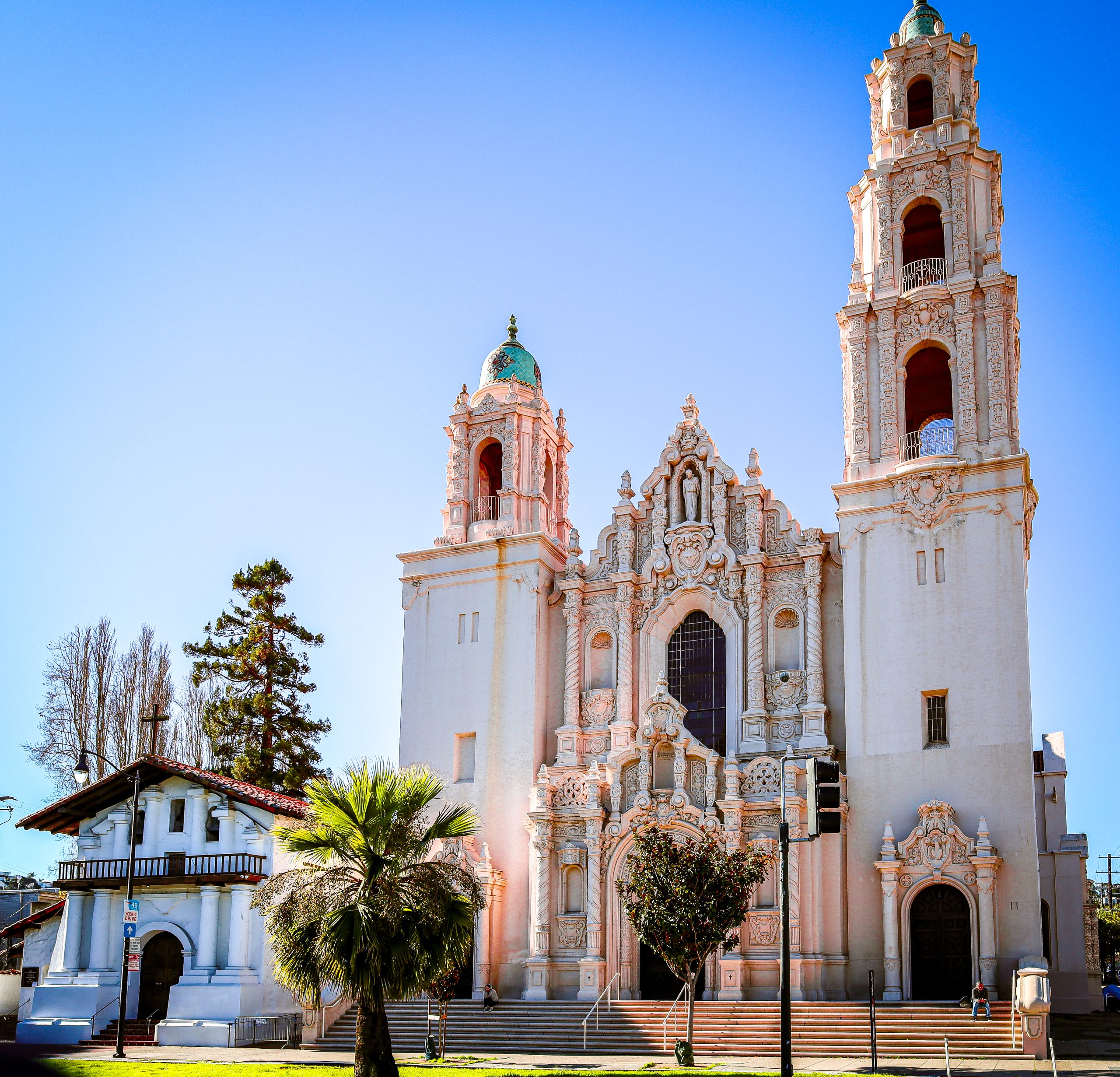
(Attribution: Ligocsicnarf89, CC BY 4.0, via Wikimedia Commons)
Mission Dolores is San Francisco’s oldest surviving building and one of the city’s most important historic sites. Founded in 1776, the mission provides insight into the city’s Spanish and Mexican-era history. The adjacent basilica and historic cemetery offer a striking contrast to the modern neighbourhood surrounding them.
Find out more about the Mission Dolores Basilica and Mission
Dolores Park

(Attribution: Mélanie Lacroix, CC0, via Wikimedia Commons)
Mission Dolores Park is one of the City’s most popular outdoor gathering places. Its hillside lawns provide spectacular views across the city skyline, while the park attracts picnickers, families, sports players and local residents. It’s an excellent place to experience San Francisco’s everyday atmosphere rather than simply visiting a formal tourist attraction.
Museums
San Francisco Museum of Modern Art (SFMOMA)
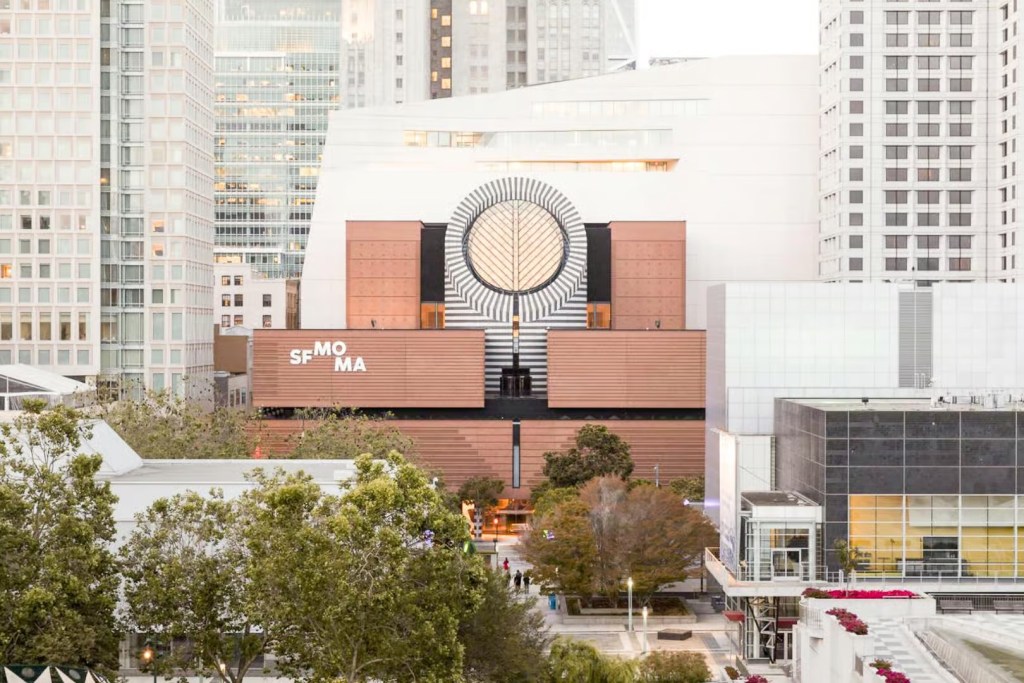
(Attribution: GetYourGuide.com)
SFMOMA is one of America’s major museums of modern and contemporary art. Its collection encompasses painting, sculpture, photography, design and media art. Highlights include works by internationally recognised artists, while regularly changing exhibitions provide fresh reasons to visit.
Find out more about the SFMOMA
Legion of Honor – Part of the Fine Arts Museums of San Francisco (FAMSF)
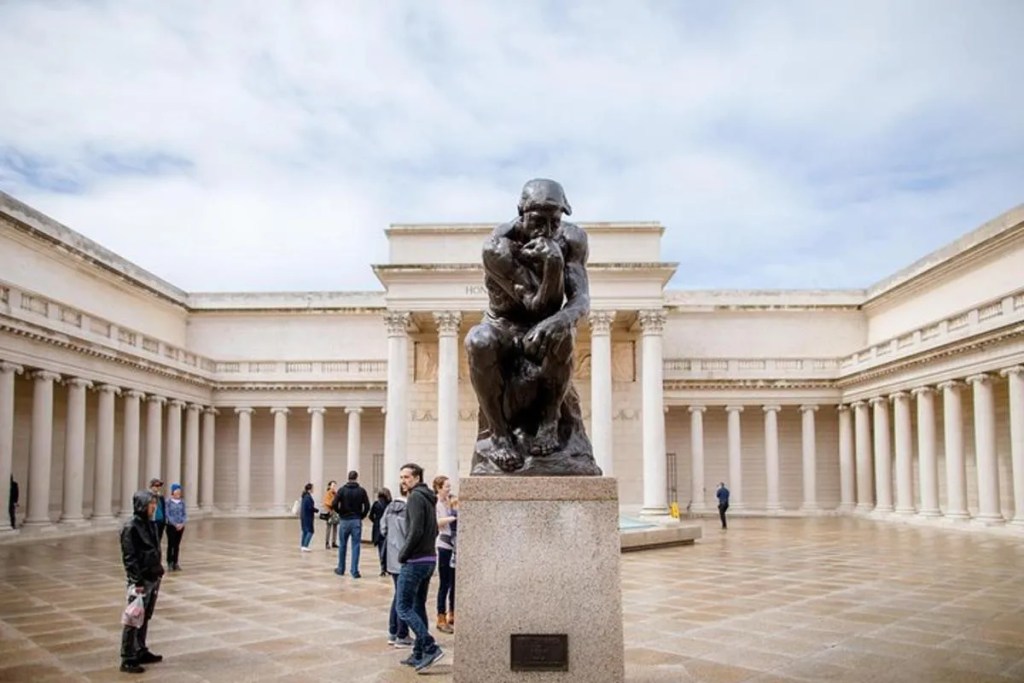
(Attribution: Booking.com)
The Legion of Honor is one half of the FAMSF and occupies an impressive neoclassical building overlooking Lincoln Park. Its collections span European painting, sculpture, decorative arts and antiquities. Visitors can also see Rodin sculptures and enjoy views towards the Golden Gate Bridge and Pacific Ocean. The other part of the FAMSF is the de Young Museum in Golden Gate Park.
Exploratorium

(Attribution: GetYourGuide.com)
The Exploratorium is an innovative museum where science, art and human perception come together through hundreds of interactive exhibits. Rather than simply looking at displays, visitors are encouraged to experiment, touch, manipulate and investigate.
Find out more about the Exploratorium
Walt Disney Family Museum
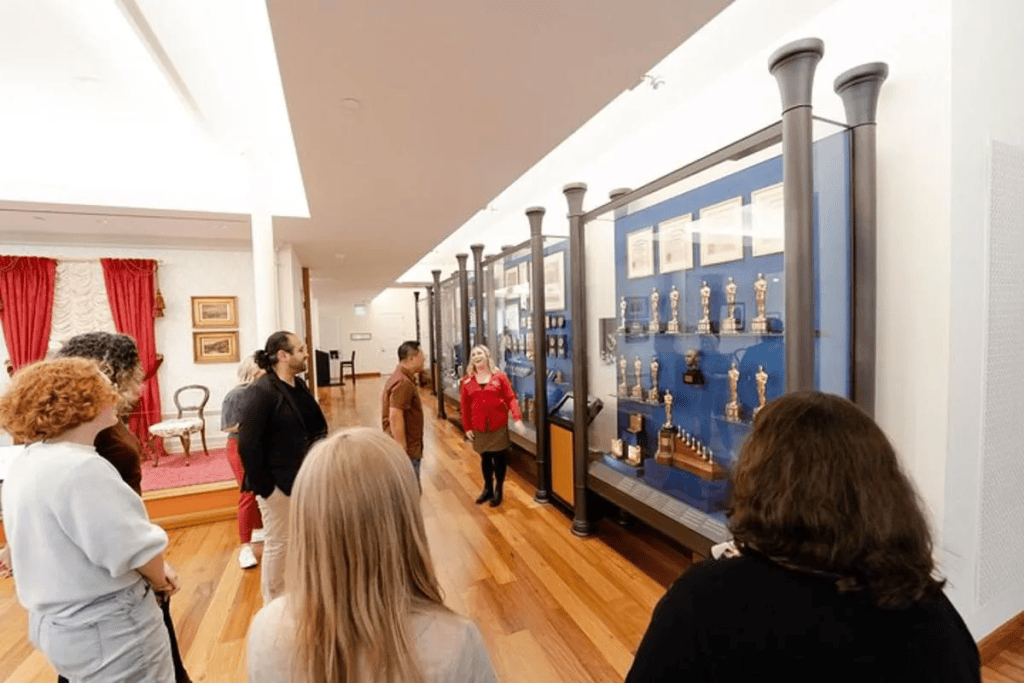
(Attribution: Booking.com)
The Walt Disney Family Museum in the Presidio explores the life and achievements of Walt Disney through original drawings, animation, films, photographs and interactive exhibits. Particularly impressive is a detailed model of Disneyland as it appeared when it opened.
Find out more about the Walt Disney Family Museum
The GLBT Historical Society Museum, Castro
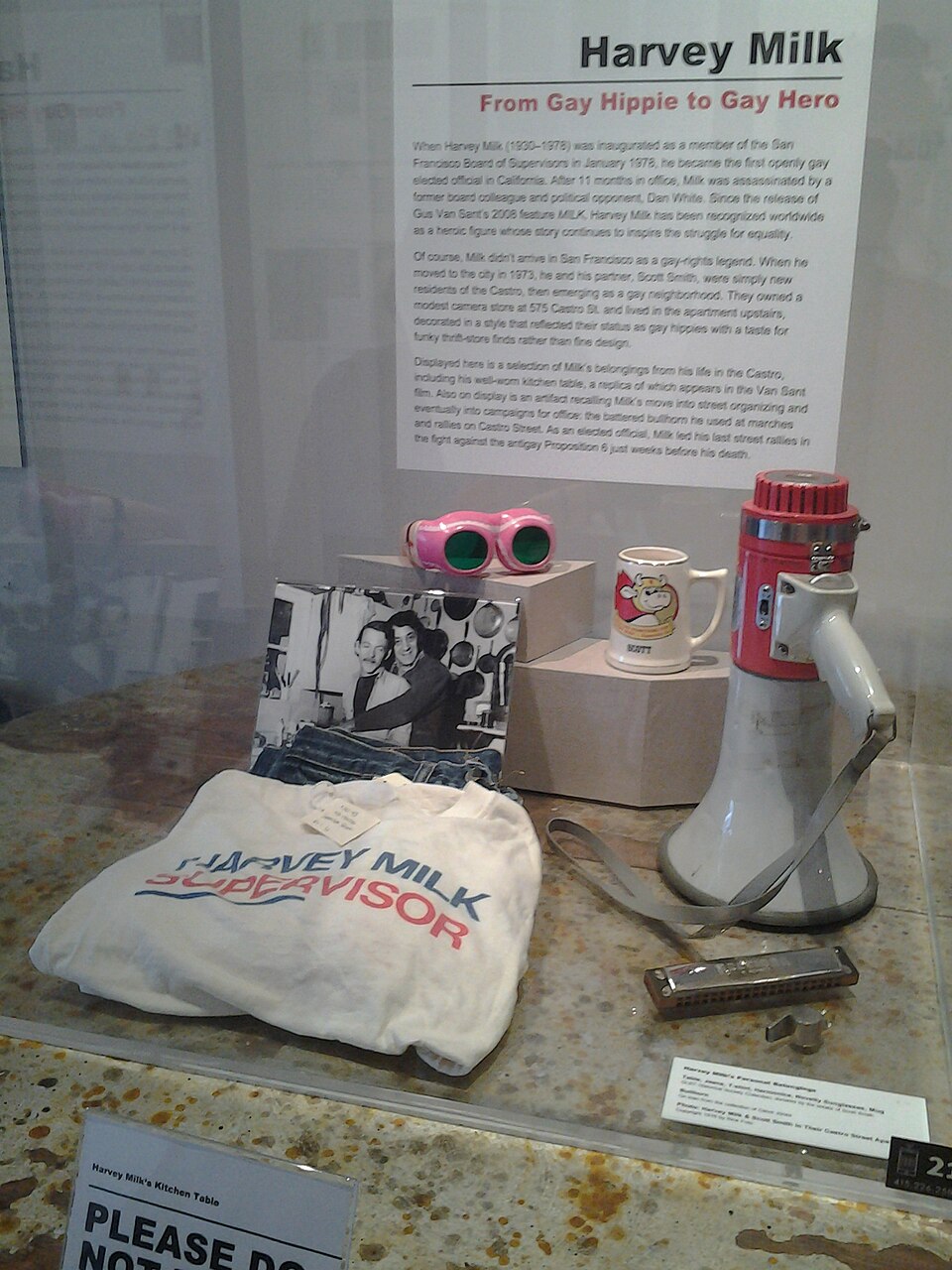
(Attribution: Gerard Koskovich, CC BY 3.0 US, via Wikimedia Commons)
The GLBT Historical Society Museum documents LGBTQ+ history, culture and community life, with particular attention to San Francisco’s (and particularly the Castro neighbourhood’s) important role in that history. Exhibitions draw on photographs, personal objects, documents and other archival material. It provides valuable historical context for understanding the development of LGBTQ+ communities and activism in San Francisco.
Notable Public Buildings
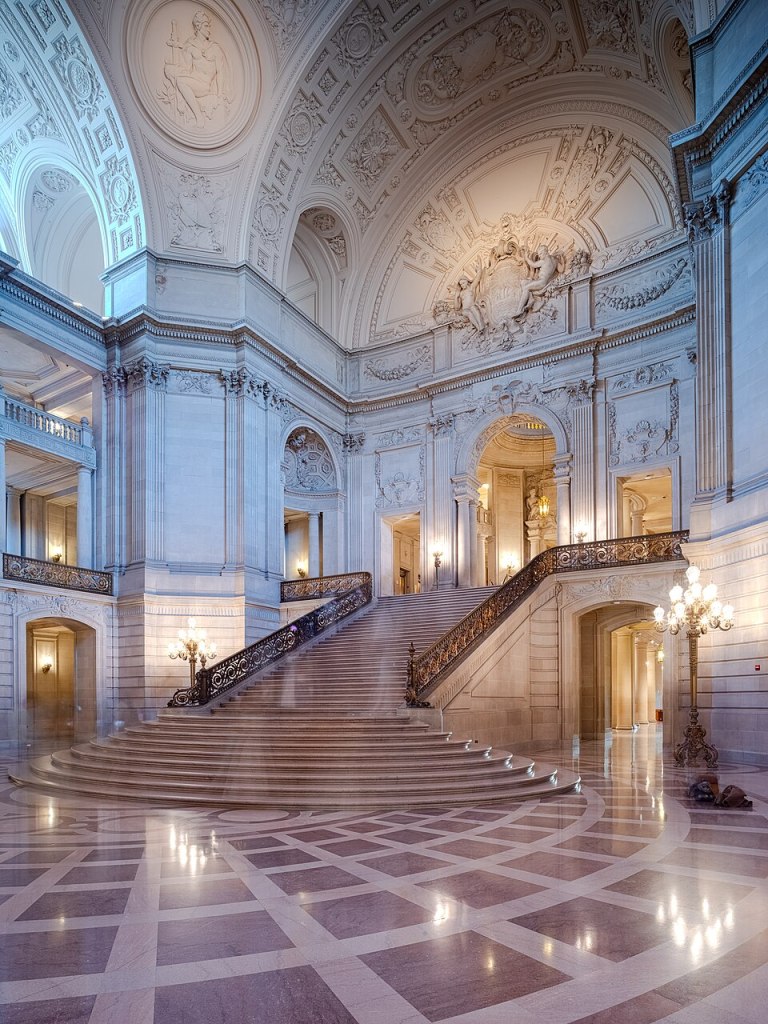
San Francisco City Hall
(Attribution: Matt Joseph, CC BY-SA 4.0, via Wikimedia Commons)
Also known as the People’s Palace, San Francisco City Hall is a stunning landmark. It is the city’s seat of government, and it makes an instant impression with its enormous gilded dome and Beaux-Arts architecture. The interior contains monumental staircases, columns and civic spaces. White marble covers every floor, adding to its palatial charm.
Grace Cathedral

(Attribution: GetYourGuide.com)
Grace Cathedral is an impressive Gothic-style Episcopal cathedral situated atop Nob Hill. Its stained glass, labyrinths, artwork and architecture make it worth visiting even for those who are not religious. The cathedral also has an important connection with San Francisco’s history and provides a peaceful interior escape from the busy streets.
Find out more about visiting Grace Cathedral
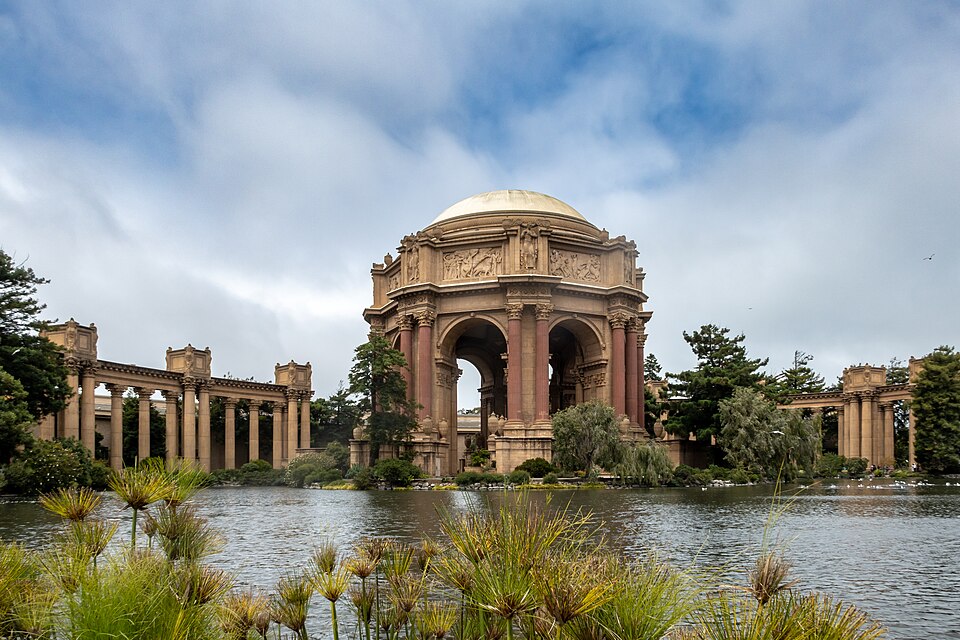
The Palace of Fine Arts Theatre
(Attribution: Dietmar Rabich / Wikimedia Commons, “San Francisco (CA, USA), Palace of Fine Arts — 2022 — 0916” / CC BY-SA 4.0)
The Palace of Fine Arts Theater, originally built for the 1915 Panama-Pacific International Exposition, resembles a Roman ruin, with its weather-worn exterior and artificial lagoon. Today, it provides the perfect setting for an Instagram photo and is a popular live performance venue.
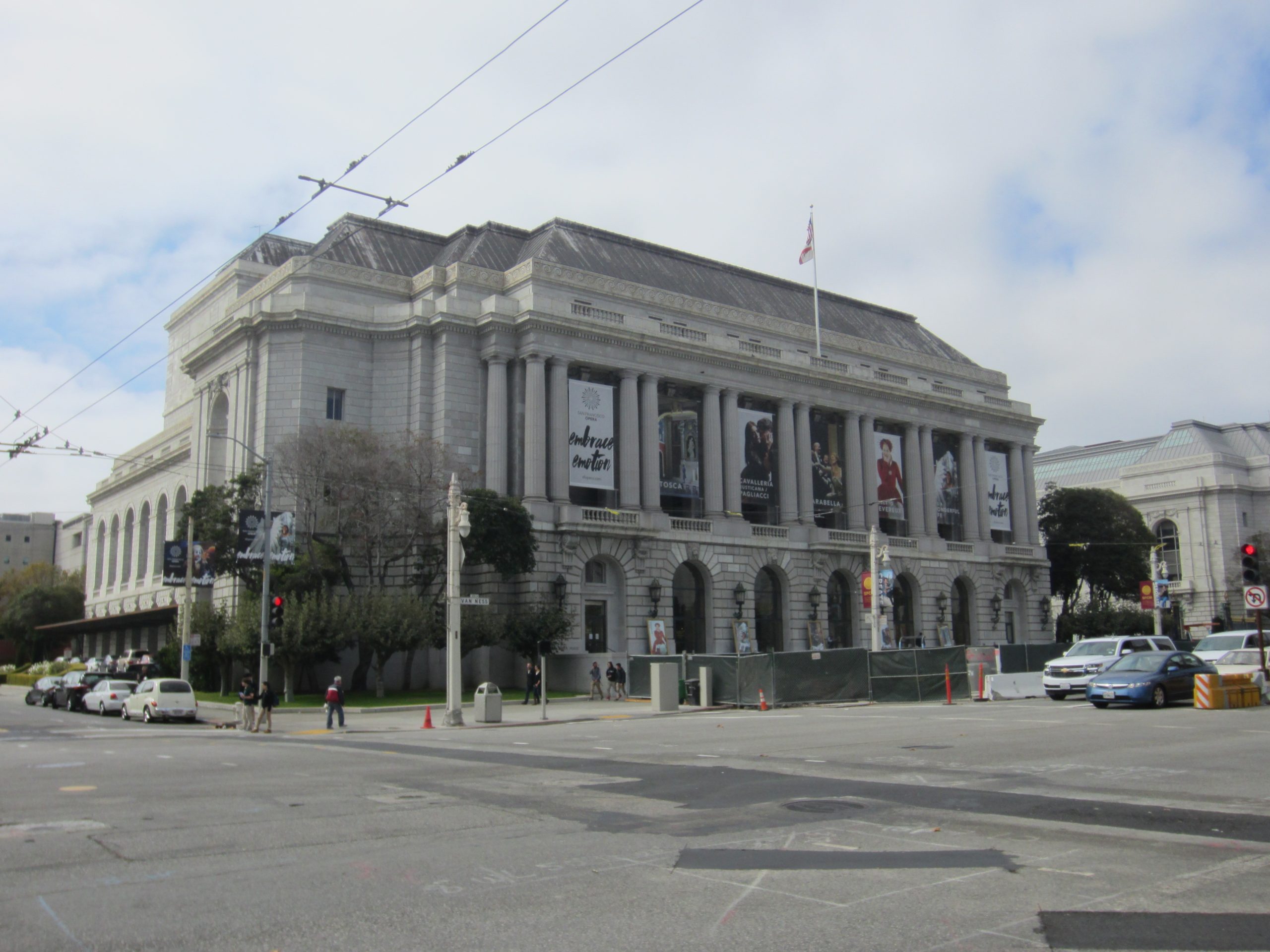
War Memorial Opera House
(Attribution: Another Believer, CC BY-SA 4.0, via Wikimedia Commons)
The War Memorial Opera House is home to the San Francisco Opera. Its grand interior reflects the architectural ambition of the Civic Center. Even if you don’t attend a performance, the building contributes to the area’s impressive collection of cultural and architectural landmarks.
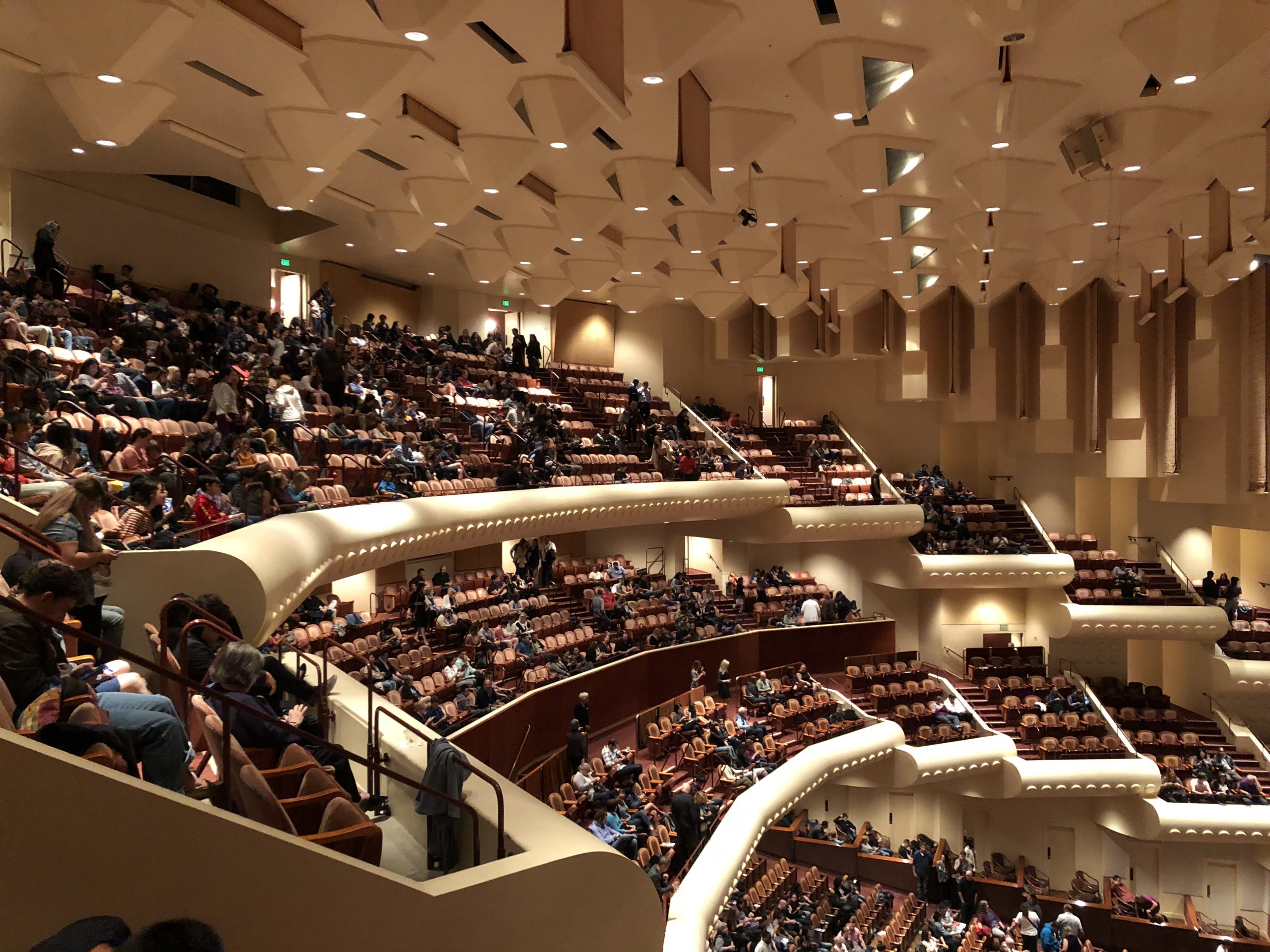
Davies Symphony Hall
(Attribution: FASTILY, CC BY-SA 4.0, via Wikimedia Commons)
The Davies Symphony Hall is home to the San Francisco Symphony and is one of the city’s principal classical-music venues. Its modern architecture and excellent acoustics make it an important part of San Francisco’s cultural scene.
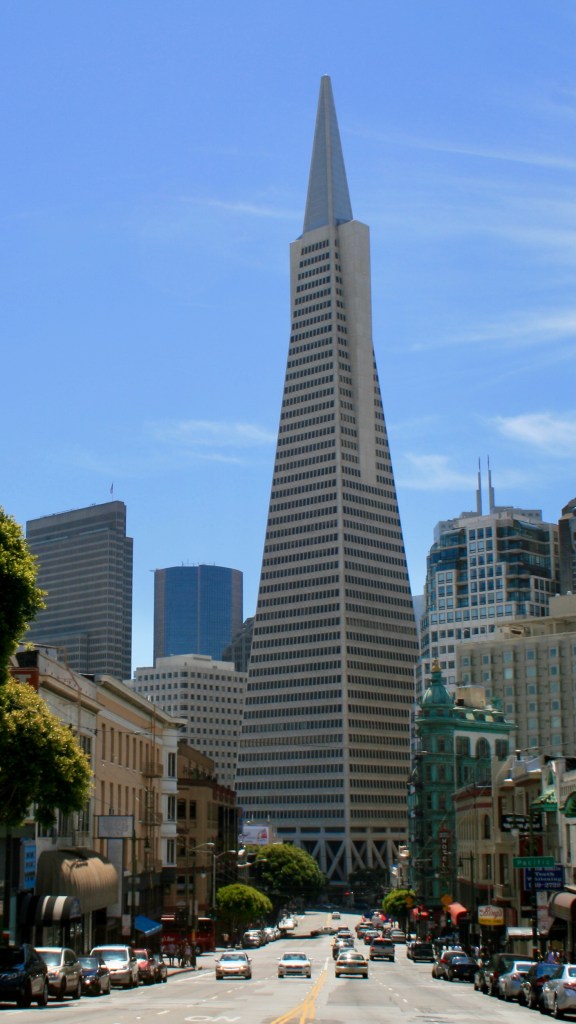
The Transamerica Pyramid Building
(Attribution: DavesTravelWorld.com)
The Transamerica Pyramid building in North Beach dominates the City’s skyline. At 853 feet, it was, at the time of its construction in 1972, the tallest building in the City. It still remains one of the most structurally distinctive buildings in the United States. Today, the building is the centrepiece of the larger Transamerica Pyramid Center, a redeveloped campus that includes ground-level public amenities and a small urban redwood park.
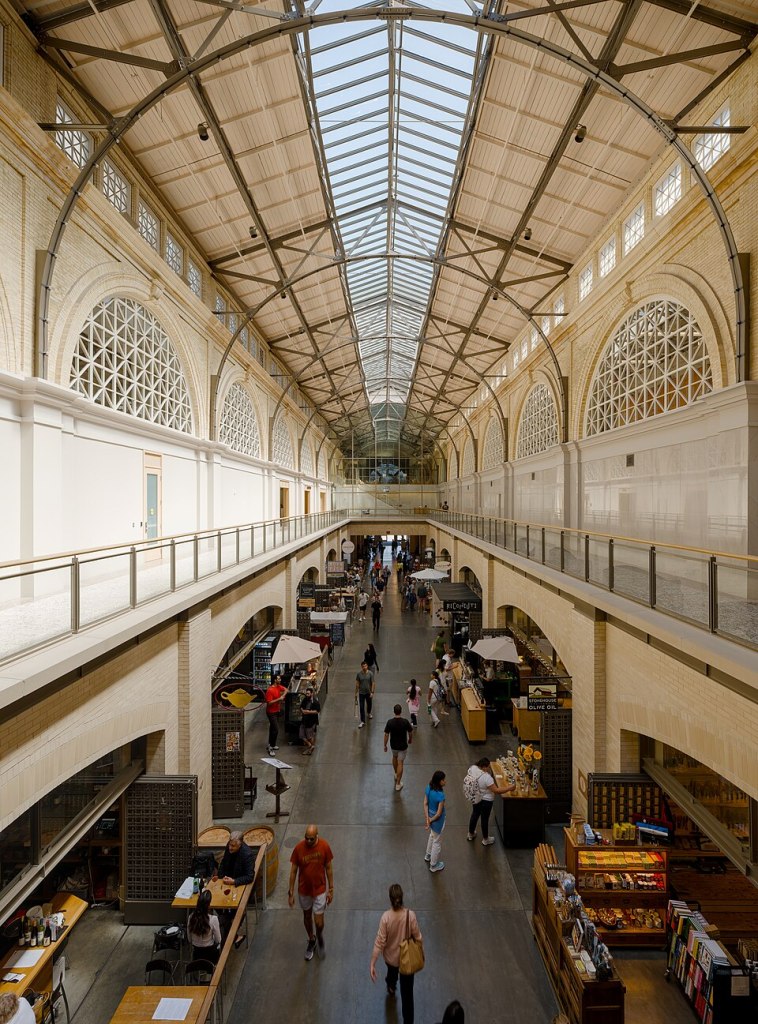
The San Francisco Ferry Building
(Attribution: Daniel Lu (User:dllu), CC BY-SA 4.0, via Wikimedia Commons)
This building, on the waterfront, is a San Francisco landmark. It was designed in the 1890s and celebrates Beaux-Arts architecture. In the morning on Tuesdays, Thursdays and Saturdays, it hosts the San Francisco Ferry Plaza Farmers Market and also boasts a range of other local retailers and eateries.
Amusement Parks Outside San Francisco
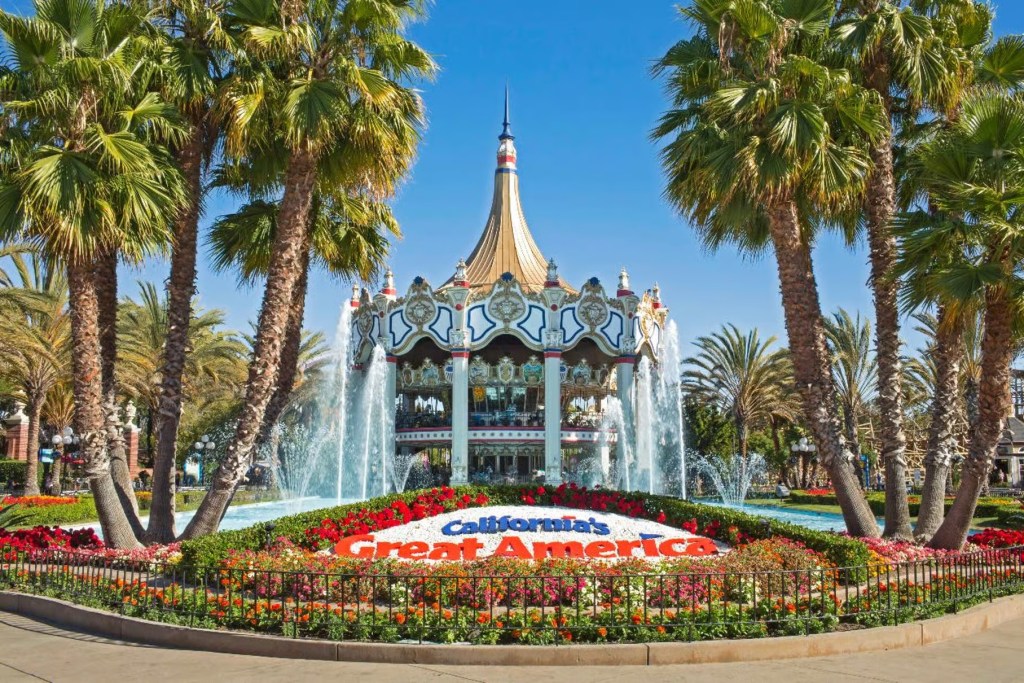
California’s Great America
(Attribution: GetYourGuide.com)
California’s Great America is a major amusement park located in Santa Clara, roughly an hour’s drive south of central San Francisco. It features roller coasters, thrill rides, family attractions and seasonal entertainment. Given its distance from the city, it is best suited as a dedicated day trip, rather than as part of a San Francisco sightseeing itinerary.
Find out more about California.s Great America
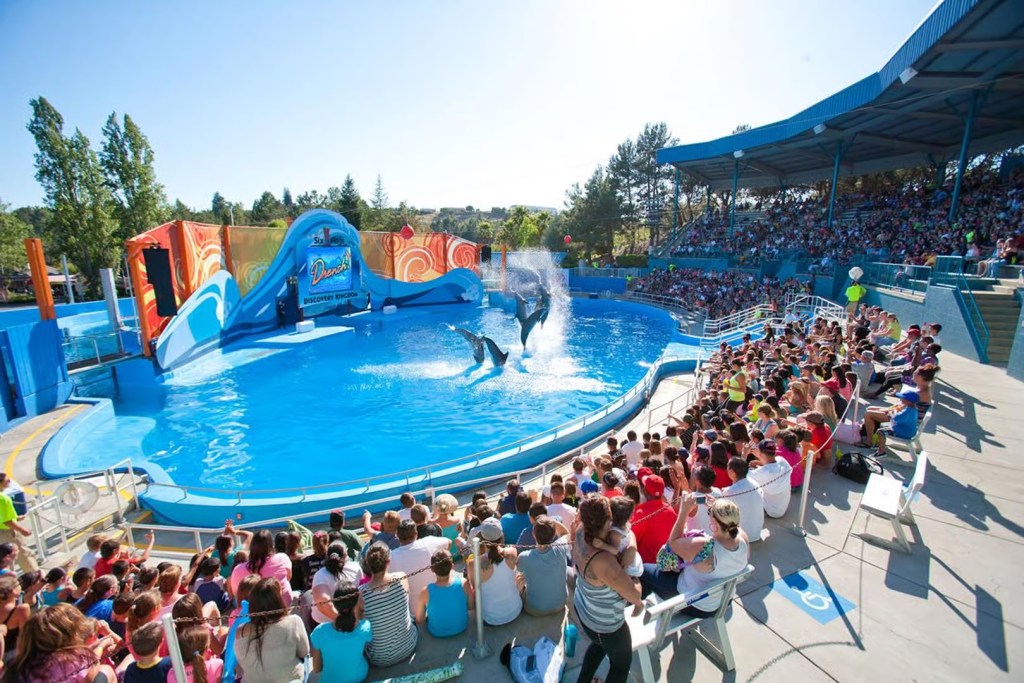
Six Flags Discovery Kingdom
(Attribution: GetYourGuide.com)
Six Flags Discovery Kingdom, located northeast of San Francisco in Vallejo, combines a traditional theme park with animal attractions. It features roller coasters and other rides alongside opportunities to see marine and other wildlife. Again, it is best treated as another possible day trip from the City.
Find out more about Six Flags Discovery Kingdom
Other Nearby Attractions
Muir Woods National Monument

Muir Woods, which was established as a national monument in 1908, is one of the easiest places near the city to experience an ancient redwood ecosystem. The monument site covers roughly 550 acres and contains enormous Sequoia sempervirens, redwood sorrel, Douglas fir, bay laurel, and a moss-covered forest floor. Many of the mature trees are hundreds of years old, creating a cool, dim environment shaped by coastal fog and abundant moisture.
It is located some 15 to 20 miles north of the city and can be reached by car in under an hour. If you are interested in visiting the Monument, the following may be of interest.
Find out about tours to the Muir Woods National Monument
Point Reyes National Seashore
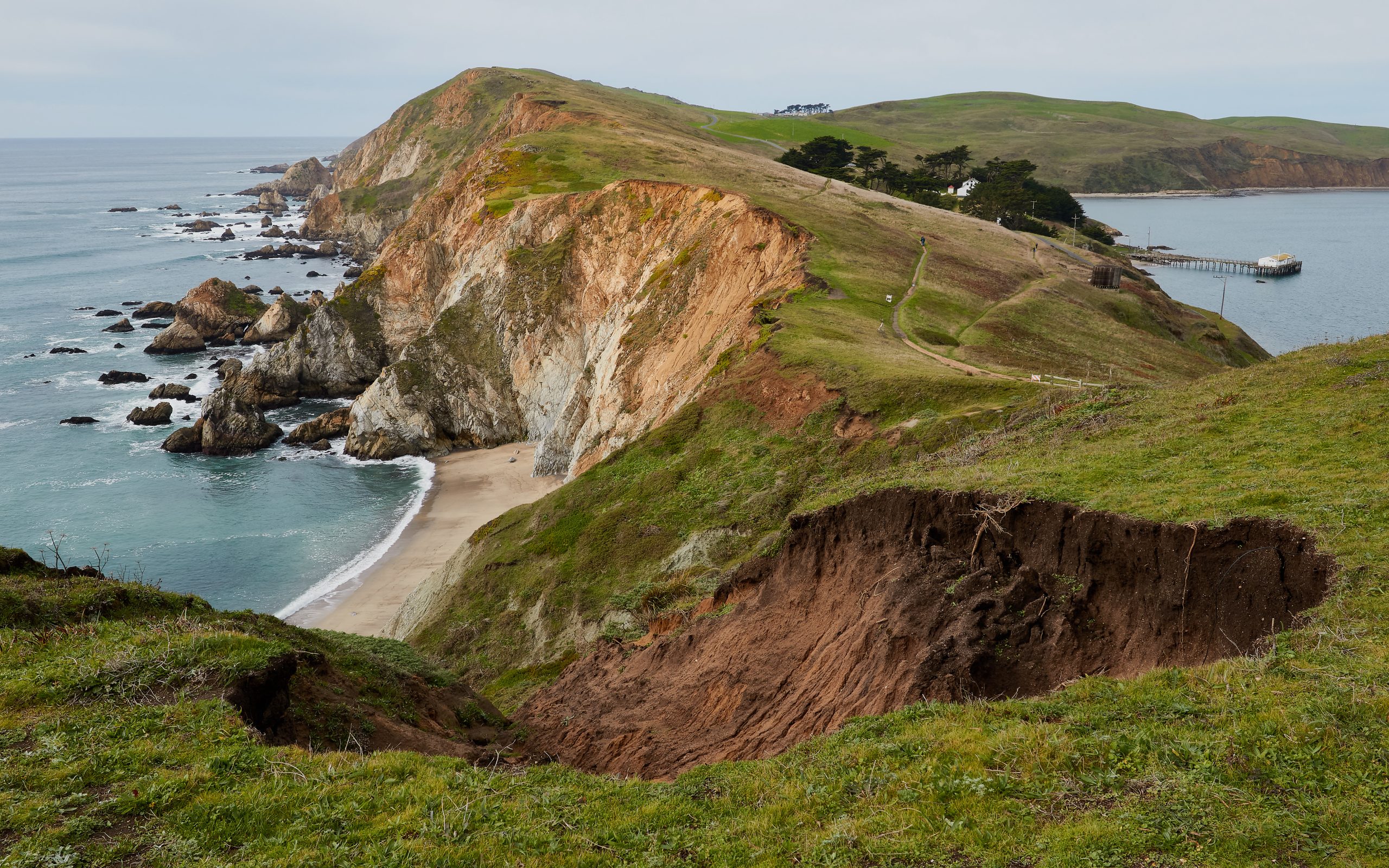
(Attribution: © Frank Schulenburg, CC BY-SA 4.0 via Wikimedia Commons)
The Point Reyes National Seashore area is about 45 miles north of the city and can be reached by road in about 90 minutes to 2 hours.
It consists of a remarkably diverse peninsula comprising beaches, windswept grasslands, forests, dunes, wetlands, and rocky headlands. The Seashore site, which lies along the San Andreas Fault, protects more than 71,000 acres of land and approximately 80 miles of undeveloped coastline. The peninsula area offers a distinctive geology and an abundant selection of wildlife, including tule elk, harbour seals, elephant seals, seabirds, and numerous coastal species.
A visit to the area is particularly rewarding for those interested in hiking, wildlife watching, photography, and coastal exploration.
Find out more about Point Reyes National Seashore
Attractions in the Wider Area
In addition to the above, within the wider California area there are several National Parks and other attractions that are well worth visiting. Many, though, are remote from San Francisco and merit a two or three day trip, rather than a day’s excursion.
These are as set out below.
Yosemite National Park

(Attribution: Vulturesong, CC0, via Wikimedia Commons)
Yosemite offers one of California’s most defining natural landscapes, centred on immense granite cliffs, glacial valleys, waterfalls, meadows, forests, and high Sierra wilderness.
Within its nearly 1,200 square miles lie iconic rock formations including the Half Dome and El Capitan, as well as Yosemite Falls, the Merced River, Tuolumne Meadows, and groves of giant sequoias. Elevations range from roughly 2,000 feet to more than 13,000 feet, producing dramatically different ecosystems. In Summary, the park offers everything from accessible valley walks to demanding wilderness routes.
Although the Park can technically be visited as a very long day trip, it is strongly recommended that this is viewed as a 2–3 day destination. The drive from the City alone typically takes around four hours, and Yosemite Valley, Tuolumne Meadows and the high country offer very different experiences.
Before setting out to visit Yosemite National Park, though, please be aware that as part of Trump’s America First initiative, non-US citizens are now required to pay a National Park non-resident entry ticket surcharge of US$100 per person.
Alternatively, and rather perversely, an annual international visitors pass can be purchased for $250, providing access for one car, including all passengers, to all US National Parks for a year.
Find out about accommodation near Yosemite National Park
Pinnacles National Park
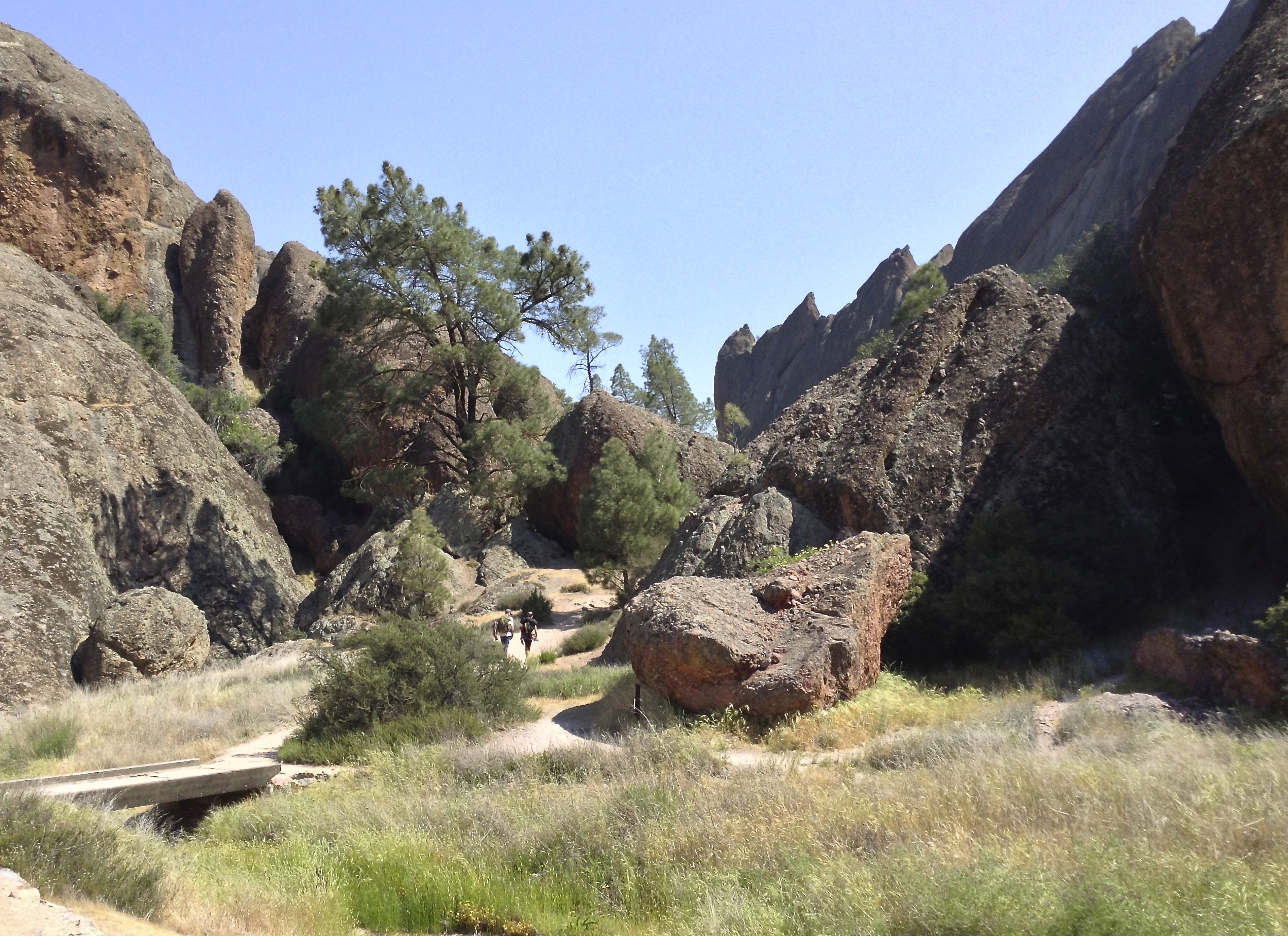
(Attribution: Joyce Cory, CC BY 2.0, via Wikimedia Commons)
Pinnacles National Park, which is around 120 miles and a 2.5 hour drive southeast of the City, offers a striking landscape created by ancient volcanic activity. Eroded rock formations, towering spires, cliffs, talus caves, and narrow canyons dominate the park.
Hiking trails through the Park pass through dramatic terrain, including the Balconies and Bear Gulch areas, and its unusual volcanic geology makes it very different from the granite landscapes of Yosemite or the redwood forests of the coast.
The park, which is best visited in the Spring and Fall, is especially attractive for those who enjoy hiking, climbing, geology, and wildlife observation.
In the case of the latter, it is notable for its California condor recovery program, with the park providing important habitat for these enormous birds.
Find out about accommodation near Pinnacles National Park
Lassen Volcanic National Park
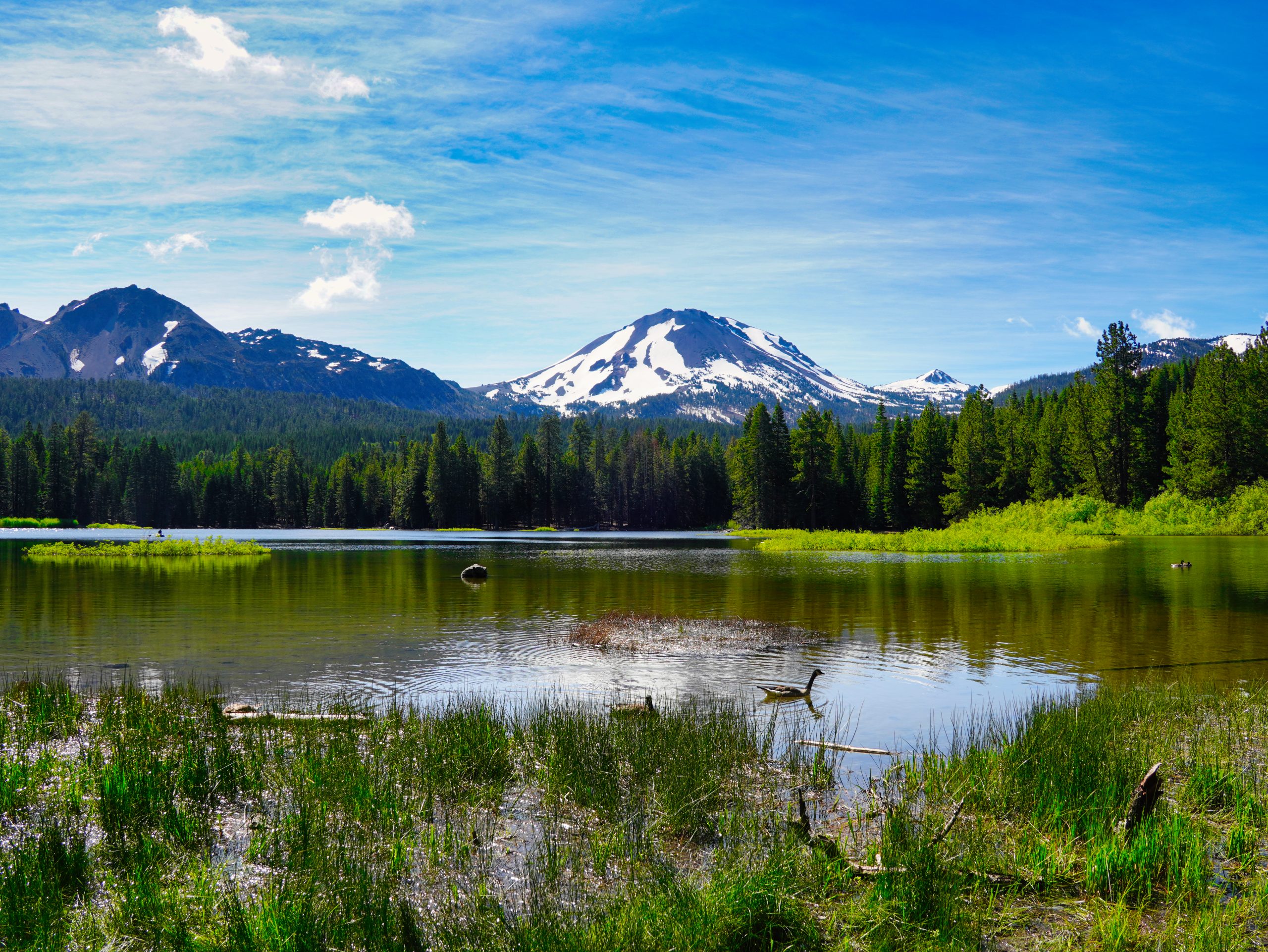
(Attribution: John Manard, CC BY-SA 2.0, via Wikimedia Commons)
Lassen Volcanic National Park, some 200 miles northeast of the city, showcases an unusually concentrated collection of volcanic landscapes.
The highest point in the park, Lassen Peak, is a massive volcanic dome that rises to 10,457 feet and dominates the area.
In addition, the park contains cinder cones, lava fields, volcanic craters, fumaroles, boiling springs, and other hydrothermal features, all of which demonstrate the region’s continuing geological activity.
These volcanic features are surrounded by forests, alpine meadows, lakes, and high-elevation landscapes.
A visit to Lassen, which is open all year, is especially suited to visitors who are interested in geology, mountain scenery, hiking, wildflowers, and less-developed wildernesses.
Find out about accommodation near Lassen Volcanic National Park
The Big Sur Coast

(Attribution: dconvertini, CC BY-SA 2.0, via Wikimedia Commons)
Driving Highway 1 along the Big Sur coast is one of California’s most dramatic natural landscape experiences.
The highlight of the drive lies at the point where the Santa Lucia Mountains rise steeply from the Pacific. Here, the rugged cliffs, rocky beaches, offshore rocks, forested canyons, waterfalls, and the winding coastal road create a landscape that changes constantly with weather and light.
The combination of mountains meeting ocean, wilderness, and dramatic coastal scenery makes Big Sur particularly distinctive.
Big Sur is located 2.5 to 3.5 hours’ drive south of San Francisco and is best visited as part of a two or three day trip.
Such a trip should combine visits to Bixby Bridge, the numerous coastal viewpoints, Pfeiffer Big Sur, Julia Pfeiffer Burns State Park, McWay Falls and parts of the Los Padres National Forest.
The best time to visit Big Sur, to both avoid poor weather conditions and crowds, is generally between April and June and then in September and October.
Be aware, though, driving conditions on Highway 1 can change from day to day, so check the road status before setting out.
Find out about accommodation in the vicinity of Big Sur
Lake Tahoe
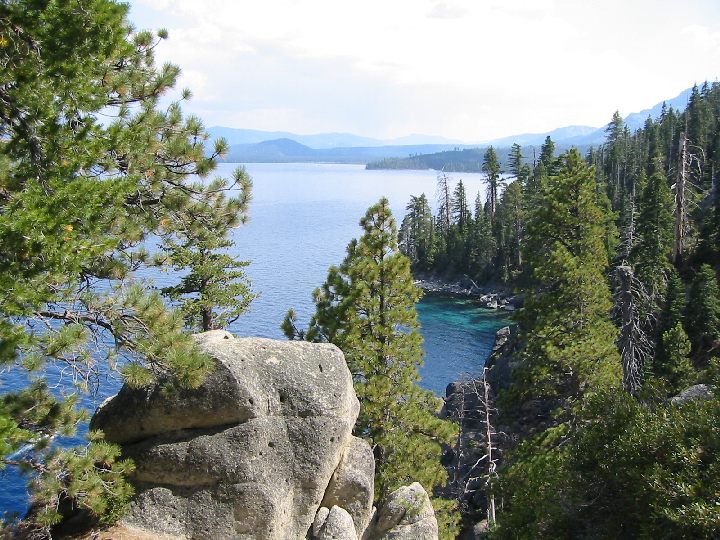
(Attribution: Maksim, CC BY-SA 3.0, via Wikimedia Commons)
Lake Tahoe, 200 miles east-northeast of San Francisco, is one of the great alpine landscapes of the Sierra Nevada. It is renowned for its exceptionally clear blue water, forested mountains, granite peaks, and dramatic shoreline.
At an elevation of 6,225 feet, the lake is surrounded by beaches, rocky coves, pine and fir forests, and an extensive mountain wilderness. The surrounding public lands provide opportunities for hiking, cycling, boating, kayaking, wildlife watching, and scenic drives.
The attraction of Tahoe as a destination changes dramatically by season. Summer brings hiking and waterborne activities, while winter transforms the surrounding mountains into a major snow-sports destination.
Conclusion
To sum up, San Francisco is one of those cities that’s difficult to describe in a few words.
Yes, the city has its top five attractions that everyone wants to see:
- Lombard Street; and
But the longer you spend in the city, the more you’ll discover that there’s so much more to it than just its famous landmarks.
Part of the fun of San Francisco is simply wandering around the city and seeing where the streets take you.
One minute you can be:
- admiring a spectacular view across the bay; and
the next you can be:
- exploring a colourful neighbourhood;
- discovering an interesting museum; or
- stopping for coffee in one of the city’s many cafés.
You certainly won’t see everything on a single visit, and to be honest, that’s part of San Francisco’s appeal. There’s always another neighbourhood to explore, another viewpoint to discover and another reason to cross the Golden Gate Bridge.
Whether this is your first visit, or you are returning yet again, by all means take the time to enjoy the sights. Also, though, leave a little room in your schedule for the unexpected.
It may well be an unplanned moment that you remember most when you look back on your time in San Francisco.
Enjoy your visit
Further Useful Information
For information regarding the best places to stay in San Francisco, please see my ‘Where to Stay in San Francisco’ page.
Also, for more detailed guides to Fisherman’s Wharf, the Golden Gate Bridge and the Haight-Ashbury area, please see below:
Please Provide Feedback
Hi, thanks for reading this post.
I would really appreciate it if you could please provide some feedback on your reading experience. It will allow me to further improve my offering.


Tags:

,_Coit_Tower_--_2022_--_3082.jpg)

_-_DSC00169.JPG)

.jpg)


.jpg)


,_Palace_of_Fine_Arts_--_2022_--_0916.jpg)


