
Disclaimer: Some of the links within this post are affiliate links. This means if you click them and make a purchase, I might earn a small commission at no additional cost to you. For further information, please see our privacy policy and cookie policy. In addition, if you wish to ensure that your personal information is not passed on to third party advertisers you can request that via our Do Not Sell or Share My Personal Information page.
Copenhagen Walking Tour Map: A Self-Guided Route Map to the City’s Top Attractions
Copenhagen is one of the easiest European capitals to explore on foot. The city centre is relatively compact, much of it is pedestrianised, and many of Copenhagen’s best-known attractions can be visited on the same walking route.
This self-guided Copenhagen walking tour follows a route I took during my own visit to the city.
It starts at Copenhagen Central Station and takes you past Tivoli Gardens, Copenhagen City Hall, Strøget, Amagertorv, Kongens Nytorv, Nyhavn, Amalienborg Palace, Frederik’s Church, Copenhagen Harbour, the Little Mermaid and the Kastellet.
The route is particularly useful if you only have one day in Copenhagen and want to see many of the city’s major sights without relying heavily on public transport.
I originally walked this route as part of a longer overland journey from London through Scandinavia towards the Arctic Circle.
My Copenhagen visit was therefore relatively short, but it gave me a good opportunity to explore the central part of the city on foot.
Copenhagen Walking Tour: Route Overview
The route at a glance
The Start: Copenhagen Central Station
The Finish: Østerport Station
Main sights:
4. Strøget
5. Amagertorv
7. Nyhavn
10. Frederik’s Church, the Marble Church
13. Kastellet
The route combines Copenhagen’s historic centre, shopping streets, harbourfront, royal buildings and some of the city’s best-known tourist attractions.
Copenhagen Walking Route Map

If you want a PDF of the Copenhagen Walking Map, it can be obtained below for the minimal cost of US $0.99.
Is Copenhagen a Good City for Walking?
Yes.
Copenhagen is particularly well suited to exploring on foot because the central area is relatively compact and flat. There are also extensive pedestrianised areas, attractive public spaces and plenty of cafés where you can stop for a coffee or something to eat.
You do not need to visit every attraction on this route. If you have limited time, the route can be shortened by using public transport between sections.
If you have a full day available, however, walking gives you a better opportunity to experience the city rather than simply moving between individual attractions.
Featured Guide
1. Start at Copenhagen Central Station
I recommend starting this walking tour at Copenhagen Central Station.
This is particularly convenient if you are arriving in Copenhagen by train or staying near the station.
It also makes sense if Copenhagen is part of a wider Scandinavian rail journey.
During my own trip, Copenhagen was one stage of an overland journey from London towards Sweden and eventually the Arctic Circle. In my case, I arrived the previous evening by train from Hamburg. Highlights of the train journey from Hamburg to Copenhagen are set out in the post below.
From the station, the first major attraction is Tivoli Gardens.
2. Tivoli Gardens
Tivoli Gardens is one of Copenhagen’s most famous attractions and occupies an unusual position right in the centre of the city.
I first saw Tivoli Gardens during an evening stroll after arriving in Copenhagen.
At night, the amusement park had a completely different atmosphere from that of the following morning.

When I first saw it, the image was of lights, crowds and a nostalgic atmosphere of times gone by. All of which made a strong impression on me, bringing back childhood memories of a now long-gone, similar experience in my home city of London.
In the cold light of day, that magic somewhat evaporates
Nonetheless, Tivoli Gardens is still worth considering at any time of day, even if you are not particularly interested in amusement parks. Its central location makes it an easy addition to a Copenhagen sightseeing itinerary.
Should you visit Tivoli Gardens?
If you enjoy amusement parks, gardens, historic attractions or evening entertainment, Tivoli is worth considering.
If your priority is seeing as many Copenhagen landmarks as possible in one day, however, you may prefer to admire the entrance and continue with the walking route.
Want to visit Tivoli Gardens?
Check current opening information and ticket options before travelling.
Find out more about Tivoli Gardens
3. Copenhagen City Hall
From Tivoli Gardens, walk towards Copenhagen City Hall and City Hall Square.
Copenhagen City Hall was built between 1892 and 1905 and is a notable example of the National Romantic architectural style.
The building has an elaborate exterior and is one of the most recognisable buildings in central Copenhagen.
The square in front of the building also provides a useful orientation point before continuing towards the pedestrianised centre of the city.

4. Strøget: Copenhagen’s Main Shopping Street
From City Hall Square, continue along Strøget, Copenhagen’s famous pedestrianised shopping street.
Strøget is one of the main routes through the central shopping district.
My own impression was that the section closest to City Hall felt more run-down and tourist-oriented than I had expected. However, as you continue towards Amagertorv, the character of the shops changes considerably.
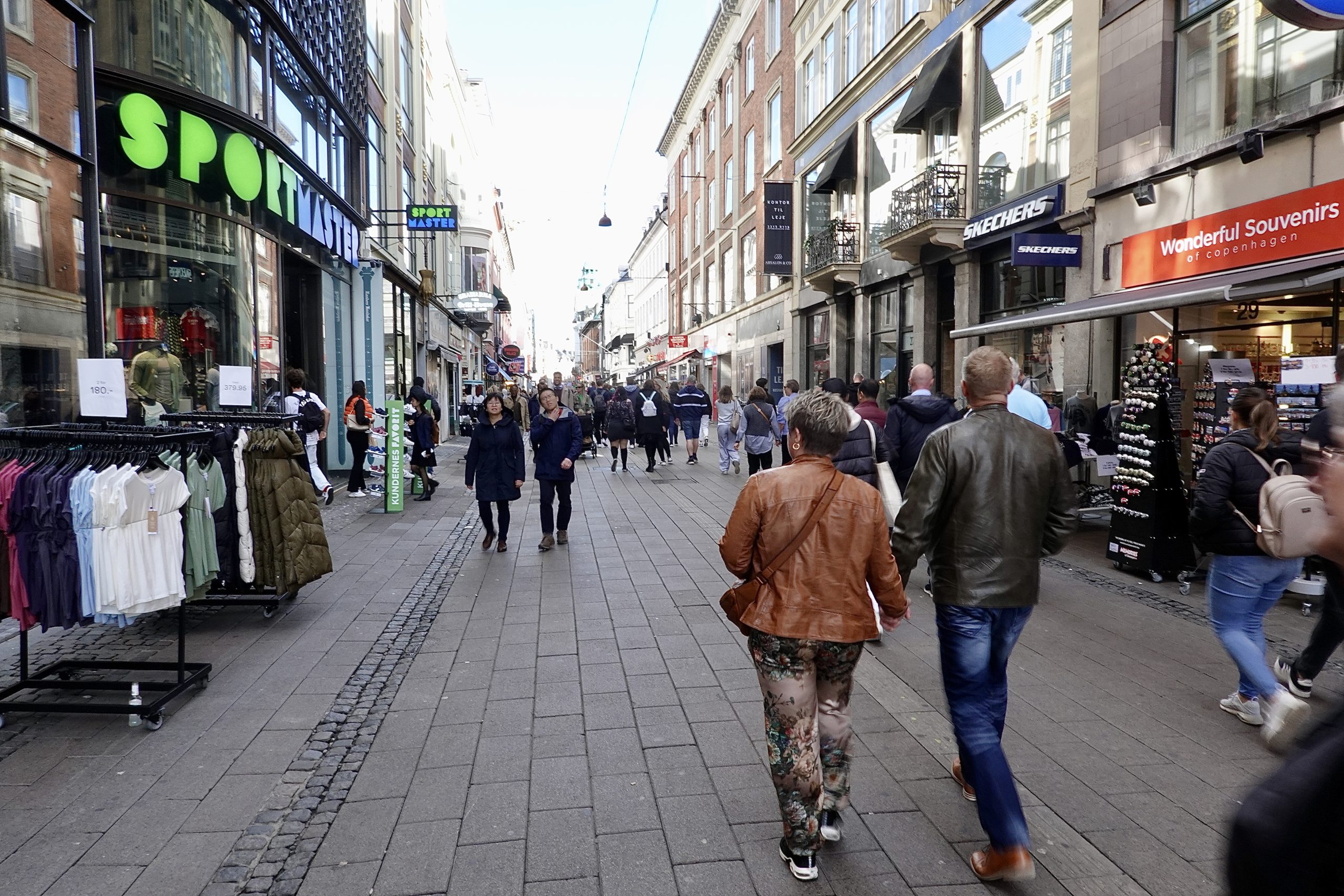
If you enjoy shopping, this is an obvious place to spend some time.
If shopping is not your priority, there is another option.
An alternative to Strøget
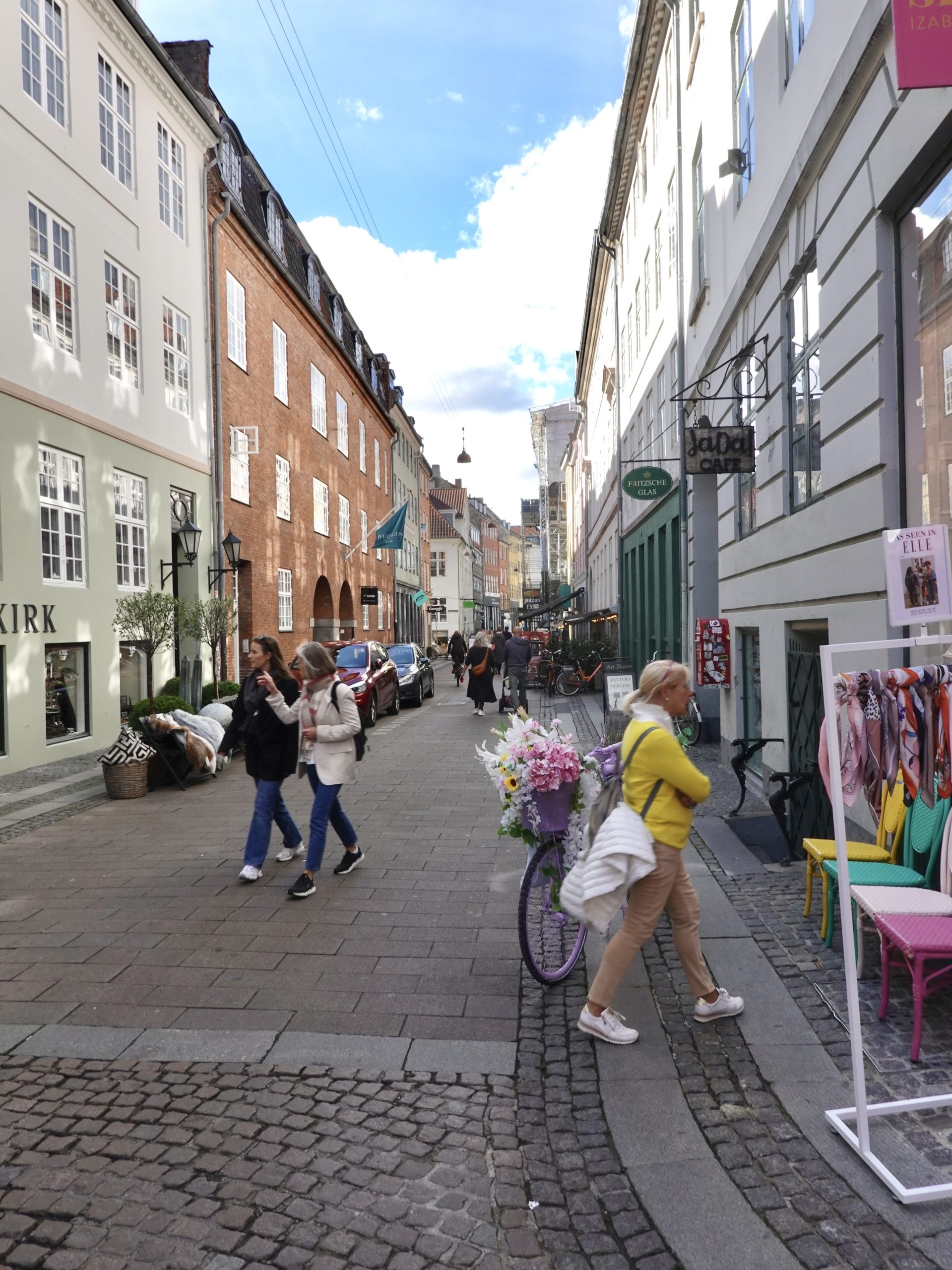
Some of the narrower streets between Strøget and Gammel Strand are, in my opinion, more interesting than the main shopping street.
They contain smaller shops, cafés, restaurants and bars and provide a better opportunity to see some of the character of central Copenhagen away from the main tourist route.
5. Amagertorv
Continue along Strøget until you reach Amagertorv.
This is one of the more fashionable sections of Copenhagen’s central shopping area, with many international luxury brands represented here.
For me, the contrast between the different sections of Strøget was interesting. The street changes character considerably as you move through the city centre.
From Amagertorv, continue towards Kongens Nytorv.
6. Kongens Nytorv
Kongens Nytorv is one of Copenhagen’s major squares and provides a natural transition between the shopping district and the harbour area.

From here, continue towards the attraction that appears in almost every photograph of Copenhagen:
Nyhavn.
7. Nyhavn
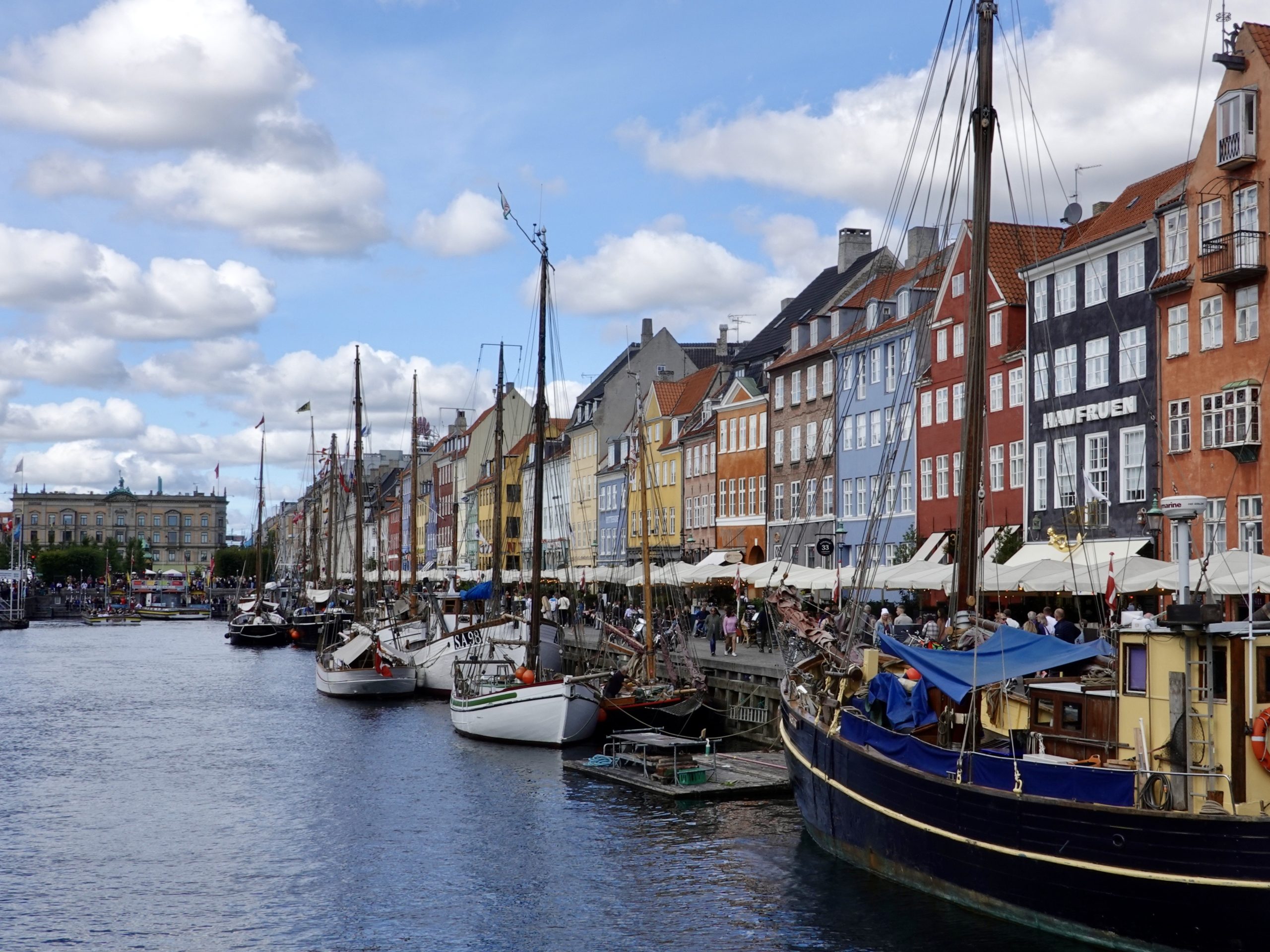
If you have seen photographs of Copenhagen, you have probably seen Nyhavn.
The colourful 17th-century buildings along the canal make Nyhavn one of the city’s most recognisable landmarks.
It is also one of the busiest tourist areas in Copenhagen.
When I visited, I found Nyhavn interesting partly because the reality is somewhat different from the classic postcard photographs.
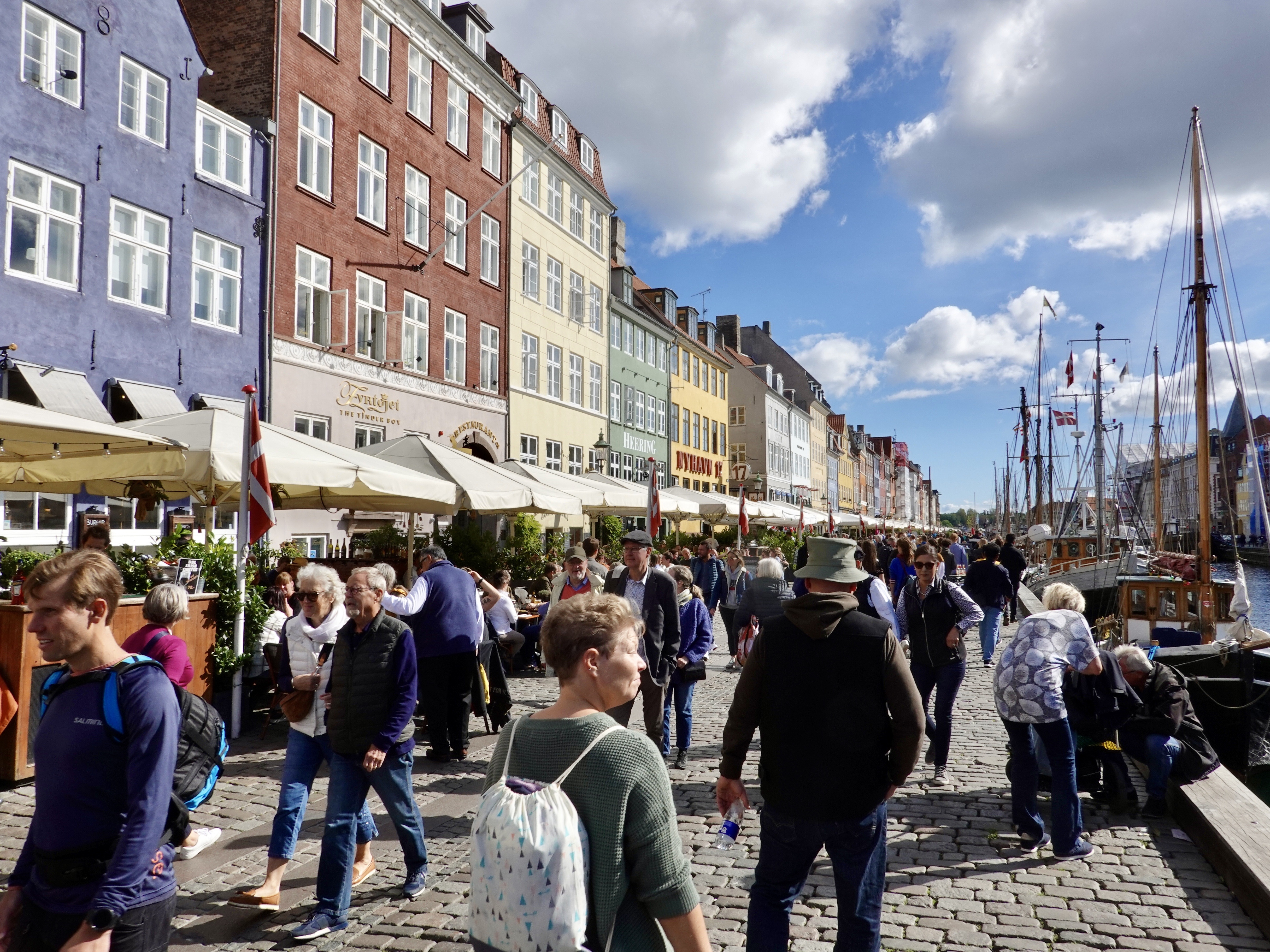
While the photos are a true representation, they do not portray the fact that Nyhavn is essentially a narrow canal and dock lined with historic buildings, rather than Copenhagen’s main waterfront.
They also do not fully prepare you for the extent to which the dockside has been commercialised by restaurants and outdoor seating.
Nonetheless, despite the crowds, it is somewhere I would recommend visiting.
This is one of those Copenhagen attractions where the photograph is part of the experience.
A little Nyhavn history
The Danish author Hans Christian Andersen lived in several buildings overlooking Nyhavn at different times during his life.
As already mentioned, today, the area is dominated by restaurants, bars, cafés and tourists, but its historic buildings remain one of the defining images of Copenhagen.
8. Copenhagen Harbour Waterfront
From Nyhavn, continue towards Copenhagen Harbour and follow the waterfront.
This is one of my favourite parts of the route because the walk provides a change of scenery after the busy streets of the city centre.
You can see across the harbour towards other parts of Copenhagen and, depending on the weather, the waterfront provides some excellent photographic opportunities.
9. Amalienborg Palace
Continue along the waterfront towards Amalienborg Palace, the Copenhagen residence of the Danish royal family.
Amalienborg is arranged around an attractive central square and is somewhat different from the image many visitors might have of a traditional European royal palace.

The palace complex is still used by the Danish royal family, while parts of the complex are open to visitors as the Amalienborg Palace Museum.
If you are interested in Danish history or the monarchy, this is one of the attractions on the route where it is worth allowing additional time.
Can you visit Amalienborg Palace?
Yes. The Amalienborg Palace Museum is open to visitors, and tickets can be purchased in advance.
Check current ticket prices and opening times before visiting, as these can change.
Find information here about the Amalienborg Palace Museum

10. Frederik’s Church – The Marble Church
Immediately north of Amalienborg is Frederik’s Church, commonly known as the Marble Church.
The church is particularly recognisable because of its large dome.
Construction was originally proposed in the 18th century, but the building took considerably longer to complete than originally intended. It was finally completed in the 19th century.
The Marble Church is an easy addition to the walking route because it is immediately adjacent to Amalienborg.

11. Walk Along Copenhagen Harbour
From Frederik’s Church, head back towards the waterfront and continue towards the Little Mermaid.
This section of the route is particularly enjoyable on a clear day.
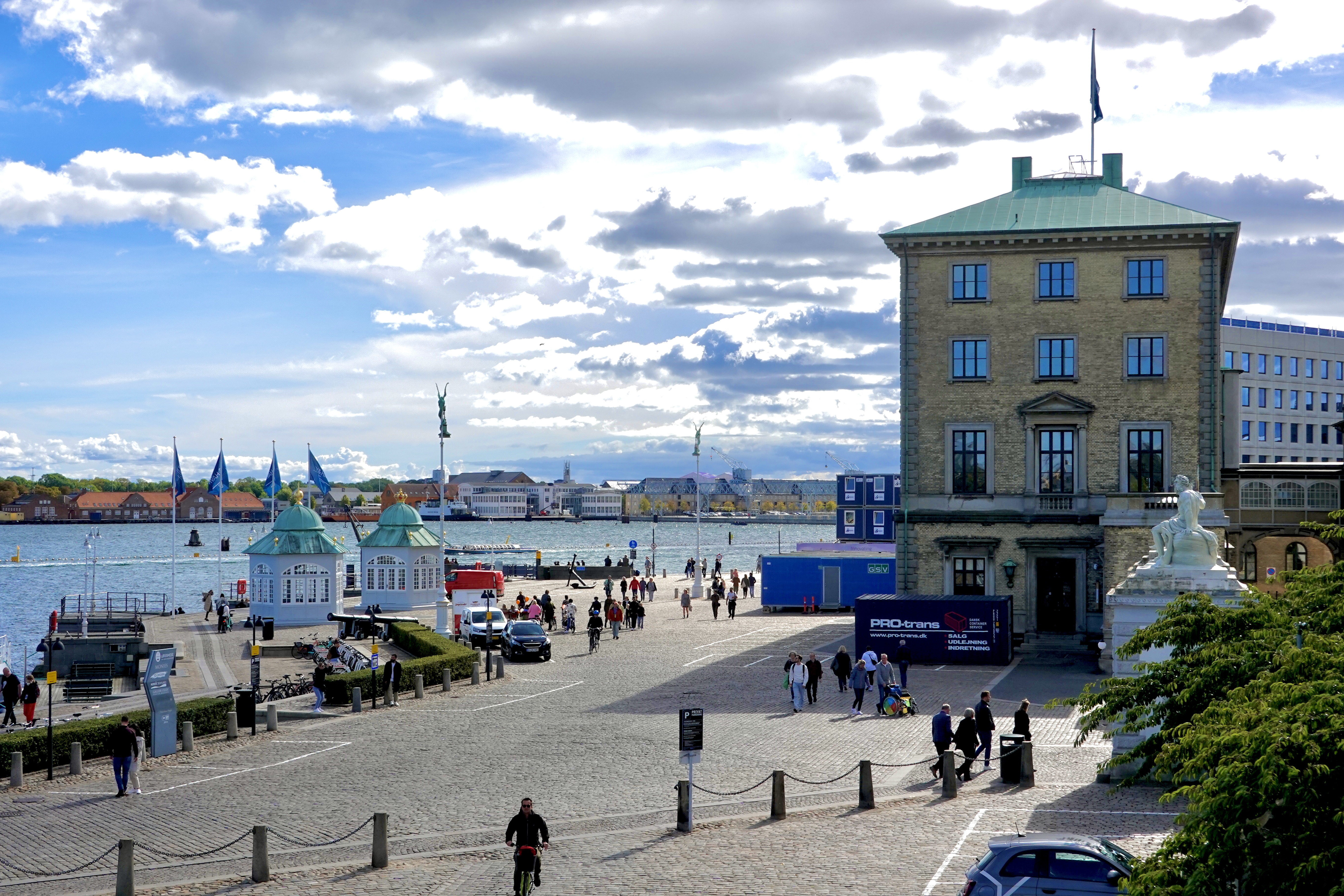
You get views across the harbour and can see some of Copenhagen’s more unusual modern architecture alongside its historic buildings.
One building that caught my attention was CopenHill, also known as Amager Bakke.
CopenHill is an energy-from-waste facility with an artificial ski slope built onto its roof.
It is an unusual example of how Copenhagen has combined infrastructure, recreation and modern architecture to create a net-zero building in the heart of the city.

12. The Little Mermaid
Continue along the waterfront until you reach The Little Mermaid.
The statue is based on the famous Hans Christian Andersen fairy tale of the same name and is probably Copenhagen’s best-known individual tourist landmark.
My own reaction was that the statue was somewhat underwhelming compared with the expectations created by its fame.
That said, I would still include it on a first visit.
It is one of those attractions where the historical and cultural significance is more important than the physical size of the attraction itself.
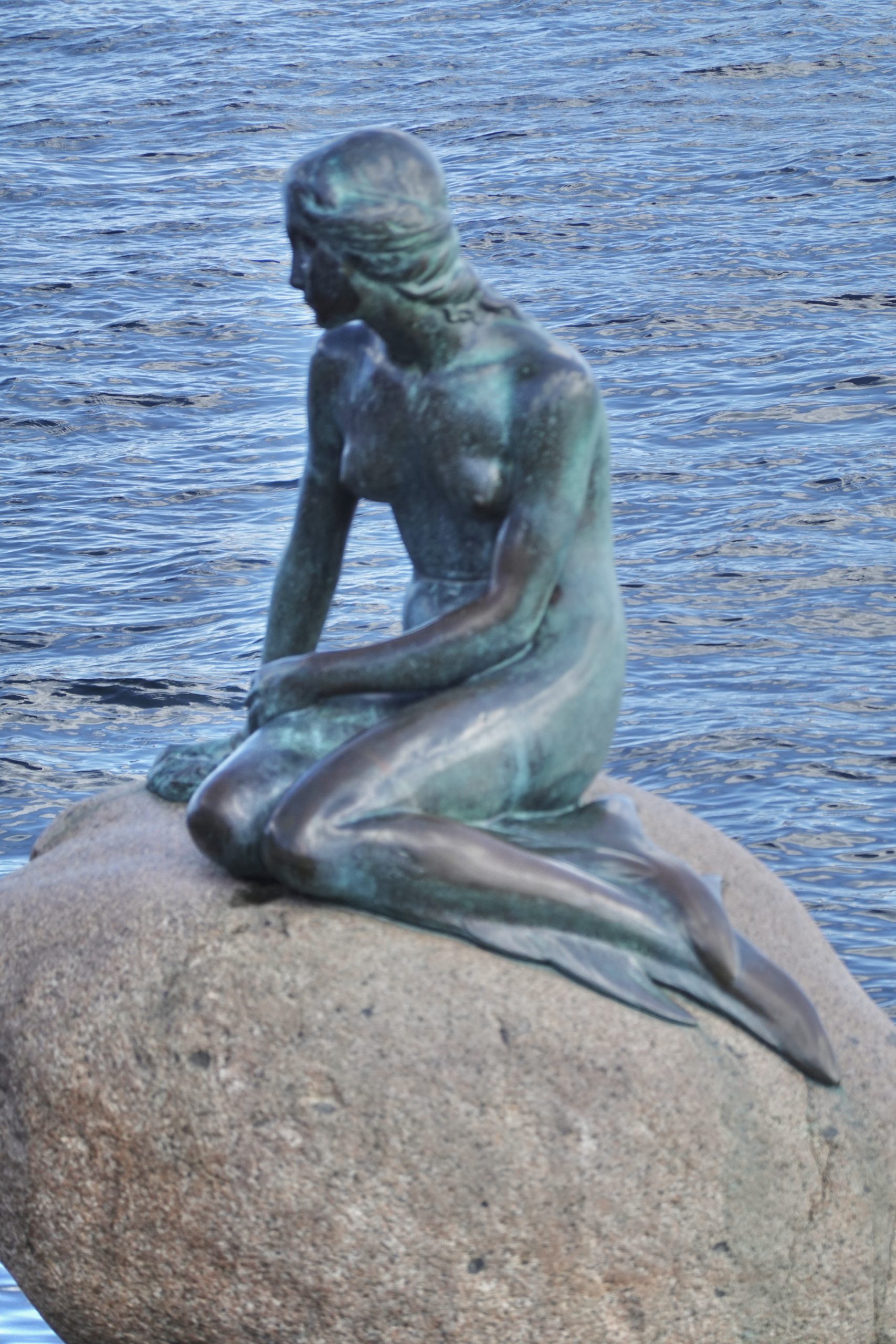
The walk along the waterfront is also part of the experience.
Again, it also offers another ‘not to be missed’ photo opportunity while in the city.
13. Kastellet
One attraction that I almost missed during my own walk was the Kastellet, the historic star-shaped fortress located close to the Little Mermaid.
The Kastellet is one of the best-preserved star fortresses in Northern Europe and is worth including if you have time.
Sadly, I actually walked past it without properly appreciating what I was seeing, which is a good reminder of why having a route and map is useful when sightseeing.
If you are following this itinerary, allow some time to explore the Kastellet before continuing to Østerport Station.
Information about the Kastellet can be found here
14. Finish at Østerport Station
The walking route finishes at Østerport Station.
From here you can take a train back towards Copenhagen Central Station or continue with your Scandinavian rail journey.
In my case, I returned to Copenhagen Central Station to ready myself for the next stage of my much longer overland journey.
The following morning I continued across the Øresund Bridge towards Sweden, travelling via Malmö towards Stockholm.
How Long Do You Need for This Copenhagen Walking Route?
I would allow most of a day if you want to walk the complete route at a comfortable pace.
The exact time will depend on:
- how long you spend at each attraction;
- whether you enter Tivoli Gardens;
- whether you visit Amalienborg Palace;
- whether you stop for food and coffee;
- whether you visit the Kastellet;
- how much time you spend shopping.
If you are primarily interested in seeing the major landmarks from outside, you can complete the route more quickly.
If you want to visit museums, palaces and Tivoli Gardens, I would recommend treating this as a full-day Copenhagen itinerary rather than simply a walking tour.
Where to Stay in Copenhagen
Copenhagen accommodation can be expensive, particularly in the central areas.
For budget travellers, the Vesterbro and Central Station area can be particularly convenient because you are close to the railway station, Tivoli Gardens and the beginning of this walking route.
For a short visit, staying close to Copenhagen Central Station can also make sense if you are arriving and departing by train.
Budget accommodation
Some of the accommodation options I considered or used include:
Annex Copenhagen
I stayed at Annex Copenhagen during my visit.
It offers hostel-style accommodation close to Copenhagen Central Station, including private rooms and shared facilities.
My room was relatively small but clean and heated, and the facilities were adequate for a short stay.
One of the hostel’s advantages is its relationship with the neighbouring Absalon Hotel, giving guests access to additional hotel facilities.
Check current prices at the Annex Copenhagen before booking
Other Accommodation Options
Other budget hostel / hotel options worth comparing include:
- CityHub – Offers pod-style units and features 24 hr front desk, free wifi, air-conditioning, sauna, bar and luggage storage. Suited for solo travellers and couples.
- Generator Copenhagen – Well known chain hostel offering dormitories and private rooms. Provides 24 hr front desk, free wi-fi, a late-night bar, laundry facilities and luggage storage.
- MEININGER Hotel – Hostel offering dormitories and private rooms. Provides a shared kitchen, bar, laundry, luggage lockers and bicycle rental.
- Nebo – Budget hotel offering basic rooms with private or shared bathrooms, buffet breakfast and on-site cycle hire. Proceeds support the city’s homeless community.
- Wakeup Copenhagen, Bernstorffsgade – All rooms have a desk, TV and private bathroom. Offers a 24-hour front desk, freeWi-Fi, and a shared lounge / bar.
Rather than assuming that one property will always be cheapest, I recommend comparing prices for your actual travel dates.
Compare Copenhagen hotels and hostels
For more information on accommodation options in Copenhagen, plus a guide to making the correct accommodation choices, see my ‘Where to Stay in Copenhagen’ guide.
Copenhagen Food: What Should You Try?
Copenhagen is not the cheapest city for eating out, so budget travellers may want to combine supermarket food and inexpensive local dishes with occasional restaurant meals.
Some Danish foods worth trying include:
Bread Based Delicacies
Smørrebrød – Open-faced sandwiches made with rye bread and a variety of toppings.
Rugbrød – Traditional Danish rye bread, often used as the base for smørrebrød.
Meat and Fish Based Dishes
Frikadeller – Danish meatballs.
Stegt flæsk – Crispy pork belly, traditionally served with potatoes and sauce.
Rød pølse – The familiar Danish red sausage often served in a hot dog.
Gravad laks – Cured salmon, traditionally served with a mustard-based sauce.
Desserts / Pastries
Æbleskiver – Small round Danish pancakes, usually served with sugar and jam.
Danish pastries – Copenhagen is an obvious place to try Danish pastries and other Scandinavian baked goods.
For a more comprehensive guide to Copenhagen’s traditional food offerings, see my guide to ‘What to Eat in Copenhagen’
Want to experience the food rather than simply read about it?
A guided Copenhagen food tour can be a good way to combine sightseeing with local food.
Find out more about Guided Copenhagen Food Tours
Other Things to Do in Copenhagen
The walking route above focuses on the central attractions I visited, but Copenhagen has many other worthwhile sights.
Visit these Buildings and Gardens
Rosenborg Castle
A Renaissance castle surrounded by attractive gardens and home to important Danish royal collections. (Tickets are available here)
Christiansborg Palace
Christiansborg has played an important role in Danish political and royal history and today contains the Danish Parliament, Supreme Court and Ministry of State. Visitors, though, can still explore parts of the palace complex. (Tickets are available here)
The Round Tower
The Round Tower is a historic Copenhagen landmark offering views across the city’s rooftops. (Tickets need to be purchased on the day)
Copenhagen Botanical Garden
A quieter alternative to the busy central attractions, with extensive plant collections and attractive gardens. (Tickets are available here)
Frederiksborg Castle, Hillerød
A majestic example of Renaissance architecture built in the early 17th century. It is sited on three islets in the castle lake and houses the Museum of National History. (Tickets are available here)
Visit Denmark’s Top Museums and Art Galleries
National Museum of Denmark
A good choice if you want to understand more about Danish history and culture. (Tickets are available here)
National Gallery of Denmark
The National Gallery contains Danish and international art spanning several centuries. (Tickets are available here)
Designmuseum Denmark
An obvious choice if you are interested in Scandinavian design. (Tickets are available here)
Visit Other Top Attractions Around Copenhagen
Carlsberg
The Carlsberg attraction provides an opportunity to explore the history of one of Denmark’s best-known breweries. (Tickets are available here)
Christiania
Christiania is one of Copenhagen’s most unusual neighbourhoods and is known for its alternative culture, street art and distinctive atmosphere. (Tickets for a Guided Walking Tour of Christiania are available here)
Are There Any Good Travel Guide Books for Copenhagen?
Depending on what genre of travel guide book you most favour, one of the following three might meet your needs. To find out more, please click on each of the images below for more information.


Is the Copenhagen Card Worth Buying?
If you intend to visit several paid attractions and use public transport, it is worth checking the current Copenhagen Card options before your trip.
The card can provide access to numerous attractions and public transport, although whether it represents good value depends on exactly what you plan to visit.
I would therefore work out the individual attraction costs for your itinerary before buying one.
Check the current Copenhagen Card options and prices here.
Copenhagen Canal and Harbour Cruise
A canal and harbour cruise is another option if you want to see Copenhagen without walking the entire route.
While you might think Nyhavn and the nearby harbour area are natural places to commence a boat trip, this is not actually the case. Most of the available boat trips commence from Gammel Strand. About a 15-minute walk from Nyhavn.
Nonetheless, for visitors with limited time, combining a walking tour with a canal cruise can be a good way to see more of the city from different perspectives.
This might be a particularly good option if:
- after shopping and sightseeing in the morning, and
- settling down for lunch in Nyhavn,
you decide to take it easy on the water for the remainder of the day.
These canal and harbour cruises all pass by Nyhavn, the Amalienborg Palace and the Little Mermaid.
Check current Copenhagen canal and harbour cruise options
Travelling to Copenhagen by Train
Copenhagen is particularly interesting for travellers who are exploring Scandinavia by rail.
During my own journey, I travelled overland from London through Europe and into Scandinavia.
From Copenhagen, the railway provides onward connections towards Sweden, including Malmö and Stockholm.
If you are planning a longer Scandinavian journey, Copenhagen can therefore work very well as one stop on a wider itinerary.
InterRail Travel Passes
Purchasing an InterRail travel pass could provide a cost effective way of accessing rail travel. Passes range from country specific varieties to Europe-wide options, and are valid for just a few days or up to three months.
The passes themselves can be quite expensive, particularly if they only cover a short period of time, but if you buy one during the customary November Black Friday sale or the March / April Spring sale, you can usually get a 25% discount on the price. Additionally, if you are under 28, you get an extra 25% discount anyway. Similarly, an extra 10% discount is also available for those who are 60 or over.
Check current InterRail Pass options and prices
Individual International Train Tickets
Alternatively, you can book individual Europe-wide train tickets through websites like Trip.com. This website provides all the details you need, train times, connections and prices, and it also allows you to book tickets there and then online. No need to navigate train operator sites, translate from a foreign language or deal with currency conversions.
Check out options for buying individual train tickets
My Scandinavian rail journey
If you are interested in travelling to Scandinavia by train, you can read about my experiences on this wider journey here:
Each of these posts is written in blog form, setting out both my experiences and thoughts while travelling.
You can also read an overview of my travels between London and Scandinavia’s Arctic Circle in the post below. This details my route, my overall itinerary, where I stayed and which modes of transport I used.
Luggage Storage in Copenhagen
If you are only spending a few hours in Copenhagen between trains, luggage storage can make sightseeing much easier.
Instead of carrying your bags around the city, you can arrange luggage storage near the station or in another convenient central location.
This can be particularly useful if you arrive before your hotel check-in time or have a late train departure.
Check current Copenhagen luggage-storage options
Is Copenhagen Expensive?
Yes, Copenhagen can be an expensive European destination, particularly for accommodation, restaurant meals and alcoholic drinks.
When I visited, the price of a beer was one of the first things that made me appreciate the cost of living.
The good news is that you don’t need to spend a fortune to enjoy Copenhagen.
A walking itinerary allows you to see many of the city’s major sights without paying an entrance fee.
To keep costs under control:
- stay in a hostel or budget hotel;
- book accommodation early;
- walk rather than use transport where practical;
- use supermarkets for some meals;
- choose inexpensive local food;
- limit your consumption of alcohol;
- limit expensive restaurant meals;
- compare attraction tickets before buying; and
- check whether a city card would actually save money.
My Experience of Copenhagen
My Copenhagen visit was part of a much longer overland journey, so I was travelling with a very different objective from someone taking a conventional city break.
I arrived at Copenhagen Central Station in the late afternoon and walked to my accommodation near the station.
That evening I explored the area around Tivoli Gardens and experienced Copenhagen after dark.
The following day I spent most of the day walking through the city centre, following the route described above.
What struck me most was how easy Copenhagen was to explore on foot.
The combination of historic buildings, pedestrianised streets, canals, harbour views and modern architecture makes the city particularly enjoyable to explore without a fixed timetable.
The city is also very different from some of the other European capitals I have visited. It feels compact and relatively relaxed, despite being a major capital city.
If you would like to read my blog post discussing my short stay in Copenhagen, it can be accessed below.
My Verdict: Is Copenhagen Worth Visiting?
Yes.
If you are visiting Scandinavia for the first time, I would recommend including Copenhagen in your itinerary.
The city has enough major attractions to occupy several days, but it is also possible to see many of the highlights during a single day on foot.
For a first visit, I would prioritise:
3. Strøget and Amagertorv
4. Nyhavn
9. Kastellet
If you have additional time, add Rosenborg Castle, Christiansborg Palace, the Round Tower, Christiania, museums or a canal cruise.
For budget travellers, Copenhagen doesn’t have to be prohibitively expensive. Accommodation is likely to be the biggest challenge, so booking early and considering hostels can make a significant difference.
Plan Your Copenhagen Trip
If this walking route has helped you plan your visit, these are the areas I would investigate next:
Accommodation
Compare Copenhagen hotels, hostels and budget accommodation
Attractions and Tours
Check out Copenhagen’s major attractions and experiences
Canal Cruises
Luggage Storage
Find useful luggage storage facilities in Copenhagen
Train travel
Plan your onward train journey to Malmö, Stockholm and the rest of Scandinavia
Copenhagen Card
Compare the current card price with the attractions you intend to visit
Frequently Asked Questions About Copenhagen Walking Tours
Is Copenhagen easy to explore on foot?
Yes. Central Copenhagen is relatively compact, flat and pedestrian-friendly, making walking one of the easiest ways to see the major attractions.
How long is this Copenhagen walking tour?
Allow most of a day if you want to explore the attractions rather than simply walk past them.
Where does the Copenhagen walking route start?
This route starts at Copenhagen Central Station.
Where does the route finish?
The route finishes at Østerport Station, although you can easily modify it depending on where you are staying.
What are the main attractions on the route?
The route includes Tivoli Gardens, Copenhagen City Hall, Strøget, Amagertorv, Nyhavn, Amalienborg Palace, Frederik’s Church, Copenhagen Harbour, the Little Mermaid and Kastellet.
Can you walk around Copenhagen in one day?
Yes. A full day is enough to see many of the major central attractions, although you will need longer if you want to visit several museums, palaces and Tivoli Gardens.
Is Copenhagen expensive?
Copenhagen can be expensive compared with many other European cities, particularly for accommodation and eating out. However, walking between attractions and using budget accommodation can significantly reduce the cost.
Is the Copenhagen Card worth buying?
It depends on your itinerary. Compare the current card price with the individual attraction and transport costs for your planned visit before purchasing.
Final Thoughts
Copenhagen was one of the most enjoyable stops on my journey through Scandinavia.
What I particularly liked was the fact that I could leave Copenhagen Central Station and spend most of the day exploring the city without needing to rely heavily on public transport.
The route takes you from the commercial centre of Copenhagen, through the shopping district, along the colourful streets of Nyhavn, past the Danish royal palace and along the harbour to the Little Mermaid and Kastellet.
If you only have one day in Copenhagen, this is a good way to see many of the city’s best-known sights.
And if you have longer, you can simply use this route as the framework for a more relaxed Copenhagen itinerary.
Planning a longer Scandinavian adventure?
Continue with my complete Overland to Scandinavia by Train journey, including the routes from London through Germany and Denmark and onward towards Sweden and the Arctic Circle.
Tags:
#IsCopenhagenwalkable #IsCopenhagenexpensive #walkingmapofCopenhagen #Copenhagenfreewalkingmap #Copenhagenwalkingmap #Copenhagenwalkingtourmap #FreewalkingmapCopenhagen #freewalkingtourmapCopenhagen #Copenhagentouristmap #CopenhagenItinerary #Copenhagenonfoot #walkinginCopenhagen #Copenhagenonabudget #Copenhagenattractionsmap
