
Disclaimer: Some of the links within this post are affiliate links. This means if you click on them and make a purchase, I might earn a small commission at no additional cost to you. For further information, please see the privacy policy and cookie policy. In addition, if you wish to ensure that your personal information is not passed on to third party advertisers, you can request that via the Do Not Sell or Share My Personal Information page.
What are Nanjing’s Top Attractions
Summary
I recently undertook an epic overland journey by train and tour van from Shanghai on China’s eastern seaboard to Kathmandu in Nepal.
The trip lasted for four weeks and included stops in Shanghai, Huangshan, Nanjing, Xi’an, Xining, Lhasa, Shigatse, Shelkar, Rongbuk Monastery (near Tibet’s Everest Base Camp), Kyirong and Kathmandu.
This post provides details of my time in Nanjing. Specifically, it details my visit to each of Nanjing’s top attractions.
For easy reading, the post is divided into several sections and sub-sections, each of which can be directly selected from the accompanying ‘Page Contents’ tag.
If you want to read more general information about my overall overland trip from Shanghai to Kathmandu, including:
- information on obtaining Visas to visit both China and Tibet;
- detailed maps outlining the trip; and
- an overall itinerary
please see the wider article as set out below.
Travelling to Nanjing
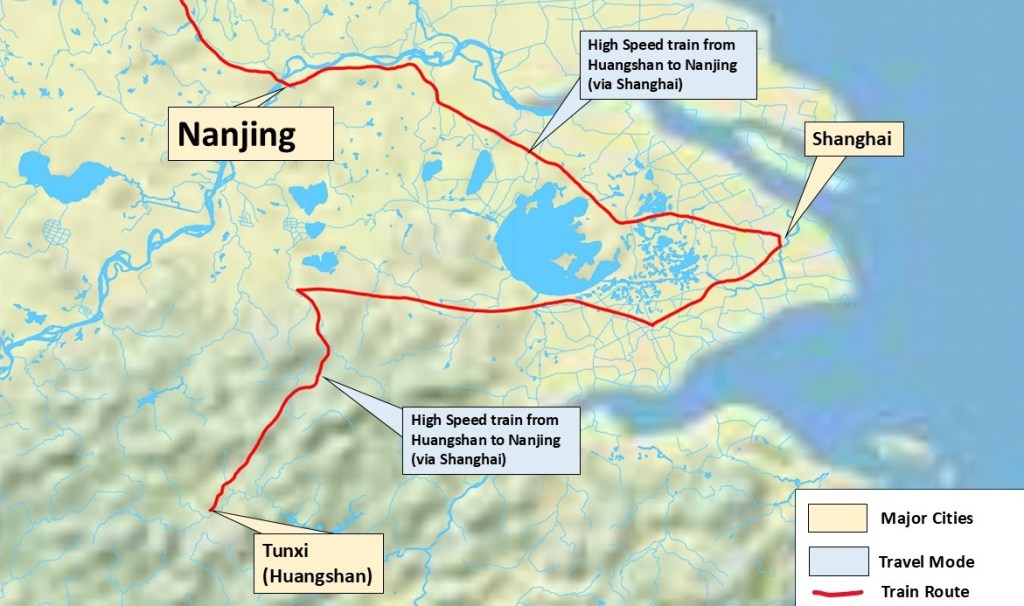
I travelled by high speed train to Nanjing from the city of Huangshan. The journey, which was routed via Shanghai, took some four hours and, following a late start, I didn’t arrive in Nanjing till about 9.30 in the evening.
Fortunately though, I had already booked myself into the Novotel Nanjing Central Suning Hotel, making use of some more of my ill-gotten ‘ALL‘ loyalty points. Even without loyalty points, this four star hotel, located within the centre of the Old City, provides excellent value for money.
To find out more, use the link below.
Find out more about the Novotel Nanjing Central Suning Hotel
Nanjing – An Overview
Nanjing is one of China’s oldest and most historically significant cities. Established more than 2,500 years ago, it served as China’s capital city under the Ming dynasty from 1368 to 1421 and again in recent times between 1928 and 1949 during the days of the Republic of China.
It is strategically located on the Yangtze River and has been, particularly during the Ming dynasty, an important political, cultural, and economic centre. Today, Nanjing combines its rich historical heritage with modern development, preserving numerous cultural landmarks.
What Are Nanjing’s Top Attractions?
While in Nanjing, I visited:
- the Old City and its walls (also known as the Ming Palace);
- the Confucius Temple;
- the Qinhuai River;
- the Sun-Yat-sen Mausoleum; and
– all grandiose reminders of the city’s past and present.
The following describes each of these city attractions, sets out some original photographs of each and also provides a personal perspective in respect of each of them.
The City Walls (Ming Palace)
I started my first day of sightseeing by touring the city walls, or the Ming Palace as it is officially known. This Ming Palace was originally established back in the 14th Century during the early Ming Dynasty, at a time when Nanjing was the capital city of China.
Today, it is only parts of the city walls that survive in their original form. The most notable being the Zhonghua and Xuanwu Gates.
The Xuanwu Gate stands in the northern part of the city close to the much more recently developed Xuanwuhu Lake Park, while the Zhonghua Gate is located to the south.
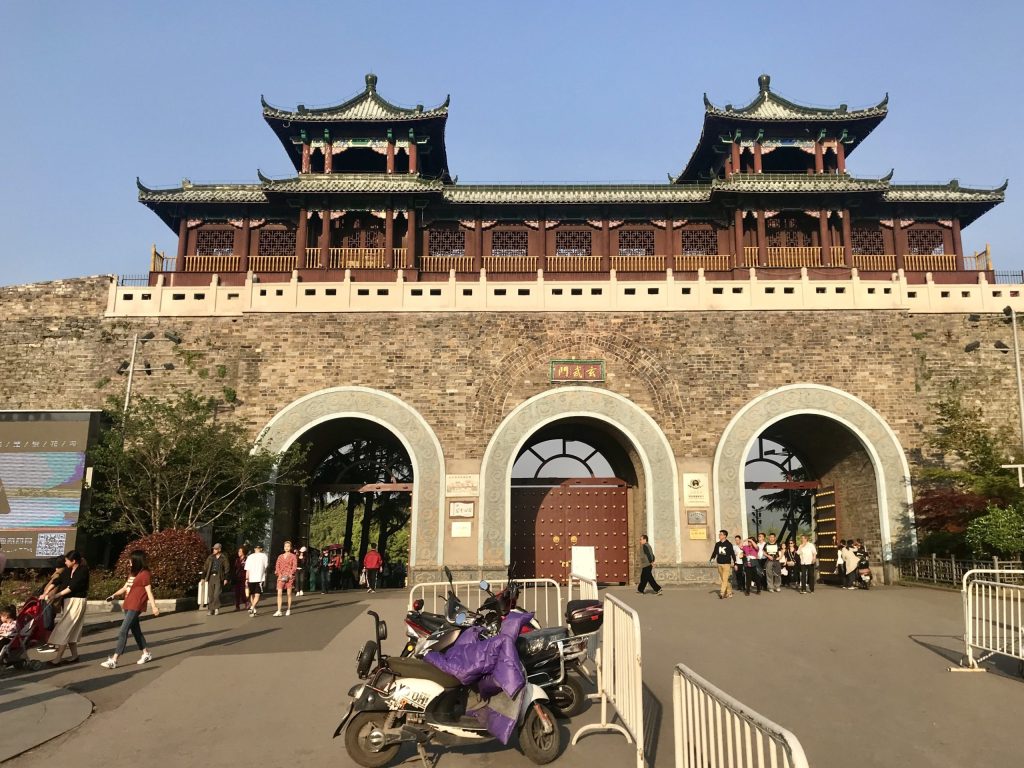
Xuanwu Gate, Nanjing, China
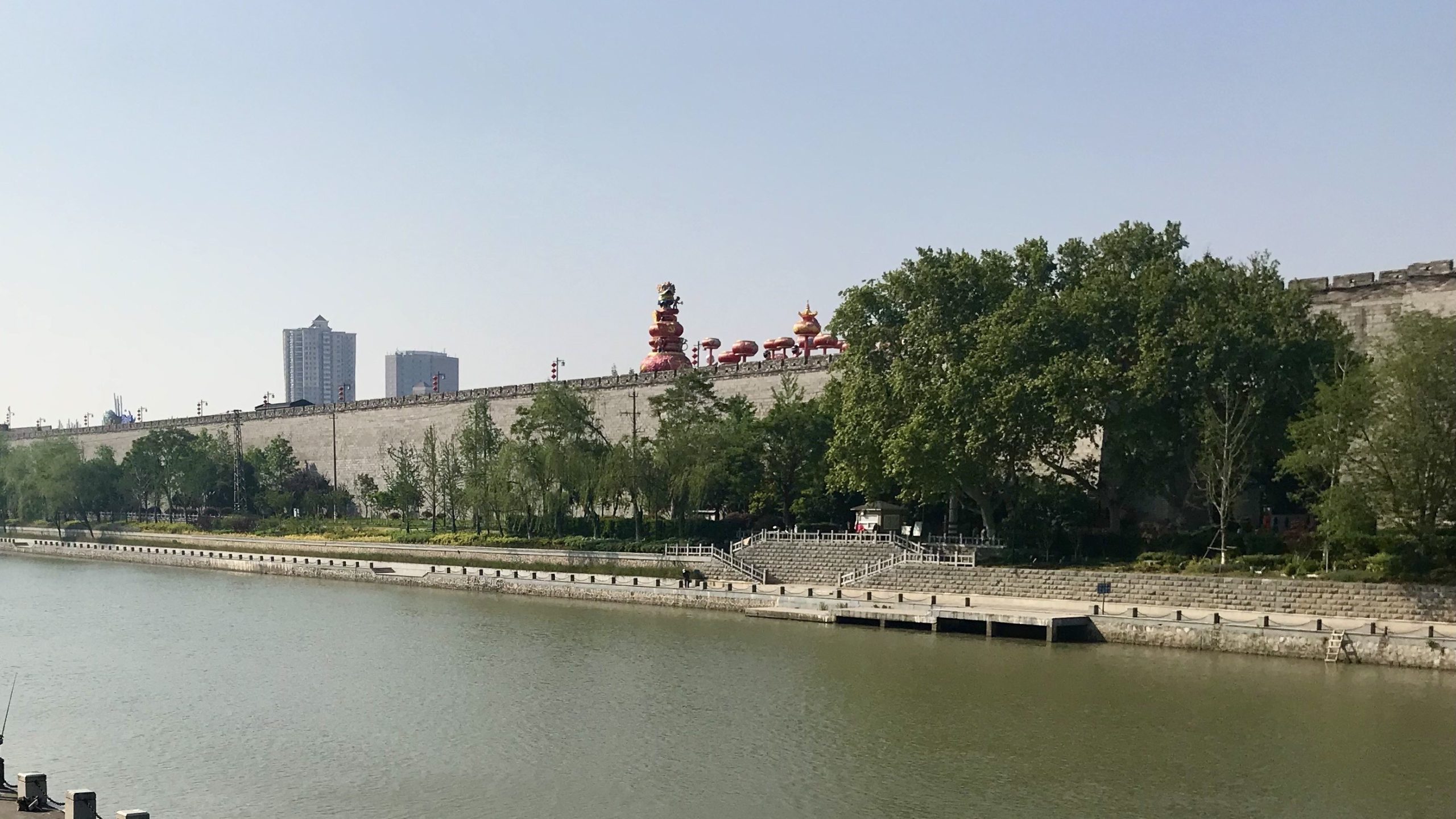


Photos taken in the vicinity of Zhonghua Gate
Find out more about visiting Nanjing’s City Walls
Thinking about it, given both Nanjing’s and China’s torrid history, it’s fairly remarkable that in a modern city like Nanjing these examples of Ming dynasty architecture have survived.
This torrid history includes various uprisings and battles that have beset the city, including:
- the Taiping Rebellion between 1850 and 1864: and
- the Japanese led Nanjing Massacre in 1937
More information on each of these events can be found by following the links above.
The Confucius Temple
The Confucius Temple, located on the southern banks of the Qinhuai River, is one of Nanjing’s top attractions.
As its name suggests, it is dedicated to Confucius, the Chinese philosopher and educator who founded Confucianism back in 500BC. Confucianism is a system of thought that deeply influences Chinese culture and philosophy.
The Temple’s origins date back to the Year 1034, during the Song Dynasty (960–1279).
It was originally built to honour Confucius and his teachings, but over time, it also became a centre for education and imperial examinations, where scholars would gather to study Confucian classics and prepare for civil service exams.
The current building, though, is largely a reconstruction, following heavy damage to the original during the Taiping Rebellion (1850–1864).
Today, the temple and the surrounding area make up a complex of buildings that combine elements of Chinese traditional architecture with cultural and educational significance. Together, the temple and surrounding complex attract tourists and scholars alike, especially during Confucius’s birthday on September 28, when ceremonies and events are held to honour his life and teachings.
It’s incredible to think that China’s civilisation dates back so far. It perhaps makes you realise just how advanced China is, or has been, compared with much of our ‘modern’ western civilisation.
It is also interesting to note that Confucianism is an approach to living one’s life, rather than a religion. In many ways both are similar, but Confucianism does not cause wars or require the building of grandios cathedrals and the obedient subservience of populations, as is the case with many religions. It is, however, still a system that is centred on the principles of orderly society, with both leaders and subjects.

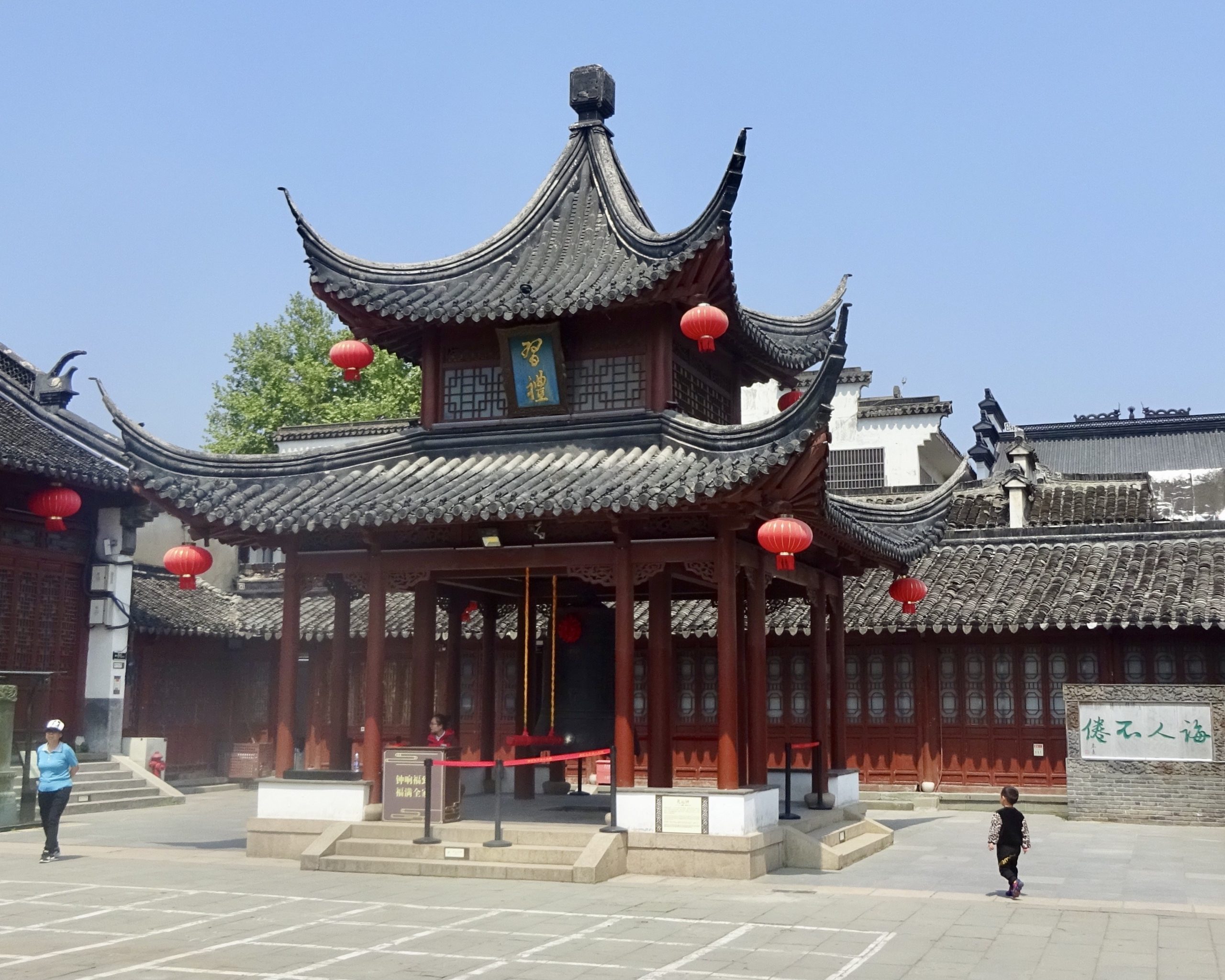

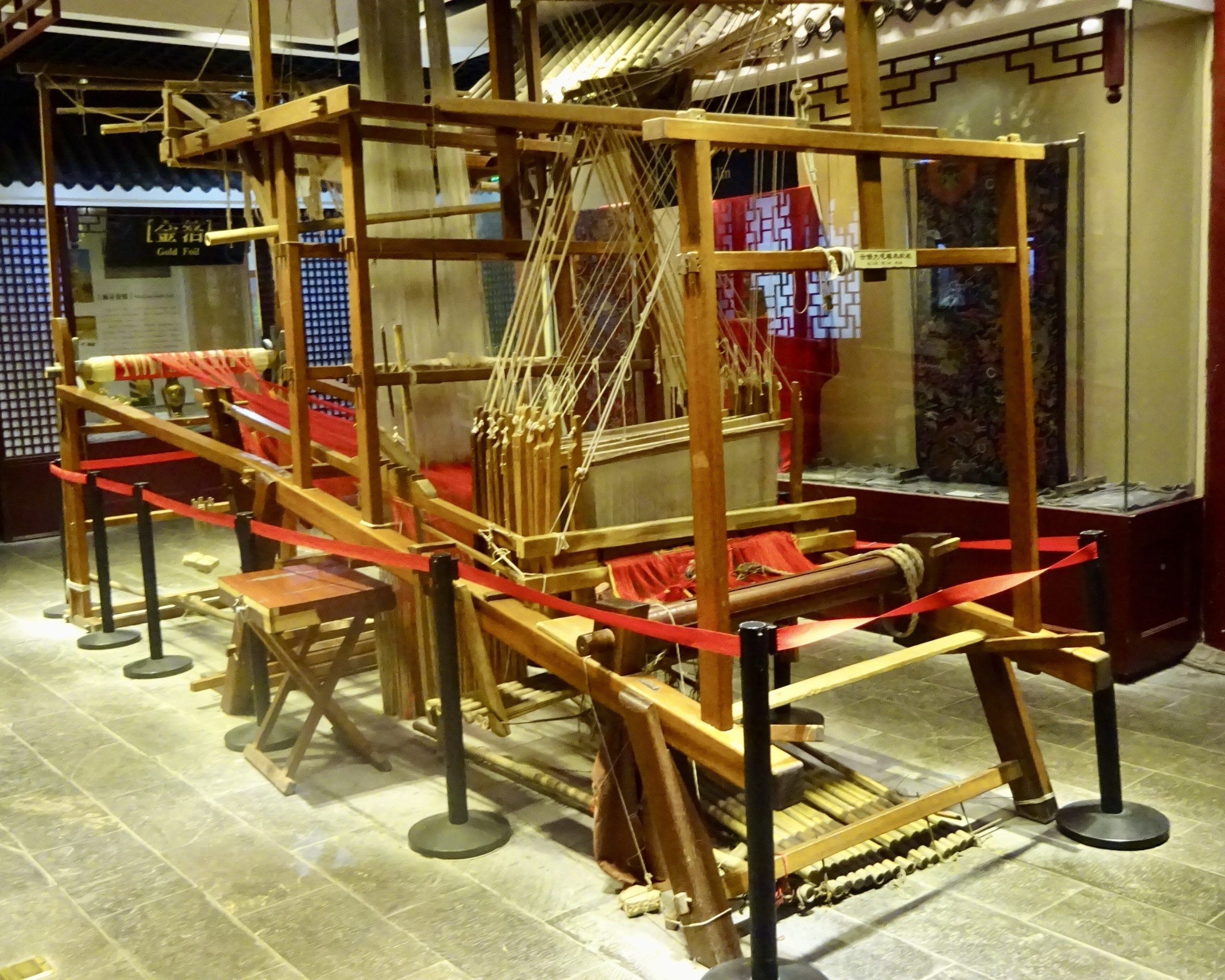
Photos showing various aspects of the Confucius Temple
Boat Trip on the Qinhuai River
Immediately adjacent to the temple lies the Qinhuai River. River boat trips leave from the Panchi Wharf, sited a few 100 metres from the temple building itself.
The Qinhuai River, which is a tributary of the Yangtze, runs through the centre of Nanjing and is best explored at night, when both the boats and the surrounding buildings are lit up.
Find out more about Qinhuai River Boat Trips

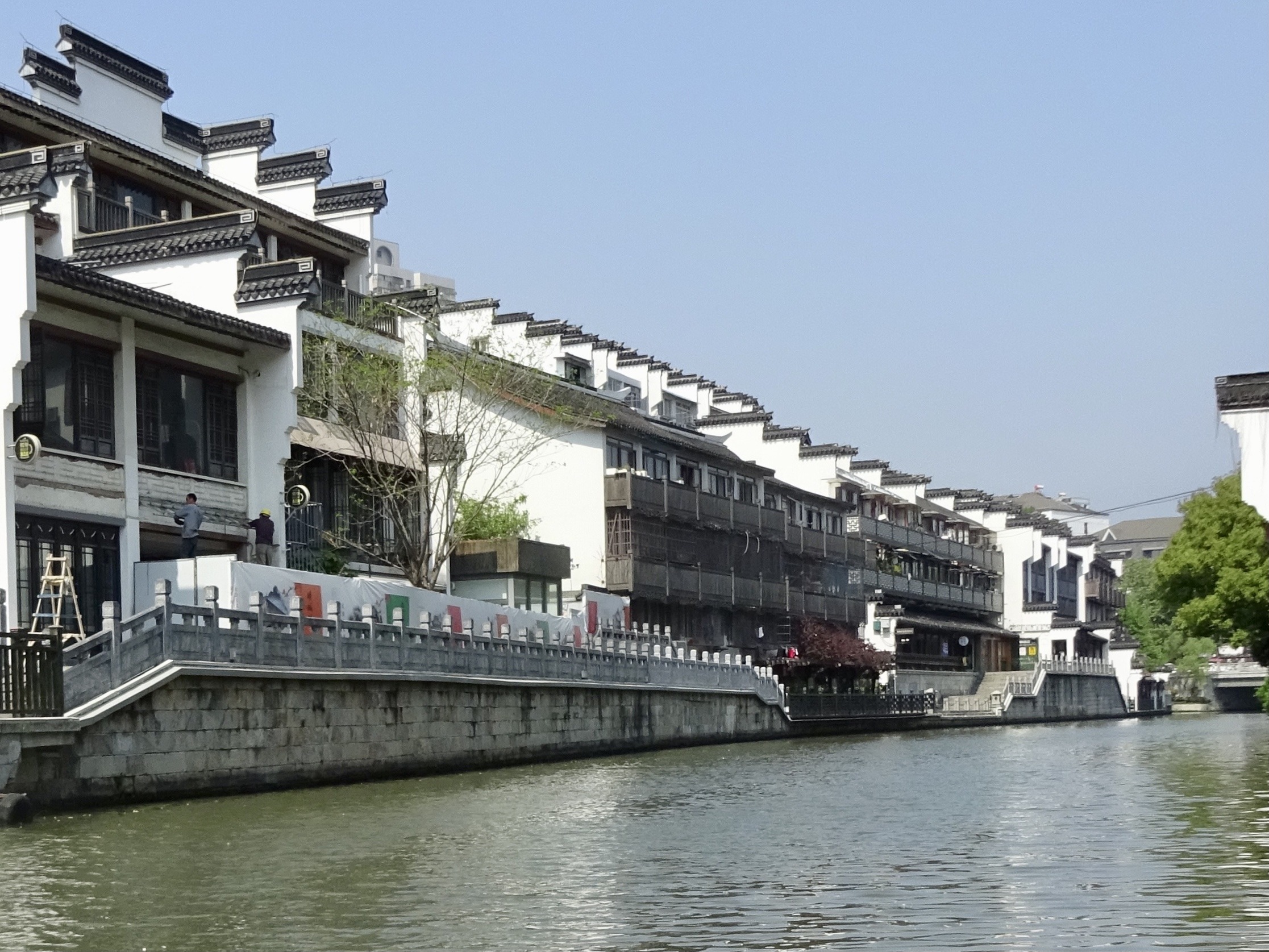
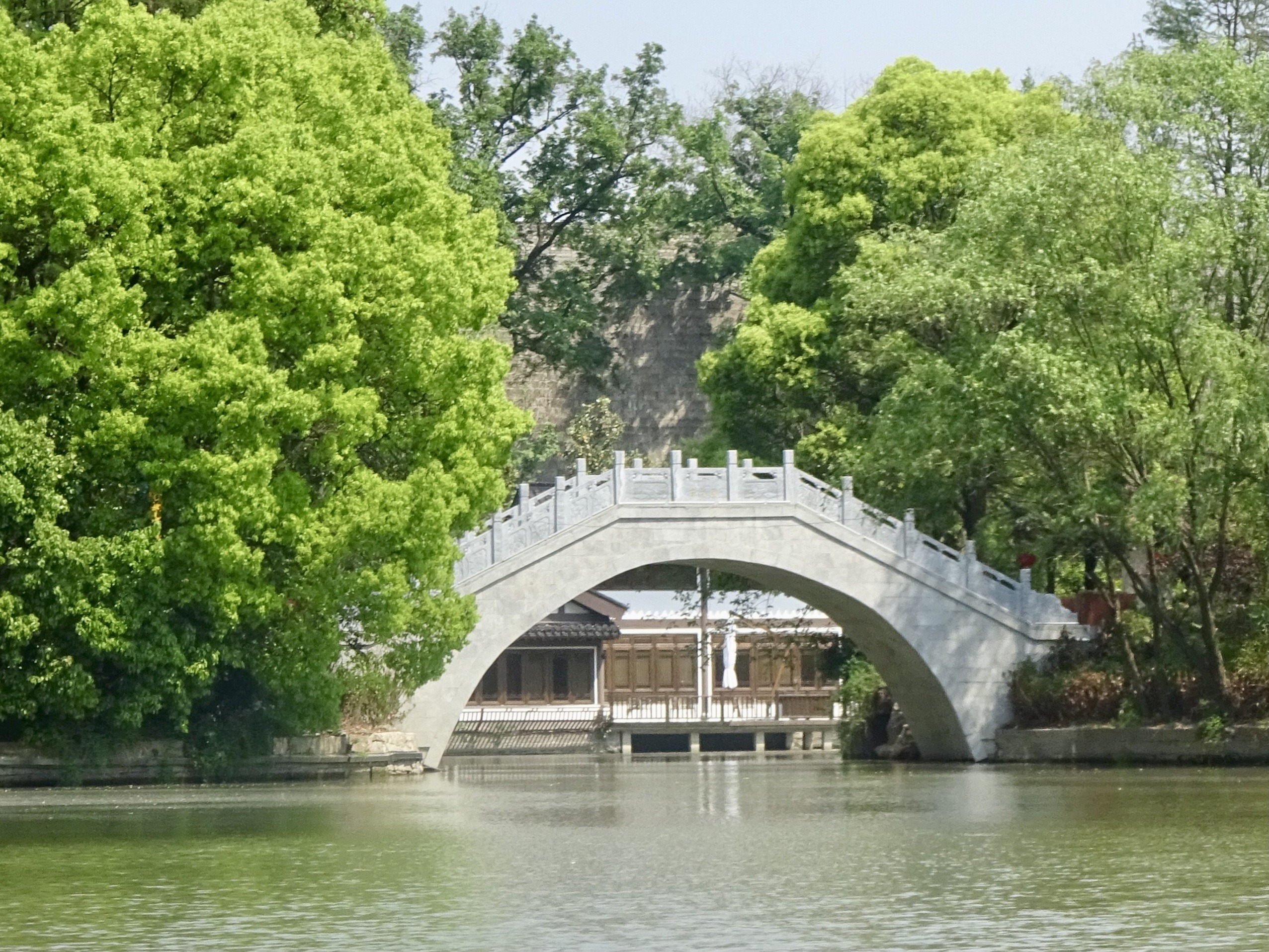


Views from the Qinhuai River Boat
Confucian Temple Food Street
If you do visit the Confucius Temple and the River Qinhuai, it is well worth spending some time in the nearby Confucian Temple Food Street. Here you can find food stalls serving many of Nanjing’s most famous food offerings.
Look for salted duck, duck blood vermicelli soup, beef potstickers, tangbao, sesame pancakes, stinky tofu and osmanthus desserts. It’s particularly lively after sunset.
Shiziqiao Food Street
If you like exploring traditional Chinese food dishes, the Shiziqiao Food Street is also worth visiting. It has a more local feel and is located not far from Xuanwu Gate.
It consists of dozens of restaurants and snack stalls serving excellent beef potstickers, roast duck, dumplings and regional Jiangsu cuisine.
The Sun-Yat-sen Mausoleum
Dr Sun Yat-sen’s Mausoleum is one of China’s most visited destinations. This top attraction is located on the southern slope of Purple Mountain, within the Zhongshan Scenic Area of Nanjing.
Dr Sun Yat-sen, who is revered as the modern leader of both China and Taiwan, led the socialist struggle against the Imperialist Qing dynasty, becoming the first president of modern China in 1912. Before the successful overthrow of the Qing dynasty, Sun spent several years living in exile in London, Singapore, Malaysia and North America. His exile is marked with similar, but smaller, memorials in a number of international cities including Penang, Malaysia and Vancouver, Canada.
Construction of the Mausoleum was commenced in 1926, following Sun’s death in 1925, and was completed in 2029. Today it is primarily China’s own citizens that visit the mausoleum, rather than foreign tourists. This perhaps reflects the fact that Sun Yat-sen is relatively unknown outside of China and Taiwan.
Of note for anyone who does want to visit the mausoleum is the fact that foreign tourists need to show their passports prior to purchasing a ticket.
Find out more about visiting the Sun-Yat-sen Mausoleum


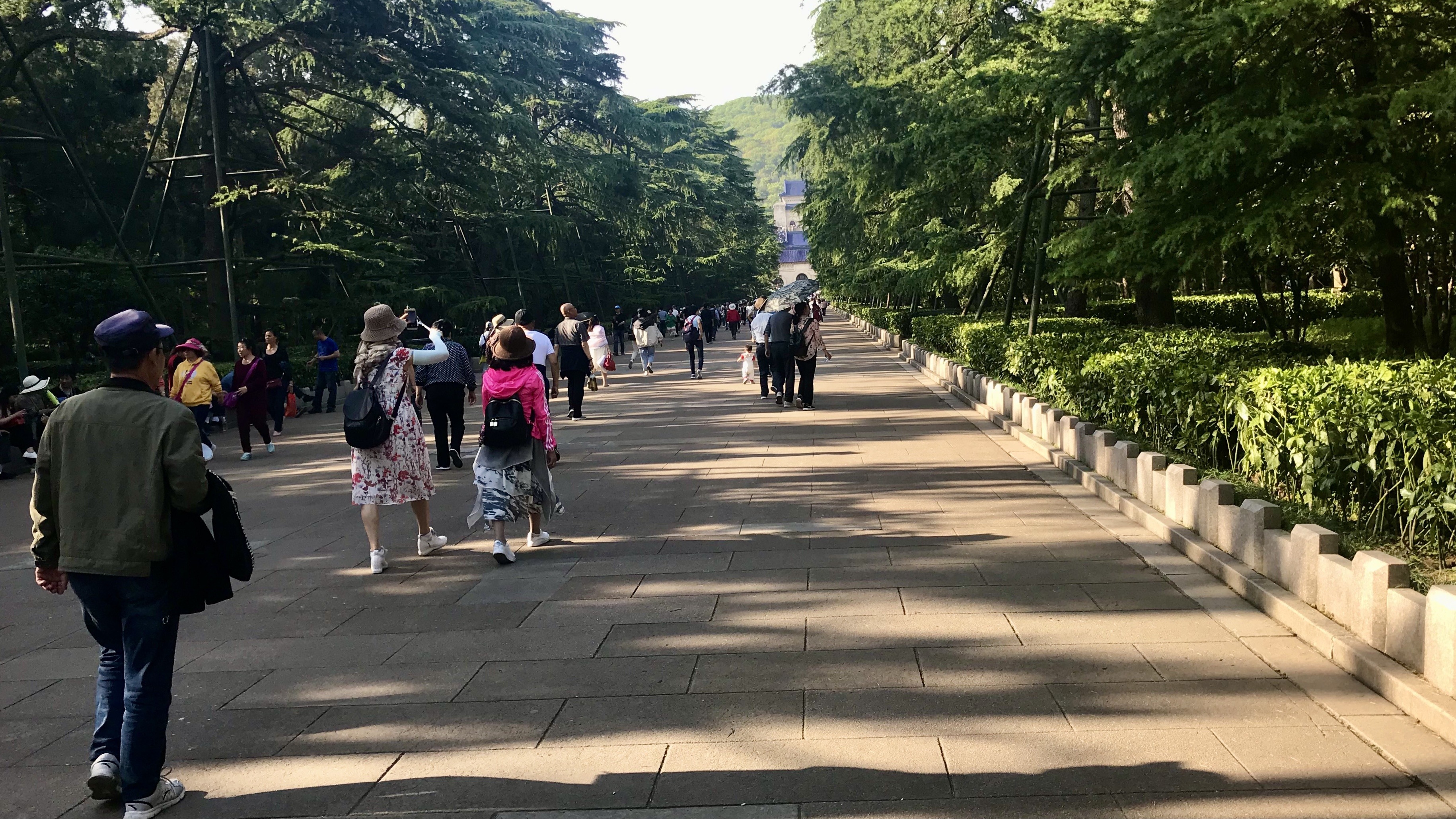


Views of the Sun-Yat-sen Mausoleum
My interest in visiting the mausoleum was tweaked by earlier experiences in my life.
Between 2009 and 2011 I lived in Vancouver, Canada. As anyone who has visited Vancouver will know, some 25 to 30 per cent of the city’s population has Chinese heritage, and Dr Sun Yat-sen is celebrated in the city through a Classical Chinese Garden dedicated to his memory. It was from Vancouver that Sun Yat-sen returned from exile to lead China’s 1911 Xinhai Revolution.
Subsequently, upon leaving Vancouver in 2011, I moved to Penang in Malaysia, only to find that Dr Sun Yat-sen was also revered there by the island’s 55 per cent majority Chinese resident community. Like Vancouver, there is Sun Yat-sen Memorial Centre in Georgetown. This Memorial Centre houses a museum which documents Sun Yat-sen’s journeys in exile, raising funds to finance the revolution back home.
Xuanwuhu Lake Park
To the north of the city wall lies the verdant 530 hectare Xuanwuhu Lake Park. The lake itself is studded with five interconnected islands and is set against the background of Nanjing’s towering buildings.
The park, which also contains bonsai gardens, camphor and cherry blossom trees, temples and bamboo groves, provides an ideal escape from the dense urban area to the south and is highly recommended for a visit while in Nanjing.


Xuanwuhu Lake Park
Other Attractions in the City
Ming Xiaoling Mausoleum – This mausoleum, a UNESCO World Heritage Site, is the resting place of the Hongwu Emperor, the founder of the Ming Dynasty. It features a Sacred Way lined with carved stone animals and officials and is set in ancient woodland (Entry Ticket)
Nanjing Museum – This is one of China’s finest cultural history museums, housing an extensive collection of prehistoric artefacts, imperial treasures, paintings, ceramics, textiles, and calligraphy. (Free Entry but Reservations Required)
Memorial Hall of the Victims in Nanjing Massacre by Japanese Invaders – This moving memorial commemorates the victims of the 1937 Nanjing Massacre through photographs, personal stories, archaeological remains, and exhibits. (Free Entry but Reservations Required)
Jiming Temple – This is one of Nanjing’s oldest Buddhist temples and is renowned for its elegant halls, peaceful atmosphere, and spring cherry blossoms.You can read more about this adventure here. (Entry Ticket)
Presidential Palace – This Ming period building was used as the Office of the President of the Republic of China from 1927 to 1949, when the Republic’s leader Chiang Kai-shek fled to Taipei. Today it houses the China Modern History Museum detailing China’s history over the last 100 years. (Entry Ticket)
Travelling on from Nanjing
Moving on from Nanjing, I travelled by high speed train to Xi’an, Xining and then on to Lhasa in Tibet. Subsequently, I then travelled by tourvan across the Tibetan High Plateau and into Nepal.
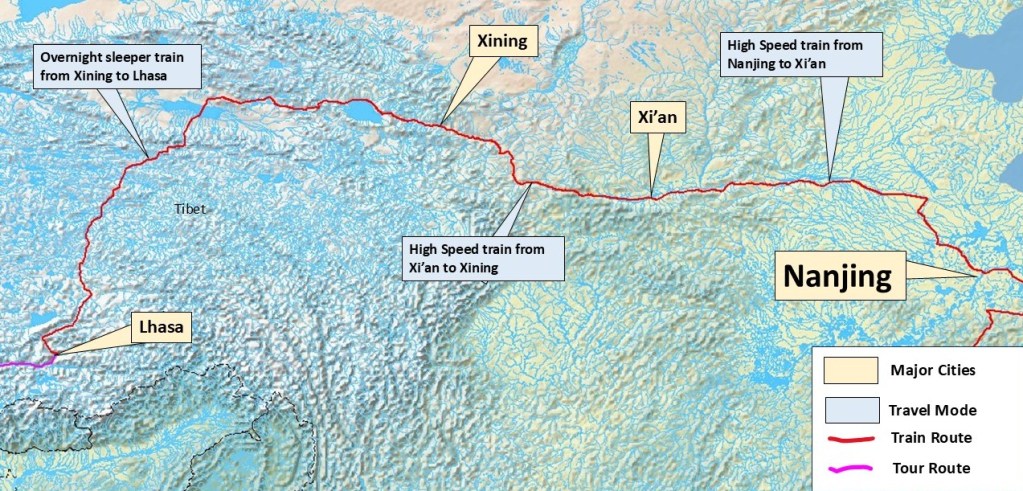
High Speed Train Route from Nanjing to Lhasa, via Xi’an and Xining
Useful Resources
Booking Accommodation
Budget hostel, private apartment or hotel accommodation can be found using this link to Booking.com, the most trusted accommodation booking service on the internet.
Booking Luggage Storage
If you haven’t got time to stay overnight in any place, but still want somewhere to store your luggage during the day to go sightseeing, Radical Storage are brilliant.
They have a network of luggage storage facilities in most towns and cities worldwide. You can reserve a space online and pay by iPay or similar just a few minutes before you need to drop your luggage off, or book in advance.
The online website will give you a quotation, issue you with a QR code to show to the local operator and provide directions to the shop / facility (together with a grid reference).
Nothing could be simpler. They also provide luggage insurance just in case something goes wrong. Hopefully you won’t need it – in my view, it just illustrates their trust in their local partners.
Find out more about Radical Storage
Booking Train Tickets
If you plan to go travelling in Europe, InterRail passes are a great way to save money. They are available for country specific travel or for Europe-wide travel and valid for just a few days or up to three months. These passes can be obtained directly from InterRail as follows:
If you buy your InterRail pass in the November Black Friday sale or the March / April Spring sale, you can usually get a 25% discount on the price of all passes. Additionally, if you are under 28, you get an extra 25% discount anyway. Similarly, an extra 10% discount is also available for those who are 60 or over.
In my experience, buying a Europe-wide pass provides much better value than buying country specific passes. Similarly, the longer the validity period of the pass, the cheaper the passes become from a daily cost viewpoint.
If you want to book train tickets outside Europe, then the following link may be useful. It can also be used to book individual train tickets within Europe if you don’t require the flexibility of an InterRail pass.
This website provides all the details you need: train times, connections and prices, and it also allows you to book tickets there and then online. No need to navigate train operator sites, translate from a foreign language or deal with currency conversions.
Further Reading
Details of My Other Long Distance Overland Adventures
Further Details on my Travels from London to the Arctic Circle
Useful Country Factsheets
Who Are Your Favourite Travel Writers
Please Provide Feedback
Hi, thanks for reading this far. I would really appreciate it if you could please provide some feedback on your reading experience. It will allow me to further improve my offering.


