Disclaimer: Some of the links within this post are affiliate links. This means if you click on them and make a purchase, I might earn a small commission at no additional cost to you. For further information, please see the privacy policy and cookie policy. In addition, if you wish to ensure that your personal information is not passed on to third party advertisers you can request that via the Do Not Sell or Share My Personal Information page.
John Steinbeck (1902-1968)
Summary
This post provides an insight into the life and writings of John Steinbeck. It additionally identifies some of my other favourite writers.
For easy reading, the post is divided into four sections and twenty-five sub-sections, each of which can be directly selected from the accompanying ‘Page Contents’ tag.
Biography – John Steinbeck
John Steinbeck (1902–1968) was an American author known for his vivid depictions of the working class and the landscapes of California.
His works often explore themes of migration, struggle, and human endurance and are set against the backdrop of the American West, particularly California.
Influenced by his own travels across America and beyond, Steinbeck captured the movement of displaced workers, restless wanderers, and those seeking a better life, making poverty and travel a central theme in much of his writing.
Steinbeck’s Top Pick Books are:
- Tortilla Flat (1935)
- Of Mice and Men (1937)
- The Grapes of Wrath (1939)
- Cannery Row (1945)
- East of Eden (1952)
A synopsis of each can be accessed using the links above
Top Picks – John Steinbeck
John Steinbeck’s six top pick travel books are presented below.
The synopsis of each sets out:
- the countries within which the book is set;
- the key themes that are tackled within the book; and
- an outline overview of the book itself.
For your convenience, if you so desire, an opportunity is also provided to purchase copies of each book from Amazon.
Following on from these three synopses, each of Steinbeck’s other books is set out in chronological order.
Tortilla Flat (1935)

Country Setting: United States (California)
Themes Addressed: Friendship, loyalty, poverty, community.
A humorous yet insightful novel set in Monterey, California, following a group of paisanos (men of mixed heritage) who drift through life, embracing camaraderie and adventure. Drawing from his observations of California’s tight-knit coastal communities, Steinbeck portrays a carefree existence where travel, though local, remains an integral part of the characters’ lives.
Of Mice and Men (1937)

Country Setting: United States (California)
Themes Addressed: Friendship, loneliness, dreams, societal outcasts.
The story, set in California during the Great Depression, follows two drifters, George and Lennie, as they travel from ranch to ranch seeking work. They share a dream of owning a farm, but their aspirations are shattered by the harshness of reality. The novel examines their feelings of isolation, the fragility of their dreams, and their bond of friendship. Steinbeck’s own experiences of mixing with itinerant workers inform the narrative, highlighting the transient nature of labourers in a harsh economic landscape. Their journey encapsulates themes of hope, longing, and the American Dream.
The Grapes of Wrath (1939)

Country Setting: United States (California, Oklahoma Dust Bowl)
Themes Addressed: Poverty, injustice, survival, migrant workers.
A powerful novel following the Joad family, forced from their Oklahoma home by the Dust Bowl and the Great Depression. Their arduous journey along Route 66 to California represents the struggle of thousands of migrant workers searching for opportunity. It critiques the exploitation of these migrant workers and social inequality, highlighting the stark realities of economic oppression.
Cannery Row (1945)

Country Setting: United States (California)
Themes Addressed: Friendship, community, survival, the human condition.
Set in Monterey’s Cannery Row, this novel is a snapshot of life among a diverse group of people who form an unlikely community. Through the lives of characters like Doc, Mack, and the “boys,” Steinbeck explores themes of friendship, the search for meaning, and the resilience of the human spirit. While it is a place-based narrative, the transient nature of its characters, drawn from Steinbeck’s real-life experiences, echoes themes of movement and impermanence.
East of Eden (1952)

Country Setting: United States (California)
Themes Addressed: Good vs. evil, family dynamics, free will.
A multi-generational novel set in California’s Salinas Valley, this epic explores the complex relationships between two families, the Trasks and the Hamiltons. The novel delves into moral dilemmas, the battle between good and evil, and the generational impact of choices, with a focus on the concept of inherited sin. Although not a traditional travel narrative, it depicts the movement of families across the American West, reflecting Steinbeck’s broader themes of migration and self-discovery. The novel’s landscapes mirror the characters’ internal and external journeys.
Travels with Charley: In Search of America (1962)

Country Setting: United States
Themes Addressed: Identity, the American landscape, human nature, self-discovery.
A travelogue of Steinbeck’s road trip across America with his poodle, Charley. This memoir offers reflections on American society, cultural diversity, and the complexities of the American identity during the 1960’s. Through personal anecdotes and observations, his reflections on the effects of change on small towns, big cities, and a diverse range of people showcase his deep-rooted fascination with travel and the transformative nature of the open road.
Other Books – John Steinbeck
All of John Steinbeck’s other books are listed below, in chronological order.
If you wish to find out more information about any of them, please press the link within the book’s title.
As previously, for your convenience, an opportunity is also provided to purchase copies of each book from Amazon.
- Cup of Gold (1929)
- The Pastures of Heaven (1932)
- To a God Unknown (1934)
- In Dubious Battle (1936)
- The Red Pony (1937)
- The Long Valley (1938)
- Bombs Away: The Story of a Bomber Team (1942)
- The Moon Is Down (1942)
- The Wayward Bus (1947)
- The Pearl (1947)
- A Russian Journal (1948)
- Burning Bright (1950)
- Sweet Thursday (1954)
- The Short Reign of Pippin IV (1957)
- Once There Was A War (1958)
- The Winter of Our Discontent (1961)
- Viva Zapata! (1975)
Cup of Gold (1929)

Country Setting: Wales, Panama, Jamaica
Themes Addressed: Ambition and success, adventure and conquest, illusion vs. reality, identity and legacy
This first work by John Steinbeck is a historical novel based on the life of the legendary pirate Henry Morgan. It follows his journey from Wales to the Caribbean, where he seeks wealth, power, and the mythical “Cup of Gold,” a metaphor for ultimate conquest and fulfilment. However, as Morgan achieves fame and fortune, he grapples with inner emptiness and the fleeting nature of success, highlighting the futility of ambition.
The Pastures of Heaven (1932)

Country Setting: United States (California)
Themes Addressed: American dream vs. reality, human Nature and fate, isolation and community, illusion vs. reality
This provides a series of interconnected short stories about the lives of families in a small, idyllic California valley (Monterey). Through these narratives, Steinbeck explores human desires, failures, and the unintended consequences of dreams. The stories depict the struggles of ordinary people whose lives are shaped by fate, misfortune, and personal flaws, revealing the complexities of human nature beneath the valley’s seemingly peaceful surface.
To a God Unknown (1934)
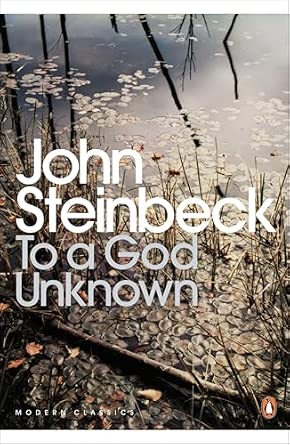
Country Setting: United States (California)
Themes Addressed: Man’s relationship with nature, fate and destiny, religion and mysticism, sacrifice and ritual.
This story follows Joseph Wayne, who settles in California to establish a prosperous ranch. He reveres the land with almost mystical devotion, believing his deceased father’s spirit protects it. As drought threatens, his faith in nature turns obsessive, leading to tragic consequences. The novel explores man’s connection to the land, fate, and sacrifice, blending realism with mythological and religious overtones.
In Dubious Battle (1936)

Country Setting: United States (California)
Themes Addressed: Labour unrest, activism, class struggle, human dignity.
This novel explores the lives of migrant workers in California’s apple orchards, focusing on their struggles to organise a labour strike. The story focuses on the harsh conditions workers face and their fight for dignity and rights, presenting both the idealism and the compromises that accompany collective action and labour movements. Steinbeck, who had observed labour conditions firsthand, injects realism into this account of struggle and solidarity.
The Red Pony (1937)

Country Setting: United States (California)
Themes Addressed: Coming of age, loss, responsibility, life and death.
This novella follows a young boy, Jody Tiflin, as he grows up on his father’s ranch in California. It explores themes of childhood, the responsibilities that come with growing up, and the painful lessons about life and death. The story captures the transition from innocence to maturity.
The Long Valley (1938)

Country Setting: United States (California)
Themes Addressed: Isolation and loneliness, struggles of rural life, power dynamics in relationships, morality and personal conflicts
This is a collection of short stories set in California’s Salinas Valley. These tales explore human struggles, loneliness, and resilience, depicting rural life during the Great Depression. The characters, often farmers or labourers, grapple with nature’s hardships, emotional turmoil, and moral dilemmas. With rich, evocative prose, Steinbeck presents a poignant, sometimes dark, reflection on human nature and the complexities of human relationships.
Bombs Away: The Story of a Bomber Team (1942)

Country Setting: United States (various Air Force training bases)
Themes Addressed: Teamwork and brotherhood, duty and patriotism, warfare and technology, Training and Transformation
This is a nonfiction work that chronicles the training and experiences of young American airmen during World War II. Commissioned by the U.S. Army Air Forces, the book follows a bomber crew as they prepare for combat, highlighting their rigorous training, camaraderie, and sense of duty. Steinbeck blends documentary-style reporting with his signature storytelling, portraying the emotional and physical challenges faced by these servicemen.
The Moon Is Down (1942)

Country Setting: Occupied Europe (fictional town)
Themes Addressed: Resistance, oppression, freedom, courage.
Set in an unnamed European town during World War II, The Moon Is Down examines the psychological effects of occupation on both the conquerors and the conquered. Steinbeck explores the power of resistance, courage, and the struggle for freedom, even in the face of oppression and tyranny.
The Wayward Bus (1947)

Country Setting: United States (California)
Themes Addressed: Human desires, isolation, hope, human nature.
Set in a small town in California, this novel follows the lives of people connected by a bus journey. The narrative explores their dreams, frustrations, and personal struggles, touching on themes of isolation and the desire for a better life in the context of post-World War II America.
The Pearl (1947)

Country Setting: Mexico
Themes Addressed: Greed, family, fate, human nature.
Inspired by Steinbeck’s travels in Mexico, this novel tells the story of a poor fisherman, Kino, who discovers a giant pearl. His pursuit of wealth takes him on a perilous journey, mirroring the dangers of ambition and colonial oppression. Steinbeck’s keen observations of coastal communities and indigenous struggles bring authenticity to this timeless tale.
A Russian Journal (1948)

Country Setting: Soviet Union (modern-day Russia, Ukraine, and Georgia)
Themes Addressed: Post-war Soviet life and resilience, everyday experiences, Western misconceptions, contrasts between urban and rural life
This is a travelogue documenting Steinbeck’s journey through the Soviet Union with photographer Robert Capa. Without political bias, Steinbeck observes everyday Soviet life in cities and rural areas, capturing the resilience of the people in post-war USSR. The book presents an intimate, human-centred perspective on a country often misunderstood by the West during the early Cold War period.
Burning Bright (1950)

Country Setting: Unspecified
Themes Addressed: Fate and destiny, betrayal and deception, human longing and identity, moral dilemmas
An experimental play / novel exploring themes of fate, human resilience, and deception. It follows Joe Saul, an ageing circus performer desperate for a child, unaware that his wife, Mordeen, conspires with another man to fulfil his dream. As secrets unravel, Joe must confront betrayal and self-discovery. The novel’s structure, shifting between play and prose, examines human emotions and moral dilemmas with poetic intensity.
Sweet Thursday (1954)

Country Setting: United States (California)
Themes Addressed: Love, community, recovery, self-discovery.
A sequel to Cannery Row, Sweet Thursday continues the story of its characters as they navigate love and relationships in the aftermath of World War II. Steinbeck explores themes of recovery and self-discovery, focusing on the redemptive powers of love and human connection within a close-knit community.
The Short Reign of Pippin IV (1957)

Country Setting: Fictional European country
Themes Addressed: Political power, ambition, corruption, absurdity.
A satirical novel set in a fictional European monarchy, The Short Reign of Pippin IV explores the rapid rise and fall of the titular king. It critiques political power and corruption while examining themes of ambition and the absurdity of political systems, using humour and irony to highlight the futility of power struggles.
Once There Was A War (1958)
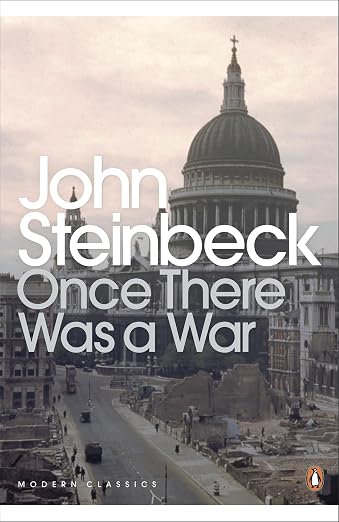
Country Setting: United Kingdom, North Africa, Italy
Themes Addressed: Camaraderie and humanity, psychological impact of war, contrasts between experience and perception, resilience and adaptability, absurdity and contradiction of war
This is made up of a collection of dispatches that Steinbeck wrote as a war correspondent for the New York Herald Tribune in 1943. Covering World War II from England, North Africa, and Italy, he captures the daily lives of soldiers, their camaraderie, fears, and resilience. The book offers a deeply humanistic portrayal of war, focusing on its emotional and psychological toll rather than just military strategy.
The Winter of Our Discontent (1961)

Country Setting: United States (East Coast)
Themes Addressed: Morality, ambition, shifting values.
Set in a fictional East Coast town, this novel follows Ethan Hawley, a grocery clerk grappling with morality and ambition. Unlike his earlier travel-heavy works, this book explores internal journeys — Ethan’s ethical dilemmas and shifting values. However, themes of societal change and the American Dream still echo through in Steinbeck’s fascination with movement and transformation.
Viva Zapata! (1975)
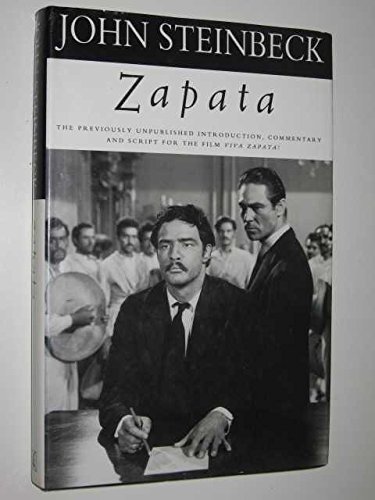
Country Setting: Mexico
Themes Addressed: Revolution, leadership, social change, idealism.
Published posthumously, this historical novel / play focuses on the life of Emiliano Zapata, the Mexican revolutionary leader. Steinbeck examines the ideals of revolution and social justice through Zapata’s life, the conflicts he faced, and his role in the Mexican Revolution, delving into the complexities of leadership and change.
Other Suggested Writers
Who is your Favourite Travel Writer
If you have a favourite travel writer, please tell us about them in the comments box below.
Also, if you want to make any comments on any of the content of this page, please also feel free to add feedback in the box below.
Please Provide Feedback


Tags:
#TheGrapesofWrath #TortillaFlat #OfMiceandMen #ToaGodUnknown #InDubiousBattle #CanneryRow #EastofEden #SweetThursday #OnceThereWasaWar #TheWinterofOurDiscontent #TravelswithCharley #travelwriters #johnsteinbeck #travelbooks #Steinbecknovels